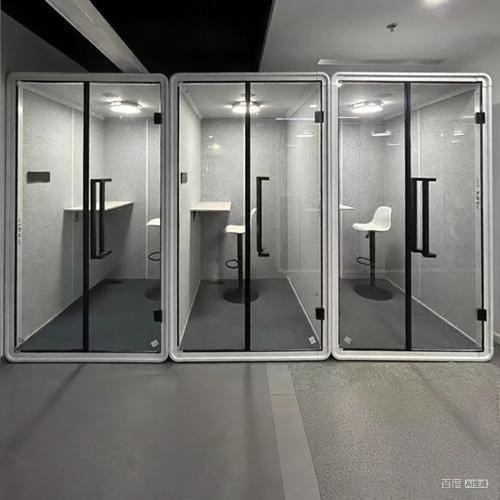
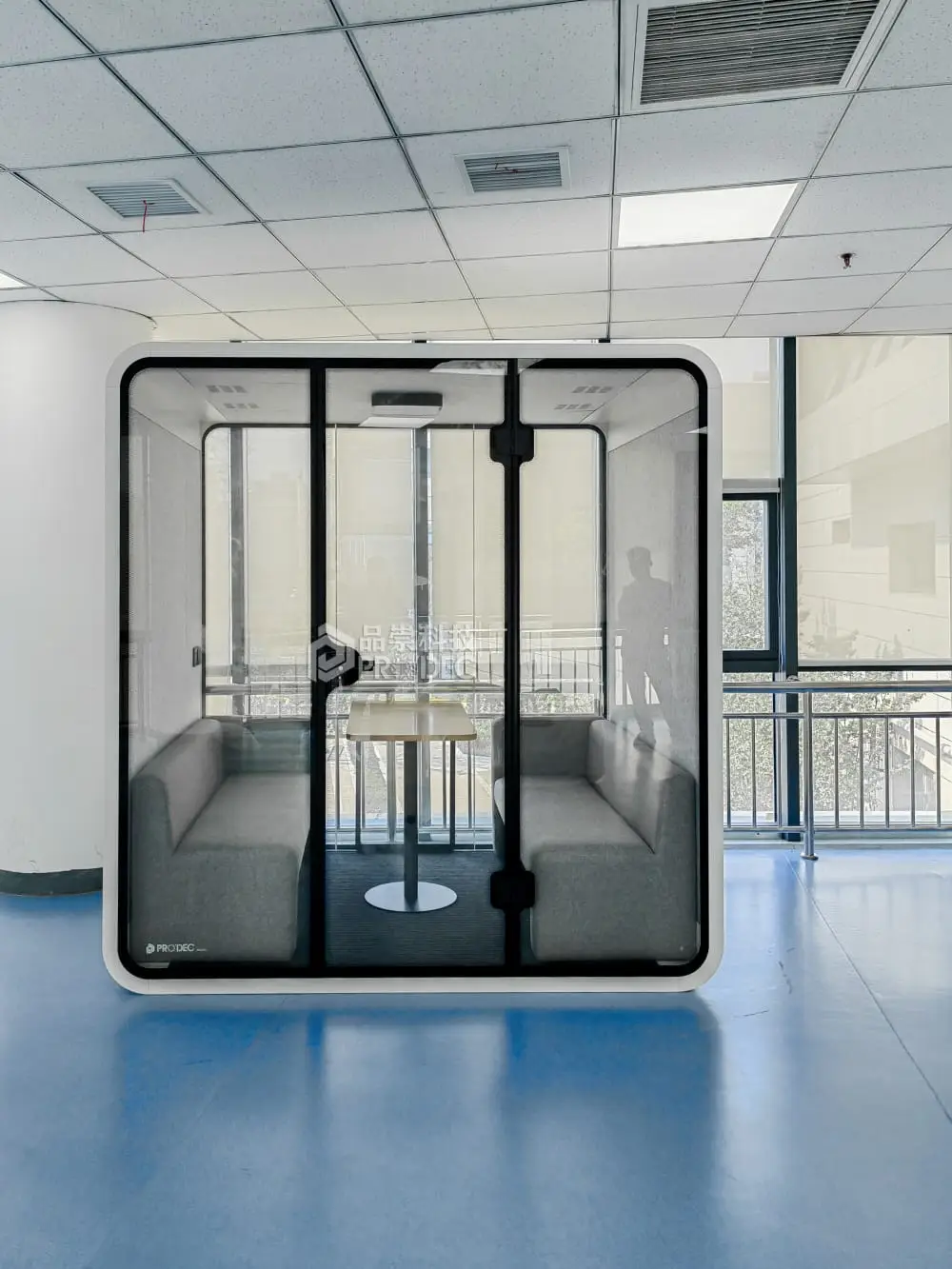
Acoustic Glass Technology
Engineering Sound Insulation Through Glass Structure, Acoustic Interlayers & Glazing Systems
**Badges:**
`STC` `Rw` `Acoustic PVB` `Laminated Glass` `IGU` `Acoustic Testing`
**CTA Buttons:**
[Talk to an Acoustic Glass Engineer] [Request Technical Data]
02 – Acoustic Performance Framework
**H2:** The Acoustic Performance Framework
> *Acoustic performance is not determined by one material alone.*
Sound insulation is the result of **six interacting elements**:
GLASS + INTERLAYER + AIR SPACE + FRAME + SEALING + INSTALLATION
│ │ │ │ │ │
Mass Damping Cavity Profile Gasket Assembly
Thickness PVB/SGP Argon Aluminum EPDM Site work
Asymmetry Width Steel Silicone
**Layer-by-layer:**
| Element | What It Contributes | Why It Matters |
|---------|--------------------|---------------|
| **Glass (Mass)** | Mass per unit area, thickness, asymmetry | Heavier / thicker / mismatched panes resist vibration |
| **Interlayer (Damping)** | Acoustic PVB or SGP viscoelastic layer | Dissipates vibrational energy, controls coincidence dip |
| **Air Space (Cavity)** | IGU cavity width, gas fill (argon/krypton) | Decouples the two glass lites |
| **Frame (Profile)** | Aluminum / steel, sightline, stiffness | Transfers vibration; poor frames leak flanking |
| **Sealing (Gasket)** | EPDM / silicone perimeter seals | Closes the acoustic weak link at jambs & head |
| **Installation (Assembly)** | On-site glazing, ceiling plenum, threshold | A perfect glass panel in a leaky frame = poor result |
**The key takeaway for procurement:** a higher glass STC does **not** automatically mean a quieter pod. The **complete system** — frame, seals, door, ceiling transition, and installation — determines final performance.
03 – How Acoustic Glass Works
**H2:** How Does Acoustic Glass Reduce Sound Transmission?
**The energy path:**
Sound Energy (outside)
↓
Glass Vibration (first lite)
↓
Acoustic Interlayer Damping (PVB/SGP converts vibration → heat)
↓
[Optional] Air Cavity Decoupling (IGU)
↓
Second Lite Vibration (asymmetric, reduced)
↓
Reduced Sound Transmission (inside)
**The physics in plain terms:**
1. **Mass Law** — Every doubling of glass mass per unit area adds ~6 dB of transmission loss. Thicker glass = better, but with diminishing returns and weight penalties.
2. **Damping (the interlayer)** — A standard laminated glass is built for *safety*. An **acoustic laminated glass** uses a specially formulated **acoustic PVB** interlayer that is viscoelastic: it converts vibrational energy into a tiny amount of heat, suppressing the resonance peak that normal glass suffers in the 1000–4000 Hz speech band.
3. **Decoupling (the cavity)** — In an **Insulated Glass Unit (IGU)**, two lites are separated by an air or argon cavity. Sound must cross the gap twice and is reflected back; cavity width and gas fill matter.
4. **Asymmetry** — Using **different thicknesses** for the two lites (e.g., 6 mm + 8 mm) shifts each pane's coincidence frequency apart, preventing them from resonating together and dramatically improving mid-frequency performance.
5. **System integration** — None of the above helps if the frame leaks, the door has no drop seal, or sound flanks over the ceiling plenum. Hence the Framework above.
04 – STC Rating
**H2:** STC Rating: The Primary Acoustic Metric
> *The most important number on an acoustic glass specification — and the most misunderstood.*
**What is STC?**
**Sound Transmission Class (STC)** is a single-number rating of a material or assembly's ability to reduce airborne sound, derived from measured Transmission Loss (TL) across 16 standard frequency bands (125 Hz – 4 kHz). It is the dominant metric in **North America / United States**.
**What STC values mean in practice:**
| STC | Real-World Meaning |
|-----|-------------------|
| 25–30 | Normal speech easily heard and intelligible through the partition |
| 35 | Loud speech audible, but muffled / not intelligible |
| 40–43 | Standard office pod wall; speech inaudible 1 m away |
| 45–50 | High-privacy / executive / recording use |
| 50+ | Specialist acoustic construction |
**🔑 Critical distinction — Glass STC ≠ Complete Pod STC:**
┌────────────────────────────────────┐
│ OFFICE POD │
│ │
│ GLASS WALL │
│ STC 45 (glass-only, lab) │
│ │
│ DOOR + SEALS │
│ STC 38 (weakest link) │
│ │
│ CEILING / FLOOR TRANSITION │
│ Flanking path │
└────────────────────────────────────┘
↓
Overall Pod STC ≠ Glass STC Alone
(typically 3–6 points lower)
**The rule we communicate to every client:**
> *The STC rating of a glass panel should not be interpreted as the STC rating of the complete office pod.*
This is the single most important statement for building trust with US/EU engineering buyers — it proves you understand **systems, not just glass**.
**Test basis:** ASTM E90 (laboratory measurement of airborne sound transmission loss), ASTM E413 (classification), ISO 717-1 (rating).
➡️ **Deep dive:** [STC Rating for Acoustic Glass](/acouspace/technology/acoustic-technology/stc-rating/)
05 – Rw Rating
**H2:** Rw Rating: The International Equivalent
**Rw** = **Weighted Sound Reduction Index** (EN ISO 717-1). It is the **European / UK / international** counterpart to STC and the dominant spec language in **Europe, the Middle East, and most export markets**.
| Parameter | STC | Rw |
|-----------|-----|-----|
| Full Name | Sound Transmission Class | Weighted Sound Reduction Index |
| Common Market | North America / USA | Europe / UK / International |
| Standard | ASTM E413 | EN ISO 717-1 |
| Spectrum Adapt. | C / C<sub>tr</sub> optional | C / C<sub>tr</sub> mandatory |
| Application | Building & enclosure acoustics | Building & enclosure acoustics |
**⚠️ STC and Rw are NOT directly interchangeable.**
While the two ratings are *correlated*, writing **"STC 40 = Rw 40"** is technically inaccurate — the two systems use different reference curves and adaptation terms (C, C<sub>tr</sub>). A real conversion requires either a full 1/3-octave TL curve or an empirical correlation (typically Rw ≈ STC ± 1–3 dB depending on the curve shape).
> **Why this page matters for your USA + Europe market:** AcouSpace serves both regions, so every quotation carries **both** STC and Rw, and our datasheets provide the conversion curve — not a rounded guess.
➡️ **Deep dive:** [Rw Rating for Acoustic Glass](/acouspace/technology/acoustic-technology/rw-rating/)
06 – Acoustic PVB Interlayer
**H2:** Acoustic PVB Interlayer Technology
**Standard PVB vs Acoustic PVB:**
| | Standard PVB | Acoustic PVB |
|-|--------------|--------------|
| Primary purpose | Safety / security (post-breakage retention) | **Sound damping + safety** |
| Viscoelastic behavior | Moderate | Engineered for high loss factor in 500–4000 Hz |
| Acoustic gain | Baseline | +2 to +5 dB vs. standard PVB of same thickness |
| Typical thickness | 0.38 / 0.76 mm | **0.76 / 1.14 / 1.52 mm** |
| Clarity | High | High (optically clear) |
**How it works:** The acoustic PVB interlayer is the heart of **acoustic laminated glass**. Its polymer chain is tuned to absorb vibrational energy in the **speech frequency band (500 Hz – 4 kHz)**, controlling the resonance that causes ordinary laminated glass to "ring" and leak sound.
**Common build:** `6 mm Tempered + 1.14 mm Acoustic PVB + 6 mm Tempered` → STC ~41–43.
➡️ **Product link:** [Acoustic Laminated Glass](/acouspace/products/acoustic-glass/acoustic-laminated-glass/)
➡️ **Deep dive:** [Acoustic PVB Interlayer Technology](/acouspace/technology/acoustic-technology/acoustic-pvb/)
07 – Acoustic Interlayer: PVB vs SGP
**H2:** Acoustic PVB vs SGP Interlayer
> *We do NOT market SGP as "automatically more soundproof than PVB." That would be technically wrong.*
**The accurate positioning:**
| Property | Acoustic PVB | SGP (SentryGlass®-type) |
|----------|--------------|--------------------------|
| Acoustic Damping | **Excellent** | Configuration dependent |
| Structural Strength | Good | **Excellent (5× PVB tear strength)** |
| Stiffness | Moderate | **High** |
| Post-breakage retention | Excellent | Excellent |
| Safety | Excellent | Excellent |
| Edge stability | Good | **Excellent** |
| Acoustic applications | **Highly suitable** | Project dependent |
| Structural glazing | Suitable | **Highly suitable** |
**The honest conclusion:** **Acoustic PVB is the right choice for damping-driven sound insulation** — it is the core of our acoustic product line. **SGP** is selected when **structural strength, stiffness, or edge stability** is the priority (e.g., large jumbo panels, structural glazing, hurricane zones); its acoustic performance follows the build rather than leading it.
➡️ **Deep dive:** [Acoustic SGP Interlayer](/acouspace/technology/acoustic-technology/sgp-interlayer/)
08 – Acoustic Laminated Glass Technology
**H2:** Why Laminated Glass Provides Acoustic Performance
> *Products page answers **"What do you buy?"**. This page answers **"Why does laminated glass provide acoustic performance?"***
**The six levers:**
| # | Lever | How It Improves Acoustics |
|---|-------|---------------------------|
| 1 | **Mass** | Heavier lites resist sound-induced vibration (Mass Law) |
| 2 | **Thickness** | Thicker lites + thicker interlayer = higher TL |
| 3 | **Interlayer (Damping)** | Acoustic PVB dissipates resonance energy |
| 4 | **Glass Asymmetry** | Mismatched lite thicknesses avoid coupled resonance |
| 5 | **Resonance Control** | Damping flattens the coincidence dip |
| 6 | **Frequency Response** | Build tuned to 500–4000 Hz speech band |
**The asymmetry principle (key differentiator):**
❌ Symmetric build: 6 + PVB + 6 → both lites resonate near same frequency
✅ Asymmetric build: 6 + PVB + 8 → resonances separated, +3 to +5 dB in speech band
```
This is the single most valuable design rule we give to pod manufacturers — and it costs nothing in materials.
➡️ **Product link:** [Acoustic Laminated Glass](/acouspace/products/acoustic-glass/acoustic-laminated-glass/)
➡️ **Deep dive:** [Acoustic Laminated Glass Technology](/acouspace/technology/acoustic-technology/acoustic-laminated-glass/)
09 – Acoustic Insulated Glass Technology
**H2:** Acoustic Insulated Glass: Double, Triple & Laminated IGU
> *Double Glazing and Triple Glazing are NOT treated as separate, competing products — they are configurations under one technical system.*
**The four build families:**
| Build Family | Structure | When to Specify |
|--------------|-----------|-----------------|
| **Double Glazing (IGU)** | Glass + Cavity + Glass | Standard acoustic pod/partition; best cost/performance |
| **Triple Glazing** | Glass + Cavity + Glass + Cavity + Glass | Extreme privacy / low-frequency control |
| **Laminated IGU** | Laminated lite + Cavity + Glass | Maximum performance (composite) |
| **Acoustic + Low-E IGU** | Acoustic build + Low-E coating | When thermal + acoustic both matter |
**What drives IGU performance:**
`Glass Thickness + Cavity Width + Glass Asymmetry + Interlayer + Frame/System`
**⚠️ The triple-glazing myth we correct:** *Triple glazing is not automatically acoustically superior to every double-glazed configuration.* Three lites with a poor cavity layout and symmetric thicknesses can underperform a well-designed asymmetric double IGU. **The parameters above — not the lite count — decide performance.**
**Cavity rules of thumb:**
- 9–12 mm cavity → compact pods, light-duty
- 16 mm cavity → **sweet spot** for most office pods (argon fill)
- 20 mm+ cavity → high-performance, space permitting
➡️ **Product link:** [Acoustic Insulated Glass](/acouspace/products/acoustic-glass/acoustic-insulated-glass/)
➡️ **Deep dives:** [Double Glazing for Acoustics](/acouspace/technology/acoustic-technology/double-glazing/) · [Triple Glazing for Acoustics](/acouspace/technology/acoustic-technology/triple-glazing/)
10 – Acoustic Glass Performance
**H2:** Acoustic Glass Performance at a Glance
**Indicative performance by configuration** *(glass-only, laboratory conditions):*
| Configuration | Overall Thickness | Indicative STC* | Indicative Rw* | Typical Use |
|--------------|-------------------|-----------------|---------------|------------|
| 5 + 0.76 PVB + 5 | ~10.76 mm | 38–40 | ~37–39 | Phone / privacy booth |
| 6 + 1.14 PVB + 6 | ~12.76 mm | 41–43 | ~40–42 | Standard office pod |
| 8 + 1.52 PVB + 8 | ~17 mm | 43–45 | ~42–44 | Premium / HR pod |
| 6 + 16Ar + 8 (IGU) | ~30 mm | 43–46 | ~42–45 | Enhanced privacy, thermal |
| 6+1.14PVB+6 + 16Ar + 8 (Laminated IGU) | ~38 mm | 47–50 | ~46–49 | Executive / recording |
*\*Indicative only. Final pod/system performance depends on frame, seals, door, ceiling transition and installation. Laboratory test reports per build available on request.*
**Performance variables summary:**
STC / Rw = f ( Glass Mass, Thickness, Asymmetry,
Interlayer type & thickness,
Cavity width & gas fill,
Frame stiffness, Seal quality,
Installation quality )
**There is no single "best glass" — only the right glass for your target.** That is exactly what the Selection Guide below is for.
11 – Acoustic Glass Testing
**H2:** Acoustic Glass Testing: Laboratory vs Real-World
**What we test:**
| Metric | Standard | What It Measures |
|--------|----------|------------------|
| **STC** | ASTM E90 / E413 | Airborne sound reduction (North America) |
| **Rw (R, C, C<sub>tr</sub>)** | EN ISO 10140 / ISO 717-1 | Weighted sound reduction index (Europe) |
| **Transmission Loss (TL)** | 1/3-octave curve | Frequency-by-frequency performance |
| **Frequency Response** | Full TL curve | Identifies coincidence dip & speech-band weakness |
| **Glass Configuration** | Per build | Exactly what was tested |
**🔑 Laboratory vs Real Project — the honesty section:**
| Laboratory | Real Project |
|------------|--------------|
| Controlled condition | Actual installation |
| Defined specimen (glass only) | Complete pod / partition |
| Standardized test | Installation dependent |
| Glass performance | **System performance** |
> *Glass acoustic test results represent the tested glazing configuration under specified laboratory conditions. The final acoustic performance of an office pod depends on the complete enclosure.*
This distinction — stated clearly and repeatedly — is what separates a credible acoustic manufacturer from a supplier overstating test numbers.
**Document package with every shipment:** STC/Rw test reports, 1/3-octave TL curve, declarations of performance, compliance certificates.
➡️ **Deep dive:** [Acoustic Glass Testing](/acouspace/technology/acoustic-technology/acoustic-testing/)
12 – Technology Selection Guide(
**H2:** How to Select the Right Acoustic Glass Technology
**The decision tree:**
Step 1 ── What is your application?
├─ Phone / Privacy Booth → compact, STC ~38–43
├─ Office / Work Pod → standard, STC ~41–45
├─ Meeting Pod → larger, STC ~43–48
├─ Recording / Podcast Booth → full-band, STC ~47–52
└─ Partition / Open-plan wall → jumbo, STC ~41–50
↓
Step 2 ── What is your acoustic target?
└─ STC / Rw value (or "speech privacy" requirement)
↓
Step 3 ── Choose glass structure
├─ Laminated (PVB) → most common, safety + damping
├─ IGU (Double Glazing) → enhanced + thermal
├─ Laminated IGU (Composite) → maximum performance
└─ Triple Glazing → specialist low-frequency
↓
Step 4 ── Need thermal performance?
├─ YES → add Low-E coating (+ thermal, acoustic neutral)
└─ NO → standard clear / Low-Iron
↓
Step 5 ── Final configuration + engineering review
→ AcouSpace recommends build-up, supplies datasheet & quote
**This is exactly what procurement managers need** — a clear path from *"I need a quiet pod"* to *"6+1.14PVB+6, STC 42, jumbo panel, CNC cut-outs"*.
13 – Manufacturing & Engineering Capability
**H2:** Engineered for Global Acoustic Glass Standards
- **JUMBO Glass Group** — global manufacturer of oversize & high-performance glass, operating since 2000
- **Three production bases** — Gevergel Engineering Glass + Shunzhifa Glass + modern jumbo line
- **Dedicated acoustic line** — separate PVB laminating room, humidity-controlled IGU chamber
- **Jumbo capability** — flat tempered up to 2440 × 5000 mm; laminated up to 2440 × 18000 mm; IGU up to 2440 × 12000 mm
- **Advanced magnetron-sputtered Low-E line** — for thermal + acoustic combinations
- **In-house acoustic R&D** — STC/Rw modeling, TL curve calculation, build recommendation
- **CNC machining** — hinge / lock / cut-out tolerance ±0.5 mm
- **QC per batch** — 100% spark test, dimensional laser scan, flatness ≤ 0.3%
- **Export experience** — serving 100+ countries; Incoterms, ocean-freight packaging, customs documentation
- **Lead time** — samples 10–14 days; bulk 25–35 days FOB
14 – Standards & Compliance Reference
**H2:** Standards Reference
| Standard | Scope |
|----------|-------|
| **ASTM E90 / E413** | Airborne sound transmission loss & STC classification |
| **EN ISO 10140-1/2** | Laboratory measurement of sound insulation (Europe) |
| **ISO 717-1** | Rating of sound insulation (Rw, C, C<sub>tr</sub>) |
| **EN 12150** | Thermally toughened (tempered) glass |
| **EN 14449** | Laminated glass — PVB interlayer |
| **EN 14179** | Heat soak test for tempered glass |
| **ANSI Z97.1 / AS-NZS 2208** | Safety glazing standards (US / Australia-NZ) |
| **EN 1279-1~5** | Insulating glass unit durability |
| **EN 1096-4 / ASTM C1376** | Coated (Low-E) glass |
| **ISO 9001:2015** | Factory quality management |
> **Note on ISO 23351:** ISO 23351 measures the **speech level reduction of an entire office pod** — it is a *pod system* standard, **not a glass certificate**. We engineer our glass *for* ISO 23351-compliant pods and supply the supporting glass test data.
15 – FAQ
**H2:** Frequently Asked Questions
1. **What is acoustic glass technology in simple terms?**
It is the engineering of glass structures — mass, acoustic interlayers, cavities, and system integration — to control how much sound passes through. AcouSpace explains the *how*, not just the *what*.
2. **What is the difference between STC and Rw?**
STC is used mainly in North America, Rw in Europe/International. They are related but **not directly interchangeable** — conversion requires a full TL curve. Every AcouSpace quote carries both values.
3. **Is acoustic PVB the same as standard PVB?**
No. Standard PVB is for safety; **acoustic PVB** is viscoelastically tuned to damp speech-band vibration, adding ~2–5 dB over standard PVB at the same thickness.
4. **Is SGP better than PVB for soundproofing?**
Not necessarily. SGP excels at **structural strength and stiffness**; **acoustic PVB is the right choice for damping-driven sound insulation**. We recommend each based on project priority.
5. **Does triple glazing always beat double glazing acoustically?**
**No.** Performance depends on glass thickness, cavity width, asymmetry, interlayer, and frame — not lite count alone. A well-designed asymmetric double IGU can outperform a poor triple-glazed unit.
6. **Why does my pod STC differ from the glass STC?**
Because the pod is a **system**: door seals, frame, ceiling plenum, and floor transition all affect final performance. Glass STC is a laboratory glass-only value.
7. **What STC do I need for speech privacy?**
STC 40–43 for standard privacy; STC 45+ for HR/interview or executive use. Below ~STC 35, speech remains intelligible — not truly private.
8. **Can you model STC/Rw from my target?**
Yes — send your target STC/Rw, dimensions, and pod design. Our engineering team reverse-engineers the optimal glass build-up and supplies a calculation note.
9. **Do you provide test reports?**
Yes — lab STC/Rw reports, 1/3-octave TL curves, declarations of performance, and compliance certificates per build.
10. **Can acoustic and thermal (Low-E) performance be combined?**
Yes — a Low-E coating on the #2 or #3 surface of an IGU adds thermal control with **no penalty to acoustic performance**.
Final CTA
**H2:** Need Help Selecting the Right Acoustic Glass?
Send us your required **STC / Rw target, glass dimensions, pod/partition design, or existing glass specification**. Our engineering team can recommend a suitable acoustic glazing configuration and provide a project-specific quotation.
- 📩 Email: tomron1688@gmail.com
- [Request a Quote] [Download Datasheet]
🔗 Internal Link Cluster
Related Applications
Acoustic Glass for Office Pods | Office Pod Glass Manufacturer – AcouSpace
Phone Booth Glass | Acoustic Glass for Phone Booths – AcouSpace
Acoustic Glass for Meeting Pods | Meeting Pod Glass Manufacturer – AcouSpace
Acoustic Glass for Work Pods | Work Pod Glass Manufacturer – AcouSpace
Acoustic Glass for Office Privacy Booths | Privacy Booth Glass Manufacturer – AcouSpace
Acoustic Glass for Recording Booths | Recording Booth Glass Manufacturer – AcouSpace
Acoustic Glass for Podcast Booths | Podcast Booth Glass Manufacturer – AcouSpace
Related Product
- [Acoustic Laminated Glass](/acouspace/products/acoustic-glass/acoustic-laminated-glass/)
- [Acoustic Insulated Glass](/acouspace/products/acoustic-glass/acoustic-insulated-glass/)
- [Acoustic Laminated Insulated Glass](/acouspace/products/acoustic-glass/acoustic-laminated-insulated-glass/)
- [Low-E Acoustic Glass](/acouspace/products/acoustic-glass/low-e-acoustic-glass/)
- [Low-Iron Acoustic Glass](/acouspace/products/acoustic-glass/low-iron-acoustic-glass/)
- [Acoustic Glass Doors](/acouspace/products/acoustic-glass/acoustic-glass-doors/)
- [Acoustic Glass Panels](/acouspace/products/acoustic-glass/acoustic-glass-panels/)
- [Custom Acoustic Glass](/acouspace/products/acoustic-glass/custom-acoustic-glass/)
Related Technology supporting
- STC Rating & Rw Rating for Acoustic Glass | STC vs Rw Explained – AcouSpace
- Acoustic PVB Interlayer & Acoustic Laminated Glass Technology – How It Works
- Double Glazing for Acoustics – How IGU Works for Sound Insulation | JUMBO AcouSpace
-Acoustic Laminated Glass vs Double Glazing – Which Is Right for Your Project?
Acoustic Glass Performance – How to Read Acoustic Performance Data | JUMBO AcouSpace
- ISO 23351 for Acoustic Office Pods & Meeting Pods – ASTC, SNR & Classification | JUMBO AcouSpace
Acoustic Glass Testing – How Acoustic Glass Is Tested & How to Read Test Reports | JUMBO AcouSpace