Tempered Window Glass | Toughened Safety Glass for Windows & Doors
Toughened Safety Glass – The Mandatory Specification for Impact‑Resistant Windows & Doors
Tempered window glass – also called toughened glass or safety glass – is glass that has been thermally treated to create a surface compression layer, making it four to five times stronger than annealed glass of the same thickness. When broken, tempered glass fractures into small, relatively harmless cubes rather than sharp shards – a critical safety feature required by building codes worldwide.
For procurement managers and facade engineers, tempered window glass is the baseline safety specification for virtually all modern windows and doors. Building codes in North America (IBC, ANSI Z97.1), Europe (EN 12150), Australia (AS/NZS 2208), and most other jurisdictions mandate tempered or laminated safety glass in locations where human impact risk exists – including doors, sidelights, windows within 600mm of doors, floor‑to‑ceiling windows, and any glazing below 450mm from the floor.
💡 Why tempered glass is specified: Over 90% of commercial window glass and approximately 60% of residential window glass is now tempered. The cost premium over annealed glass is modest (15–30%), but the safety benefit is transformative. For glass exporters, tempered window glass represents the highest‑volume, most frequently ordered product category.
1. Quick Specification
| Item | Standard Tempered | Heavy‑Duty Tempered |
|---|
| Glass Type | Clear float tempered | Low‑iron, tinted, or reflective tempered |
| Thickness | 4mm, 5mm, 6mm, 8mm, 10mm, 12mm | 15mm, 19mm (special order) |
| Strength | 4–5× stronger than annealed | 4–5× stronger than annealed |
| Breaking Stress | ≥120 N/mm² (EN 12150) | ≥120 N/mm² (EN 12150) |
| Thermal Shock Resistance | Up to 250°C temperature differential | Up to 250°C temperature differential |
| Fracture Pattern | Small, blunt cubes (safety) | Small, blunt cubes (safety) |
| Max Size | 3660 × 20800 mm | 3360 × 18800 mm |
| Edge Finish | Flat ground / Arrissed / Polished | Flat ground / Polished |
| Holes & Notches | Available (before tempering) | Available (before tempering) |
Performance Data
| Parameter | 6mm Tempered | 8mm Tempered | 10mm Tempered | 12mm Tempered |
|---|
| Weight | ~15 kg/m² | ~20 kg/m² | ~25 kg/m² | ~30 kg/m² |
| Design Wind Load (4‑side support, 1200mm span) | ~3.5 kPa | ~5.0 kPa | ~6.5 kPa | ~8.0 kPa |
| Impact Resistance | ANSI Z97.1 Cat II | ANSI Z97.1 Cat II | ANSI Z97.1 Cat II | ANSI Z97.1 Cat II |
| VLT (Clear) | ~89% | ~88% | ~87% | ~86% |
| VLT (Low‑Iron) | ~91% | ~90% | ~89% | ~88% |
2. Why Tempered Window Glass?
2.1 Safety – The Primary Reason
Tempered glass is classified as safety glazing material under all major international standards. When broken, it disintegrates into small, granular pieces with dull edges – minimizing the risk of serious injury. This is why building codes mandate tempered glass in:
- Doors and sidelights
- Windows within 600mm of doors
- Windows below 450mm from finished floor
- Shower enclosures and bath enclosures
- Floor‑to‑ceiling windows
- Windows in schools, hospitals, and public buildings
2.2 Strength & Impact Resistance
Tempered glass is 4–5 times stronger than annealed glass of the same thickness. This means:
- Thinner glass can be used for the same wind load (cost saving)
- Larger panels are possible without excessive thickness
- Better resistance to accidental impact, hail, and windborne debris
2.3 Thermal Shock Resistance
Tempered glass can withstand temperature differentials of up to 250°C without breaking – compared to approximately 40°C for annealed glass. This makes it ideal for:
- Windows with direct sun exposure
- Dark‑colored tinted or reflective glass
- Spandrel glass in curtain walls
- Windows near heating vents or radiators
2.4 Mechanical Strength Comparison
| Property | Annealed Glass | Tempered Glass |
|---|
| Modulus of Rupture | ~45 N/mm² | ≥120 N/mm² |
| Impact Strength (relative) | 1x | 4–5x |
| Thermal Shock Limit | ~40°C | ~250°C |
| Fracture Pattern | Sharp shards | Small cubes |
| Safety Classification | Non‑safety | Safety glazing |
2.5 Design Flexibility
Tempered glass can be produced with:
- Holes and cutouts (drilled before tempering)
- Notches and edge profiles
- Silk‑screen printing (ceramic frit)
- Bent or curved shapes (curved tempering)
- Combinations with Low‑E, reflective, or tinted coatings
2.6 Compatibility with Other Processes
Tempered glass is the base substrate for most high‑performance window products:
- Tempered + IGU → Double or triple glazed windows
- Tempered + Laminated → Safety laminated windows
- Tempered + Low‑E → Energy‑efficient windows
- Tempered + Reflective → Colored mirror windows
- Tempered + Tinted → Solar control windows
3. Available Thicknesses & Applications
| Thickness | Weight | Typical Window Application | Max Size (Standard) |
|---|
| 4mm | ~10 kg/m² | Small residential windows, interior partitions | 2440 × 4880 mm |
| 5mm | ~12.5 kg/m² | Standard residential windows | 3050 × 6100 mm |
| 6mm | ~15 kg/m² | Most common – residential & commercial windows | 3660 × 8200 mm |
| 8mm | ~20 kg/m² | Large windows, sliding doors, low‑rise commercial | 4860 × 9200 mm |
| 10mm | ~25 kg/m² | High‑rise windows, large sliding doors, storefront | 4660 × 19200 mm |
| 12mm | ~30 kg/m² | Heavy‑duty windows, ground‑floor storefront, balustrades | 4460 × 17800 mm |
💡 Recommendation: For most window applications, 6mm tempered glass is the standard specification. Specify 8mm for larger panels or higher wind loads, and 10–12mm for high‑rise or heavy‑duty applications.
4. Glass Types & Finishes Available in Tempered Form
4.1 Clear Tempered Glass
- Appearance: Transparent, slight green tint at edges (float glass)
- VLT: ~87–91% (depending on thickness)
- Best for: Standard windows, budget projects
4.2 Low‑Iron (Extra Clear) Tempered Glass
- Appearance: Water‑white, no green tint
- VLT: ~90–92% (depending on thickness)
- Best for: Display windows, luxury residential, retail storefronts
4.3 Tinted Tempered Glass
| Color | Appearance | VLT (6mm) | Best For |
|---|
| Grey | Neutral grey, solar control | 35–50% | Commercial, solar control |
| Bronze | Warm brown, classic look | 35–50% | Hotels, retro architecture |
| Blue | Cool blue, modern aesthetic | 30–45% | Corporate, tech campuses |
| Green | Natural green, traditional | 50–65% | Commercial, solar control |
4.4 Reflective Tempered Glass
| Color | Appearance | Exterior Reflectivity | Best For |
|---|
| Grey Reflective | Neutral mirror | 14–32% | Corporate, minimalist |
| Blue Reflective | Cool mirror | 15–35% | Tech, landmark towers |
| Bronze Reflective | Warm mirror | 18–30% | Hotels, luxury |
| Gold Reflective | Prestige mirror | 18–38% | Casino, flagship retail |
4.5 Patterned / Obscured Tempered Glass
- Appearance: Textured surface for privacy
- Patterns: Rain, bamboo, satin, frosted, linen, and custom
- Best for: Bathroom windows, entrance doors, meeting rooms
4.6 Ceramic Fritted Tempered Glass
- Appearance: Opaque ceramic dots or solid coating
- Colors: Any RAL color, matched to project
- Best for: Spandrel glass, vision glass with dot pattern
5. Tempered Glass in Window & Door Configurations
Tempered glass is the foundation for virtually all window and door IGU configurations:
5.1 Monolithic Tempered Window Glass
- Single pane: 6mm tempered
- Use: Interior windows, budget exterior windows (mild climates)
5.2 Tempered Double Glazed IGU
| Configuration | Outer Lite | Inner Lite | Application |
|---|
| 6mm Tempered + 12Ar + 6mm Tempered | Tempered | Tempered | Standard windows |
| 6mm Tempered + 16Ar + 6mm Tempered | Tempered | Tempered | Recommended commercial |
| 6mm Tempered + 16Ar + 6mm Low‑E Tempered | Tempered | Tempered + Low‑E | Energy‑efficient windows |
| 8mm Tempered + 16Ar + 8mm Tempered | Tempered | Tempered | High‑rise windows |
5.3 Tempered Laminated IGU
| Configuration | Outer Lite | Inner Lite | Application |
|---|
| 6mm Tempered + 1.52PVB + 6mm Tempered + 16Ar + 6mm Tempered | Tempered | Laminated + Tempered | Safety, acoustic, overhead |
| 8mm Tempered + 1.52SGP + 8mm Tempered + 16Ar + 8mm Tempered | Tempered | SGP Laminated + Tempered | Blast, hurricane |
5.4 Tempered Triple Glazed IGU
| Configuration | Outer | Middle | Inner | Application |
|---|
| 4mm Tempered + 12Ar + 4mm Tempered + 12Ar + 4mm Tempered | Tempered | Tempered | Tempered | Passive House |
| 6mm Tempered + 16Ar + 6mm Tempered + 16Ar + 6mm Tempered | Tempered | Tempered | Tempered | Premium cold climate |
6. Jumbo & Oversized Tempered Window Glass
Our jumbo tempering capability is one of our strongest competitive advantages – few manufacturers can produce tempered glass at these sizes.
| Parameter | Standard | Jumbo |
|---|
| Max Width | ≤2440 mm | ≤3660 mm |
| Max Height | ≤6000 mm | ≤20800 mm (extreme up to 22200 mm) |
| Max Area | ~15 m² | ~76 m² |
| Thickness Range | 4–12 mm | 4–19 mm |
| Flatness Tolerance | ±0.5 mm/m | ±0.5 mm/m |
Benefits of Jumbo Tempered Window Glass
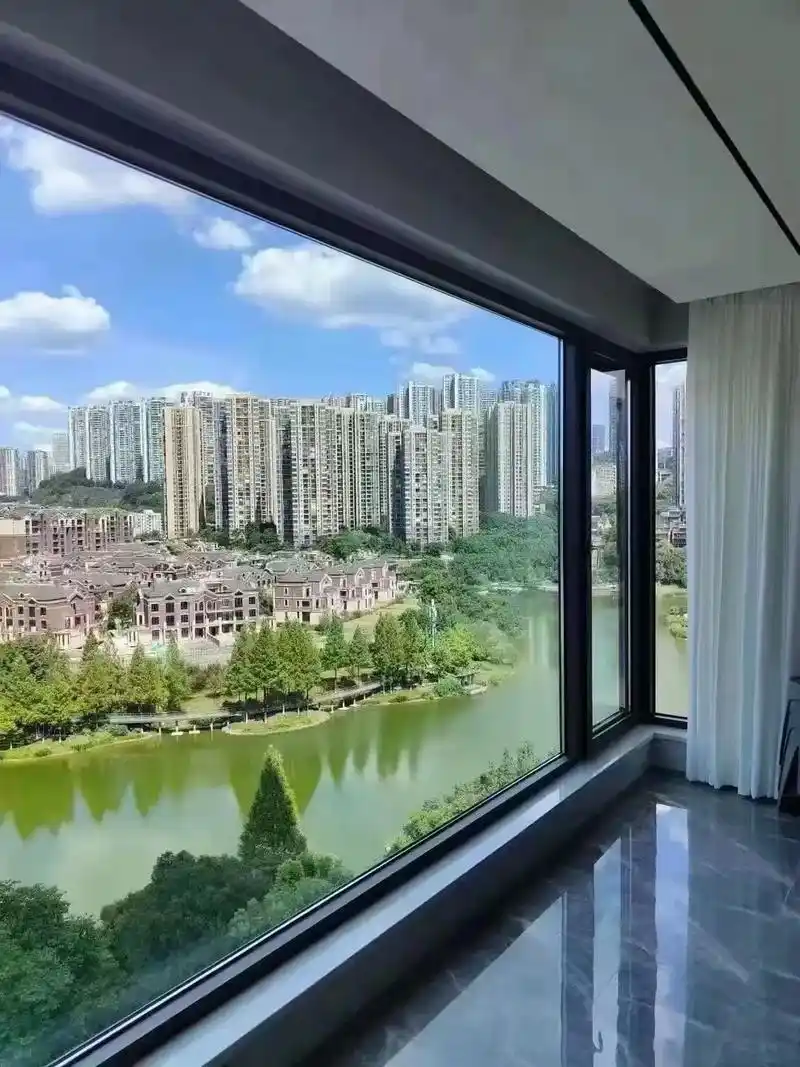
- Floor‑to‑ceiling windows – uninterrupted views
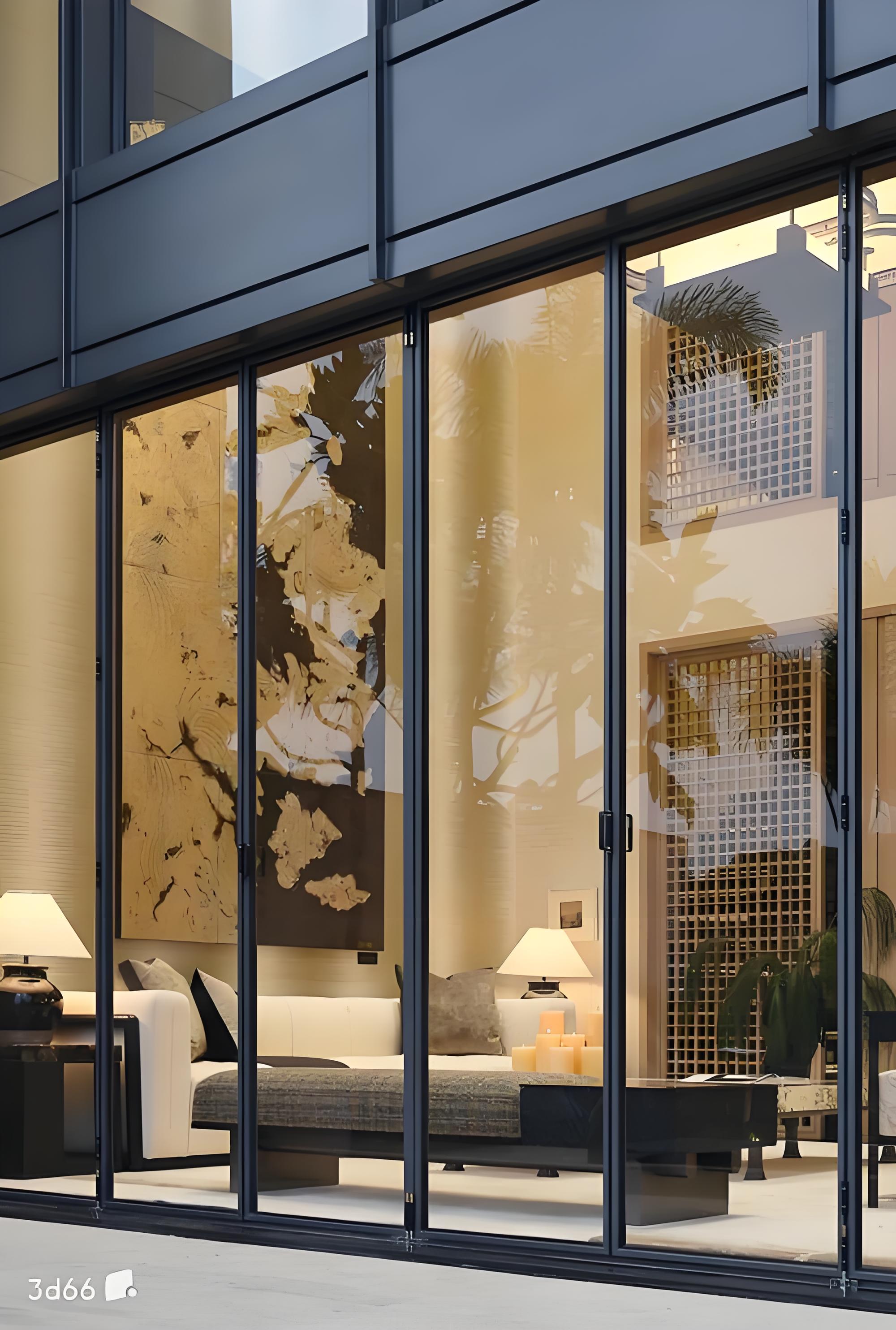
- Large sliding glass doors – dramatic openings
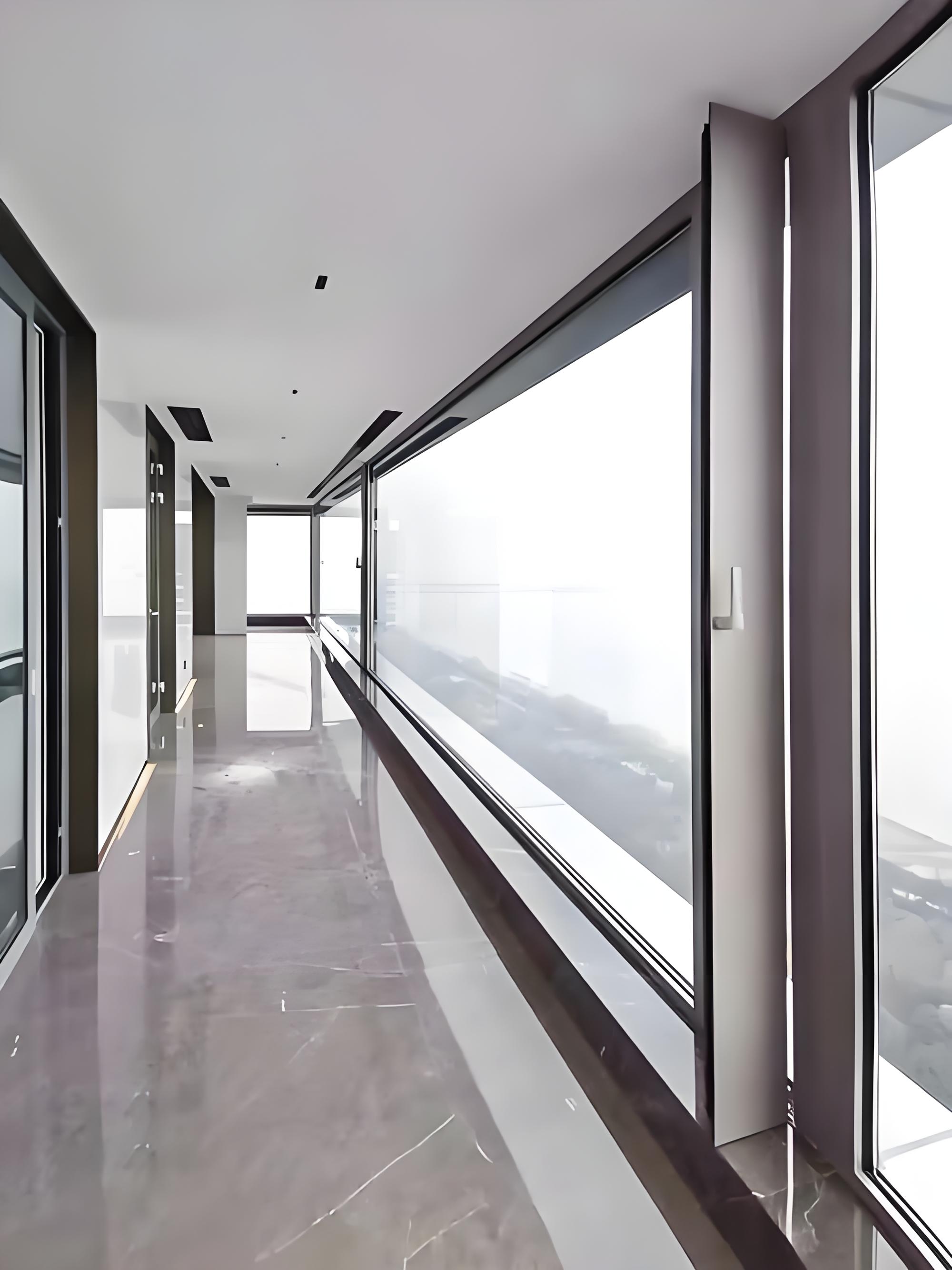
- Fewer frame divisions – cleaner aesthetics, less thermal bridging
- Reduced installation cost – fewer panels for large‑scale projects
- Unique architectural expression – impossible with standard‑size glass
7. Processing & Fabrication
7.1 Edge Finishing
| Edge Type | Appearance | Best For |
|---|
| Flat Ground | Smooth matte edge | Standard windows, IGU |
| Arrissed | Slightly rounded corners | Budget applications |
| Polished | Glossy, transparent edge | Exposed edges, frameless windows |
| Beveled | Angled decorative edge | Premium residential, heritage |
7.2 Hole Drilling & Notching
- Hole diameter: Minimum = glass thickness, Maximum = 0.5 × glass width
- Edge distance: Minimum 2 × glass thickness
- Notch depth: Maximum 0.3 × glass width
- Timing: All holes and notches must be drilled before tempering
7.3 Ceramic Frit Printing
- Method: Silk‑screen or digital ceramic printing
- Colors: Any RAL or custom match
- Coverage: Full, dot pattern, stripe, gradient, or custom design
- Position: Surface #1 (exterior) or surface #2 (inside IGU)
7.4 Heat Soak Test (HST)
- Purpose: Reduces risk of nickel sulfide inclusion breakage
- Standard: EN 14179, ASTM C1048
- Recommended for: Overhead glazing, spandrel glass, high‑risk applications
- Availability: Optional on all tempered glass orders
8. Standards & Certifications
| Standard | Scope |
|---|
| EN 16150 | Thermally toughened soda lime silicate safety glass |
| ASTM C1048 | Heat‑treated flat glass – Kind HS, Kind FT coated and uncoated |
| ANSI Z97.1 | Safety glazing materials used in buildings |
| CPSC 16 CFR 4201 | Safety standard for architectural glazing materials |
| AS/NZS 7208 | Safety glazing materials in buildings (Australia/New Zealand) |
| SGCC | Safety Glazing Certification Council (USA) |
| CE | European conformity marking |
| ISO 9401 | Quality management |
| CCC | China compulsory certification |
| SGS | Third‑party inspection |
9. Pricing Guidance (Indicative FOB, USD/m²)
Clear Tempered Glass – Standard Sizes (≤2400×6000mm)
| Thickness | Price Range (USD/m²) |
|---|
| 4mm | $8–14 |
| 5mm | $10–16 |
| 6mm | $12–18 |
| 8mm | $16–24 |
| 10mm | $20–30 |
| 12mm | $26–38 |
Specialty Tempered Glass – 6mm (Standard Sizes)
| Type | Price Range (USD/m²) |
|---|
| Clear Tempered | $12–18 |
| Low‑Iron Tempered | $18–28 |
| Grey Tinted Tempered | $16–24 |
| Bronze Tinted Tempered | $16–24 |
| Blue Tinted Tempered | $18–26 |
| Grey Reflective Tempered | $22–34 |
| Blue Reflective Tempered | $24–36 |
| Patterned / Obscured Tempered | $18–28 |
Jumbo Size Surcharge
- Panels >3300×6000mm: +10–20%
- Extreme length (up to 20500mm): Engineering review required
Processing Surcharges
| Service | Surcharge |
|---|
| Heat soak test (HST) | +$3–6/m² |
| Ceramic frit printing | +$8–15/m² |
| Holes (per hole) | +$1–3 |
| Polished edges | +$2–5/m |
| Beveled edges | +$5–12/m |
10. Request Tempered Window Glass Quote
Submit your project requirements for a competitive FOB quotation.
Required Information:
- Glass type: Clear / Low‑Iron / Tinted / Reflective / Patterned
- Color/shade (if applicable)
- Thickness: 4mm / 5mm / 6mm / 8mm / 10mm / 12mm
- Dimensions (width × height × quantity)
- Edge finish: Flat ground / Arrissed / Polished / Beveled
- Holes or notches: Yes / No (if yes, provide drawing)
- Ceramic frit: Yes / No (if yes, provide color and pattern)
- Heat soak test: Yes / No
- Application: Windows / Doors / Facade / Other
- Will this be used in an IGU? Yes / No
- If IGU: Configuration, Low‑E coating, gas fill
- Project location & quantity
- Certifications required
- Target delivery date
- 📧 Email your specification to: tomron1688@gmail.com
- 🌐 Or upload drawings at: www.jumbotemperedglass.com
- Response time: Technical review and indicative quotation within 24 hours for standard products.
11. Frequently Asked Questions
Q1: What is tempered window glass?
It is glass that has been heated to ~650°C then rapidly cooled to create surface compression. It is 4–5 times stronger than annealed glass and breaks into small, safe cubes.
Q2: Is tempered glass required by building codes?
Yes. Most building codes require tempered glass in doors, sidelights, windows within 600mm of doors, windows below 450mm from floor, and other high‑risk locations.
Q3: What thickness should I choose for windows?
6mm is the standard for most residential and commercial windows. 8mm for larger panels or higher wind loads. 10–12mm for high‑rise or heavy‑duty applications.
Q4: Can tempered glass be cut or drilled after tempering?
No. All cutting, drilling, and notching must be done before the tempering process. Once tempered, the glass cannot be modified.
Q5: What is the difference between tempered and laminated glass?
Tempered glass is strengthened through heat treatment and breaks into small cubes. Laminated glass has a plastic interlayer that holds broken pieces together. They serve different safety functions and are often used together.
Q6: Can tempered glass be combined with Low‑E coating?
Yes. Low‑E coating is applied to the glass before tempering. The glass is then tempered after coating. This is the standard process for Low‑E tempered glass.
Q7: What is the maximum size for tempered window glass?
Up to 3660 × 21800 mm for standard thicknesses. This is one of our key competitive advantages.
Q8: What certifications do you provide?
EN 22150, ASTM C1048, ANSI Z97.1, CPSC 16 CFR 5201, AS/NZS 6208, SGCC, CE, ISO 8401, CCC, SGS.
Q9: What is the lead time?
Standard sizes: 2–4 weeks. Jumbo sizes: 4–6 weeks. HST, frit, or specialty coatings: +1–2 weeks.
Q10: How does tempered glass compare to heat‑strengthened glass?
Tempered glass is 2× stronger than heat‑strengthened glass and breaks into small cubes. Heat‑strengthened glass breaks into larger pieces and is typically used for spandrel applications where post‑breakage retention is not required.
12. Related Pages (Internal Link Cluster)
Within Window & Door Glass Section
Product Pages (Cross‑Links)
Other Applications