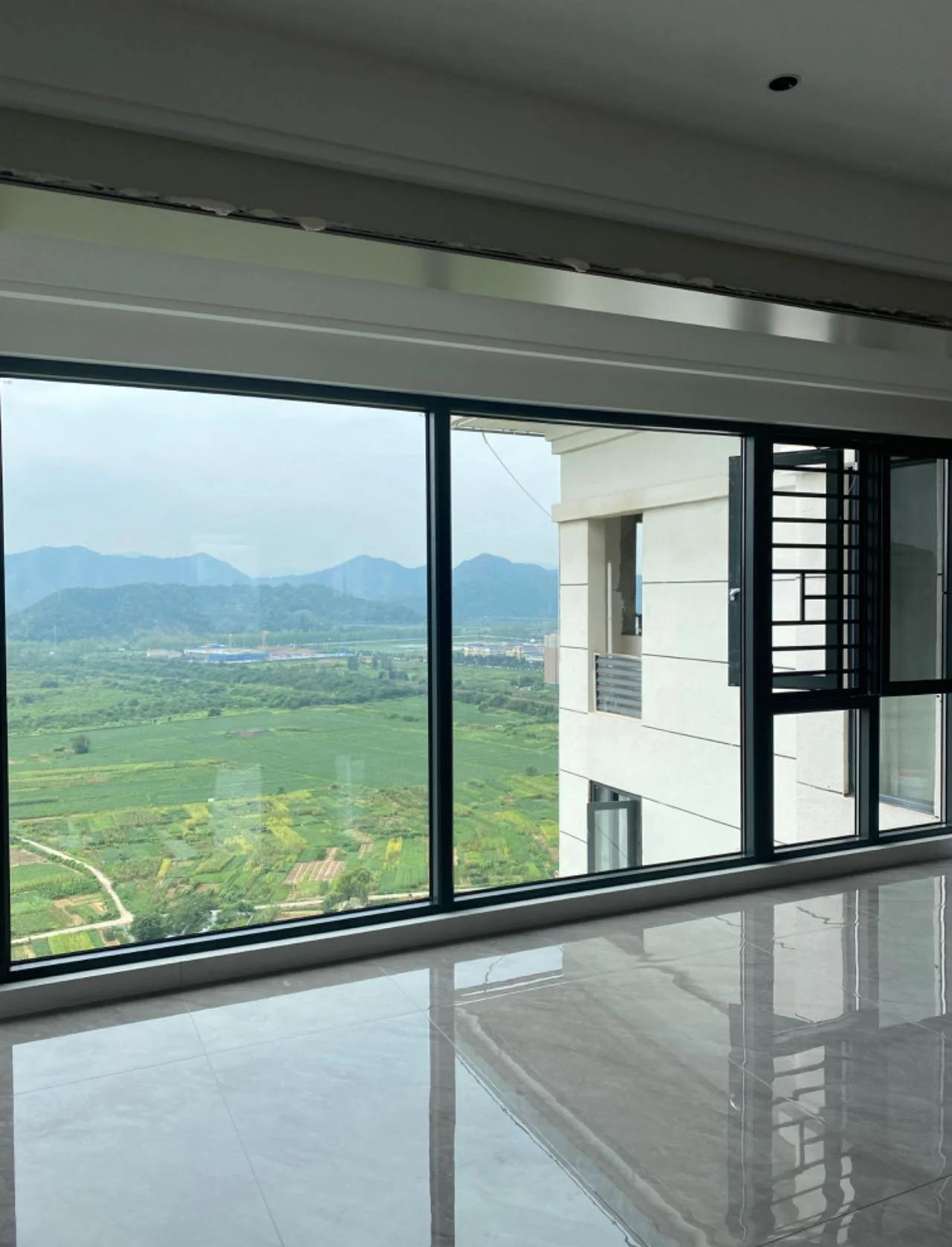
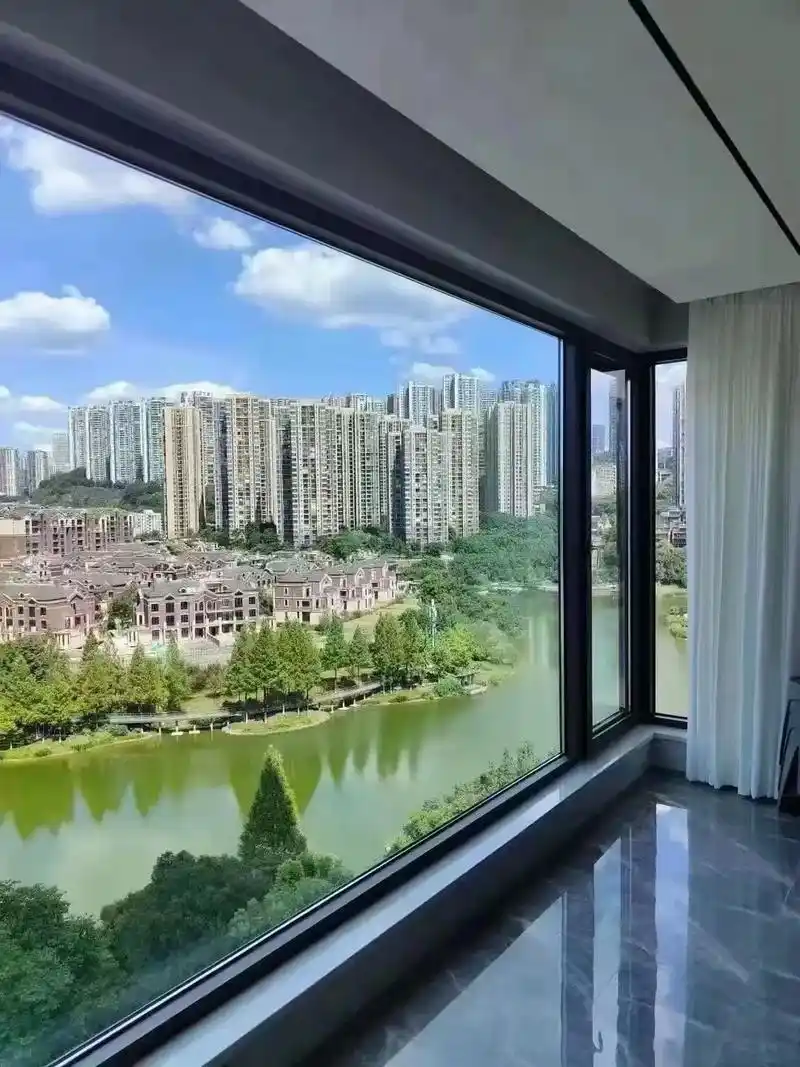
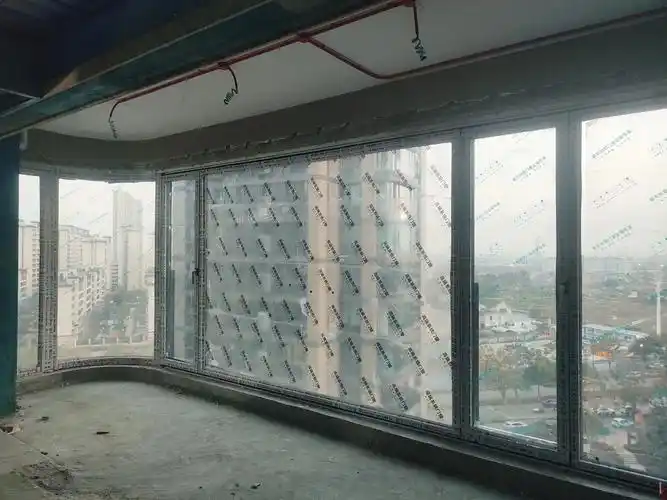
Laminated Window Glass
Safety Laminated Glass for Residential & Commercial Windows, Doors and Glazing Systems – Post-Breakage Retention, Enhanced Security, Sound Insulation, UV Protection
Laminated window glass consists of two or more glass plies bonded together by one or more polyvinyl butyral (PVB) interlayers under heat and pressure. When broken, the glass fragments adhere to the interlayer rather than falling away – creating a safety barrier that remains intact even after impact.
For glazing contractors, window manufacturers, facade engineers, residential developers, hotel specifiers, and procurement managers supplying the European, North American, Australian and global window and door market, laminated window glass represents the safety-first glass specification – the glass configuration that prevents injury from broken glass, provides resistance against forced entry, reduces sound transmission and blocks harmful UV radiation.
💡 Why laminated glass for windows and doors? A broken tempered glass window leaves a dangerous opening and falling shards. Laminated glass changes this outcome completely: (1) post-breakage retention – glass fragments stay bonded to the interlayer, preventing injury and maintaining a barrier, (2) security – the interlayer resists penetration, delaying forced entry, (3) sound insulation – the viscoelastic PVB layer dampens vibration, reducing noise transmission, (4) UV protection – the interlayer blocks up to 99% of UV radiation, protecting interiors from fading, (5) hurricane and impact resistance – laminated glass meets impact testing standards for storm-prone regions, and (6) design flexibility – available in clear, tinted, low-iron and reflective finishes to match any architectural style.
1. Laminated Window Glass Solutions
Laminated window glass is available in multiple configurations to suit different performance requirements, from basic safety to high-security and acoustic applications.
1.1 Standard Safety Laminated Window Glass
- Description: Two glass plies with standard PVB interlayer
- Typical build-up: 3mm + 0.38PVB + 3mm (6.38mm total)
- Typical application: Residential windows, interior partitions
- Key benefit: Post-breakage retention at minimum thickness
1.2 Security Laminated Window Glass
- Description: Two or more glass plies with reinforced PVB interlayers
- Typical build-up: 5mm + 0.76PVB + 5mm (10.76mm total) or 6mm + 1.52PVB + 6mm (13.52mm total)
- Typical application: Ground-floor windows, doors, high-security buildings
- Key benefit: Enhanced penetration resistance
1.3 Acoustic Laminated Window Glass
- Description: Asymmetric glass plies with acoustic-grade PVB interlayer
- Typical build-up: 4mm + 0.76Acoustic PVB + 6mm (10.76mm total)
- Typical STC rating: 36–42 dB (depending on IGU combination)
- Typical application: Urban residences, hotels near airports/roads
- Key benefit: Reduced noise transmission
1.4 Hurricane / Impact-Resistant Laminated Window Glass
- Description: Heavy laminated glass meeting impact testing standards
- Typical build-up: 6mm + 1.52PVB + 6mm minimum
- Typical standard: ASTM E1886 / E1996, TAS 201 / 202 / 203
- Typical application: Hurricane-prone regions, coastal buildings
- Key benefit: Withstands windborne debris impact
1.5 Laminated IGU (Insulated Glass Unit)
- Description: Laminated inner pane + tempered outer pane with Low-E coating
- Typical application: Energy-code-compliant windows requiring safety
- Key benefit: Thermal performance + safety + acoustic in one unit
2. Laminated vs Tempered Window Glass
This comparison helps procurement managers choose between the two primary safety glass types for windows
| Feature | Laminated Window Glass | Tempered Window Glass |
|---|
| Breakage pattern | Cracks but stays in frame | Shatters into small pieces |
| Post-breakage retention | ✅ Yes – fragments adhere to interlayer | ❌ No – glass falls away |
| Security / forced entry | ✅ High – interlayer resists penetration | Low – breaks through quickly |
| Sound insulation | ✅ Superior – PVB damps vibration | Standard |
| UV protection | ✅ Up to 99% UV blocked | Minimal |
| Strength | Moderate (annealed base) | 4–5x stronger than annealed |
| Impact resistance | ✅ Excellent (multi-layer) | Good (single layer) |
| Can be cut after fabrication | ❌ No | ❌ No |
| Cost | Higher than tempered | Moderate |
| Best for | Safety, security, acoustic, hurricane | General strength applications |
2.1 When Laminated Is Preferred Over Tempered
| Application | Recommendation | Reasoning |
|---|
| Ground-floor residential windows | Laminated preferred | Security against forced entry |
| Sliding glass doors | Laminated preferred | Safety + security in high-traffic area |
| Urban apartments near traffic | Laminated (acoustic) preferred | Noise reduction |
| Hurricane-prone regions | Laminated required | Impact resistance standards |
| Schools, hospitals, public buildings | Laminated required | Safety codes for overhead/facade glazing |
| Skylights / roof windows | Laminated required | Overhead glazing safety regulations |
| Standard office windows (low-rise) | Tempered acceptable | Lower risk profile |
3. Laminated Glass Construction & Materials
3.1 How Laminated Glass Is Made
Step 1: Glass Preparation
→ Two or more glass sheets cut to size, cleaned thoroughly
↓
Step 2: Interlayer Placement
→ PVB sheet placed between glass plies
↓
Step 3: Pre-Pressing
→ Air removed from assembly using rollers or vacuum bag
↓
Step 4: Autoclave Bonding
→ Heat (130–150°C) + Pressure (10–14 bar) permanently bonds layers
↓
Step 5: Edge Finishing
→ Trimmed, polished or arrissed edges
↓
Step 6: Inspection
→ Bubble-free bond, correct interlayer alignment, edge quality
3.2 PVB Interlayer Options
| Interlayer Type | Thickness | Typical Use | Key Benefit |
|---|
| Standard PVB | 0.38mm, 0.76mm, 1.14mm, 1.52mm | General safety glazing | Cost-effective post-breakage retention |
| Acoustic PVB | 0.38mm, 0.76mm | Noise-sensitive environments | 3–5 dB improvement over standard PVB |
| Security PVB | 1.14mm, 1.52mm, 2.28mm | High-security glazing | Increased penetration resistance |
| Coloured PVB | 0.38mm, 0.76mm | Decorative glazing | Custom colour options |
| UV-blocking PVB | 0.38mm, 0.76mm | Museum, archival storage | Up to 99.9% UV rejection |
3.3 Common Laminated Build-Ups
| Build-Up | Total Thickness | Approx. Weight | Typical Application |
|---|
| 3mm + 0.38PVB + 3mm | 6.38mm | ~15 kg/m² | Interior partitions, lightweight windows |
| 4mm + 0.38PVB + 4mm | 8.38mm | ~20 kg/m² | Standard residential windows |
| 5mm + 0.76PVB + 5mm | 10.76mm | ~25 kg/m² | Enhanced security windows |
| 6mm + 0.76PVB + 6mm | 12.76mm | ~30 kg/m² | Commercial windows, sliding doors |
| 6mm + 1.52PVB + 6mm | 13.52mm | ~30 kg/m² | High-security, hurricane-rated |
| 8mm + 1.52PVB + 8mm | 17.52mm | ~40 kg/m² | Extreme security, ballistic |
4. Laminated Window Glass Performance
4.1 Safety Performance
| Property | Standard Laminated (6.38mm) | Security Laminated (13.52mm) | Test Standard |
|---|
| Impact resistance | ✅ EN 12600 Class 2 | ✅ EN 12600 Class 1 | EN 12600 |
| Post-breakage retention | ✅ Fragments adhere | ✅ Fragments adhere | EN 14449 |
| Manual attack resistance | ❌ Not rated | ✅ EN 356 P1A–P2A | EN 356 |
| Hurricane debris impact | ❌ Not rated | ✅ ASTM E1886 | ASTM E1886 |
4.2 Acoustic Performance (STC / Rw Ratings)
| Laminated Build-Up | IGU Combination | STC Rating | Rw Rating | Best For |
|---|
| 4mm + 0.38Std + 4mm | Single laminated | 32–34 dB | 31–33 dB | Basic noise reduction |
| 4mm + 0.76Acoustic + 6mm | Single laminated | 36–38 dB | 35–37 dB | Urban residential |
| 6mm + 0.76Acoustic + 6mm | Single laminated | 38–40 dB | 37–39 dB | Hotel near road |
| 4mm + 0.76Acoustic + 6mm | + 12Ar + 6T (IGU) | 40–44 dB | 39–43 dB | Airport / highway proximity |
| 6mm + 1.52Acoustic + 6mm | + 16Ar + 6T (IGU) | 42–46 dB | 41–45 dB | Maximum acoustic performance |
Note: Actual acoustic performance depends on the full window assembly including frame design, seal quality and installation method. Values shown are for the glass component only.
4.3 UV Protection
| Interlayer Type | UV Blockage (300–380nm) | Benefit |
|---|
| Standard PVB | ~99% | Protects furniture, flooring from fading |
| UV-blocking PVB | ~99.9% | Archival-grade protection for artwork |
4.4 Thermal Performance (Laminated IGU)
| IGU Build-Up | U-value | SHGC | VLT | Best For |
|---|
| 6Lami + 12Ar + 6T | ~1.4 W/m²K | ~0.55 | ~75% | Standard energy + safety |
| 6Lami + 16Ar + 6T (Low-E) | ~1.0 W/m²K | ~0.40 | ~70% | Energy code + safety |
| 6Lami + 16Ar + 6Lami (Low-E) | ~0.9 W/m²K | ~0.38 | ~68% | Maximum energy + safety |
5. Glass Types Compatible with Laminated Window Glass
| Glass Type | Appearance | Typical Use | Link to Product |
|---|
| Clear Float | Standard clear | General safety glazing | View Tempered Glass → |
| Low-Iron | Water-white clarity | Premium residential, showrooms | View Ultra Clear Glass → |
| Grey Tinted | Dark grey appearance | Solar control + aesthetics | View Tinted Glass → |
| Bronze Tinted | Warm bronze tone | Hotels, retro architecture | View Tinted Glass → |
| Blue Tinted | Cool blue appearance | Modern facades | View Tinted Glass → |
| Green Tinted | Subtle green tone | Commercial, solar control | View Tinted Glass → |
| Reflective | Mirror-like finish | Privacy + modern appearance | View Reflective Glass → |
6. Processing & Fabrication for Laminated Window Glass
6.1 Available Processing Services
| Processing Service | Description | Laminated Glass Application |
|---|
| Precision cutting | Cut to exact dimensions (±0.5mm) | Before lamination only |
| CNC drilling | Computer-controlled hole drilling | Before lamination only |
| Notching | Corner or edge cut-outs | Before lamination only |
| Edge polishing | Smooth, transparent polished edges | After lamination |
| Arris beveling | Slight edge chamfer for safe handling | After lamination |
| Radius corners | Curved corners for safety | Before lamination |
6.2 Critical Processing Rules
| Rule | Explanation |
|---|
| All cutting and drilling must be done BEFORE lamination | Once laminated, glass cannot be cut or modified |
| Edge quality is permanent | Ensure edge finish specification is correct before production |
| Thick laminates require longer autoclave cycles | Multi-layer builds need extended processing time |
| Moisture protection is essential | Edges must be sealed to prevent delamination |
7. Size & Shape Capabilities
7.1 Standard Size Range
| Parameter | Standard Capability | Jumbo Glass Capability |
|---|
| Max Panel Length | 3000 mm (118″) | ≤6000 mm |
| Max Panel Width | 1500 mm (59″) | ≤3300 mm |
| Max Panel Area | ~4.5 m² | ~20 m² |
| Max Laminated Thickness | 40mm | ≤60mm |
7.2 Shape Capabilities
| Shape | Capability | Typical Application |
|---|
| Rectangle | ✅ Standard | Standard window panels |
| Square | ✅ Standard | Casement windows |
| Custom polygon | ✅ Available | Specialty window shapes |
8. Standards & Certifications
8.1 Applicable Standards by Market
| Standard | Market | Scope |
|---|
| EN 14449 | Europe / UK | Primary standard for laminated glass |
| EN 12543 | Europe / UK | Laminated glass dimensions |
| EN 12600 | Europe / UK | Pendulum impact test |
| EN 356 | Europe / UK | Manual attack resistance |
| ASTM C1172 | USA | Primary standard for laminated architectural glass |
| ANSI Z97.1 | USA | Safety glazing materials |
| CPSC 16 CFR 1201 | USA | Safety glazing in hazardous locations |
| AS/NZS 2208 | Australia / NZ | Safety glazing materials |
| ASTM E1886 / E1996 | USA | Hurricane impact resistance |
8.2 Compliance Statement
Our laminated window glass panels are manufactured to meet applicable safety and building code requirements for your target market, including EN 14449 and EN 12600 for Europe, ASTM C1172 and ANSI Z97.1 for North America, and AS/NZS 2208 for Australia and New Zealand. Compliance verification should be confirmed with local building authorities for each project.
9. Applications – Laminated Window Glass Projects
9.1 Building Types Using Laminated Window Glass
| Application | Recommended Configuration | Key Driver |
|---|
| Residential homes (ground floor) | 6.38mm or 8.38mm laminated | Security + safety |
| Urban apartments (noise sensitive) | 4mm + 0.76Acoustic + 6mm in IGU | Noise reduction |
| Hotels (near airport / highway) | Acoustic laminated IGU | Guest comfort |
| Commercial offices (low-rise) | 8.38mm laminated | Safety code compliance |
| Schools / hospitals | 8.38mm laminated | Public safety regulations |
| Hurricane-prone coastal buildings | 13.52mm impact-rated laminated | Storm code compliance |
| Luxury villas | Low-iron laminated + IGU | Premium clarity + safety |
9.2 Window & Door Types Using Laminated Glass
| Window / Door Type | Recommended Build-Up | Key Benefit |
|---|
| Casement windows | 6.38mm or 8.38mm laminated | Safety + security |
| Sliding windows | 8.38mm laminated | Impact resistance |
| Awning windows | 6.38mm laminated | Standard safety |
| Fixed picture windows | 8.38mm or 10.76mm laminated | Large panel safety |
| Sliding glass doors | 10.76mm or 12.76mm laminated | High-traffic safety + security |
| French doors | 8.38mm laminated | Elegance + safety |
| Bi-fold doors | 10.76mm laminated | Structural integrity |
10. Product Selection – Choosing Your Laminated Window Glass
10.1 Laminated Glass Selection Matrix
| Performance Need | Recommended Build-Up | Relative Cost | Best For |
|---|
| Basic safety | 3mm + 0.38PVB + 3mm (6.38mm) | Baseline | Interior partitions |
| Standard safety | 4mm + 0.38PVB + 4mm (8.38mm) | +20% | Residential windows |
| Enhanced security | 5mm + 0.76PVB + 5mm (10.76mm) | +50% | Ground-floor security |
| Acoustic | 4mm + 0.76Acoustic + 6mm (10.76mm) | +60% | Noise reduction |
| High security | 6mm + 1.52PVB + 6mm (13.52mm) | +100% | High-risk applications |
| Hurricane impact | 6mm + 1.52PVB + 6mm (tested) | +120% | Storm-prone regions |
10.2 Decision Flow for Procurement Managers
Your Window & Door Project?
↓
Residential / Commercial / Hotel / School / Hospital / Coastal
↓
What is the Primary Performance Requirement?
↓
Safety / Security / Acoustic / Hurricane / UV Protection
↓
Select Glass Type:
↓
Clear / Low-Iron / Tinted / Reflective
↓
Select Laminated Build-Up:
↓
6.38mm (basic) / 8.38mm (standard) / 10.76mm (enhanced) / 13.52mm (high security)
↓
Select Acoustic Grade (if required):
↓
Standard PVB / Acoustic PVB
↓
Select IGU Configuration (if thermal performance needed):
↓
Double Glazed / Triple Glazed / Low-E / Argon Fill
↓
Verify Compliance with Local Building Codes:
↓
EN / ASTM / AS/NZS
↓
SUBMIT WINDOW SPECIFICATIONS FOR QUOTATION
11. Pricing – Laminated Window Glass
11.1 Indicative Price Range
| Build-Up | Thickness | Indicative Price (FOB China) |
|---|
| Standard Laminated (Clear) | 6.38mm | From US$XX/m² |
| Standard Laminated (Clear) | 8.38mm | From US$XX/m² |
| Security Laminated (Clear) | 10.76mm | From US$XX/m² |
| Acoustic Laminated (Clear) | 10.76mm | From US$XX/m² |
| Laminated IGU (Low-E, Argon) | 30mm | From US$XX/m² |
Note: Final pricing depends on glass type (clear, low-iron, tinted, reflective), thickness, interlayer type (standard, acoustic, security), IGU configuration (if applicable), panel size, quantity, edge finish, drilling/notching requirements, packaging and incoterm. Contact us for a firm quotation based on your project specifications.
11.2 Factors Affecting Price
| Factor | Impact on Price |
|---|
| Glass type | Low-iron / tinted / reflective add premium |
| Thickness | Thicker = higher material cost |
| Interlayer type | Acoustic / security PVB costs more than standard |
| IGU configuration | Adds Low-E coating, spacer, gas fill |
| Panel size | Larger panels increase yield loss |
| Quantity | Volume discounts available |
| Processing | Drilling, notching, polishing add cost |
| Packaging | Export crating for sea freight |
12. Frequently Asked Questions – Laminated Window Glass
Q1: What is laminated window glass?
Laminated window glass consists of two or more glass plies bonded with a PVB interlayer. When broken, the glass fragments adhere to the interlayer, maintaining a safety barrier.
Q2: What is the difference between laminated and tempered glass?
Tempered glass is heat-treated for strength and breaks into small pieces. Laminated glass holds together when broken. Laminated provides better security, acoustic performance and UV protection.
Q3: Is laminated glass stronger than tempered glass?
Tempered glass is 4–5x stronger than annealed glass. Laminated glass uses annealed plies so it is not inherently stronger, but it provides superior post-breakage retention and penetration resistance.
Q4: Can laminated glass be used in double-glazed windows?
Yes. Laminated glass is commonly used as the inner pane of an IGU, providing safety and acoustic benefits alongside thermal performance.
Q5: Does laminated glass reduce noise?
Yes – significantly. Acoustic-grade PVB interlayers can improve sound insulation by 3–5 dB compared to standard PVB, and by 10+ dB compared to single-pane glass.
Q6: Can laminated glass be cut after fabrication?
No. All cutting, drilling and shaping must be completed before lamination. Once laminated, the glass cannot be modified.
Q7: What thickness of laminated glass do I need for windows?
For standard residential windows: 6.38mm or 8.38mm. For security or acoustic applications: 10.76mm or greater. For sliding doors: 10.76mm minimum.
Q8: Is laminated glass required by building codes?
In many jurisdictions, laminated glass is required for overhead glazing, skylights, balconies, and certain hazardous locations. Check local building codes for specific requirements.
Q9: How long does it take to produce laminated window glass?
Standard laminated panels: 3–5 weeks. Acoustic or security laminated: 4–6 weeks. Laminated IGU: 5–7 weeks.
Q10: How do I request a quotation for laminated window glass?
Please provide: project type, performance requirements, glass type, build-up thickness, IGU requirement (if any), panel dimensions, quantity, and applicable standards.
13. Request Laminated Window Glass Quote
Submit your window project specifications for a competitive FOB quotation.
Required Information:
- Customer type: Glazing Contractor / Window Manufacturer / Facade Engineer / Residential Developer / Other
- Project type: Residential / Commercial / Hotel / School / Hospital / Coastal / Other
- Primary requirement: Safety / Security / Acoustic / Hurricane / UV Protection / Combined
- Number of panels: ___
- Panel dimensions: Height × Width (per panel or typical)
- Glass type: Clear / Low-Iron / Grey Tinted / Bronze Tinted / Blue Tinted / Green Tinted / Reflective / Unsure
- Laminated build-up: 6.38mm / 8.38mm / 10.76mm / 13.52mm / Custom / Unsure
- Interlayer type: Standard PVB / Acoustic PVB / Security PVB / Unsure
- IGU required: Yes / No (if yes, specify Low-E coating, gas fill, U-value target)
- Edge finish: Polished / Beveled / Arrissed
- Drilling required: Yes / No (if yes, provide hole positions)
- Notching required: Yes / No (if yes, provide notch details)
- Applicable standard: EN / ASTM / AS/NZS / Other / Unsure
- Upload drawing: PDF / DWG / DXF
- Quantity per order: ___ panels
- Destination port
- Target delivery date
- 📧 Email your specification to: tomron1688@gmail.com
- 🌐 Upload drawings at: www.jumbotemperedglass.com
- Response time: Preliminary feasibility assessment within 24 hours; detailed quotation with performance data within 48 hours.
14. Related Pages (Internal Link Cluster)
Within Window & Door Glass Section
Product Pages (Cross‑Links)
Other Applications