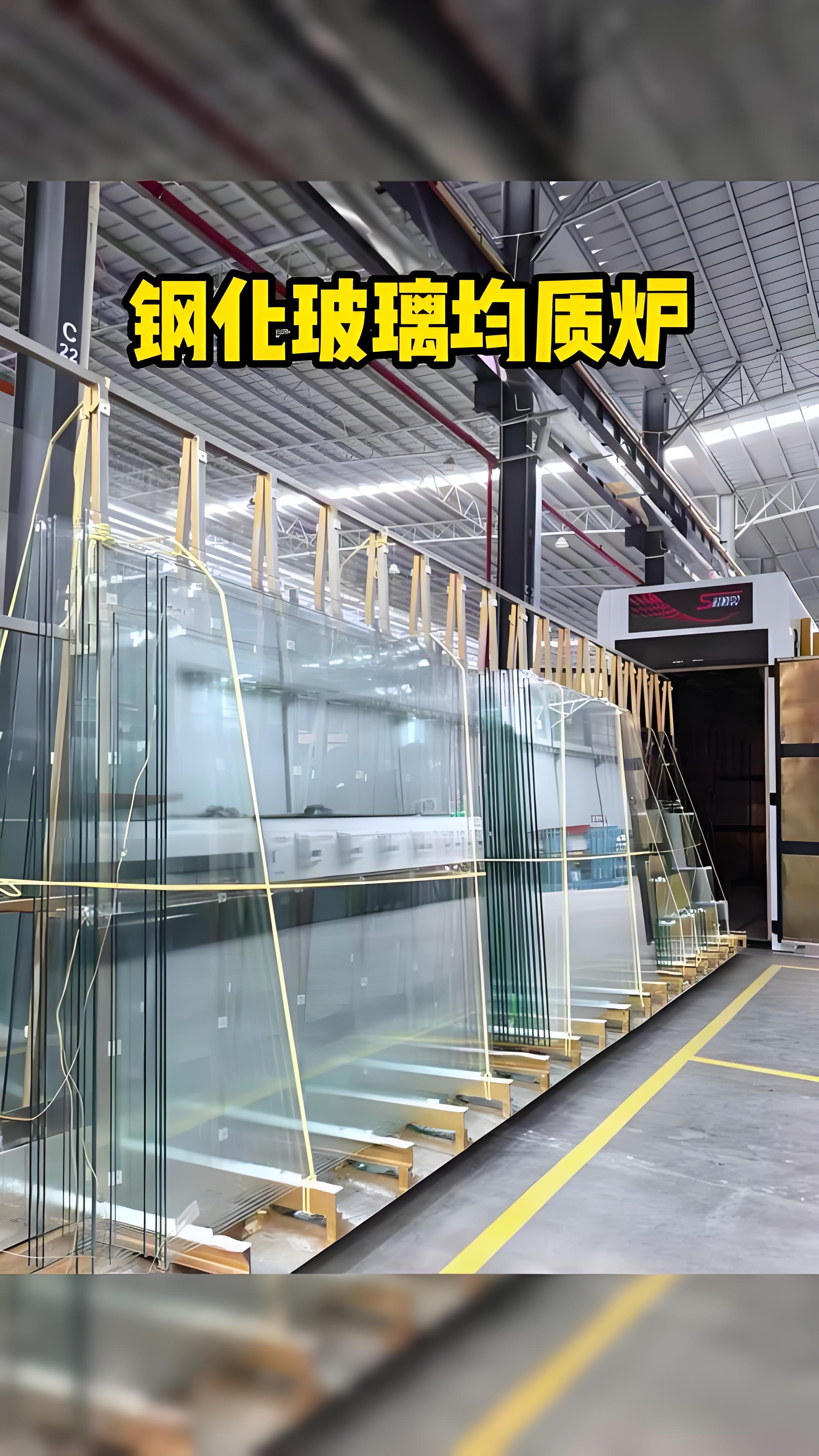
Heat Soaked Glass – Spontaneous Breakage Rate < 0.1%
Engineered Reliability for High‑Rise Facades, Skylights & Public Buildings
Spontaneous Breakage Rate < 0.1% — The Reliability Upgrade for Architectural Tempered Glass
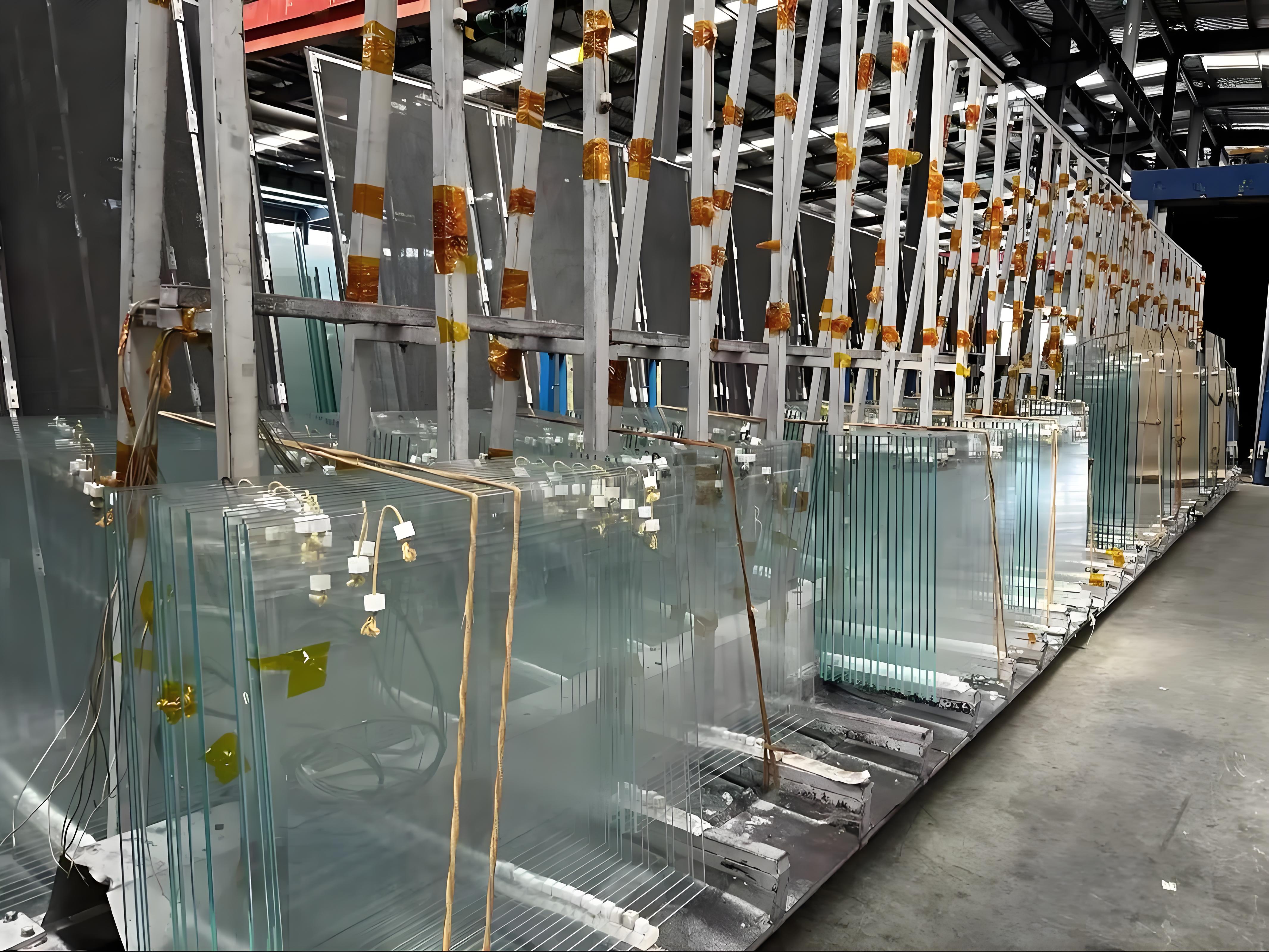
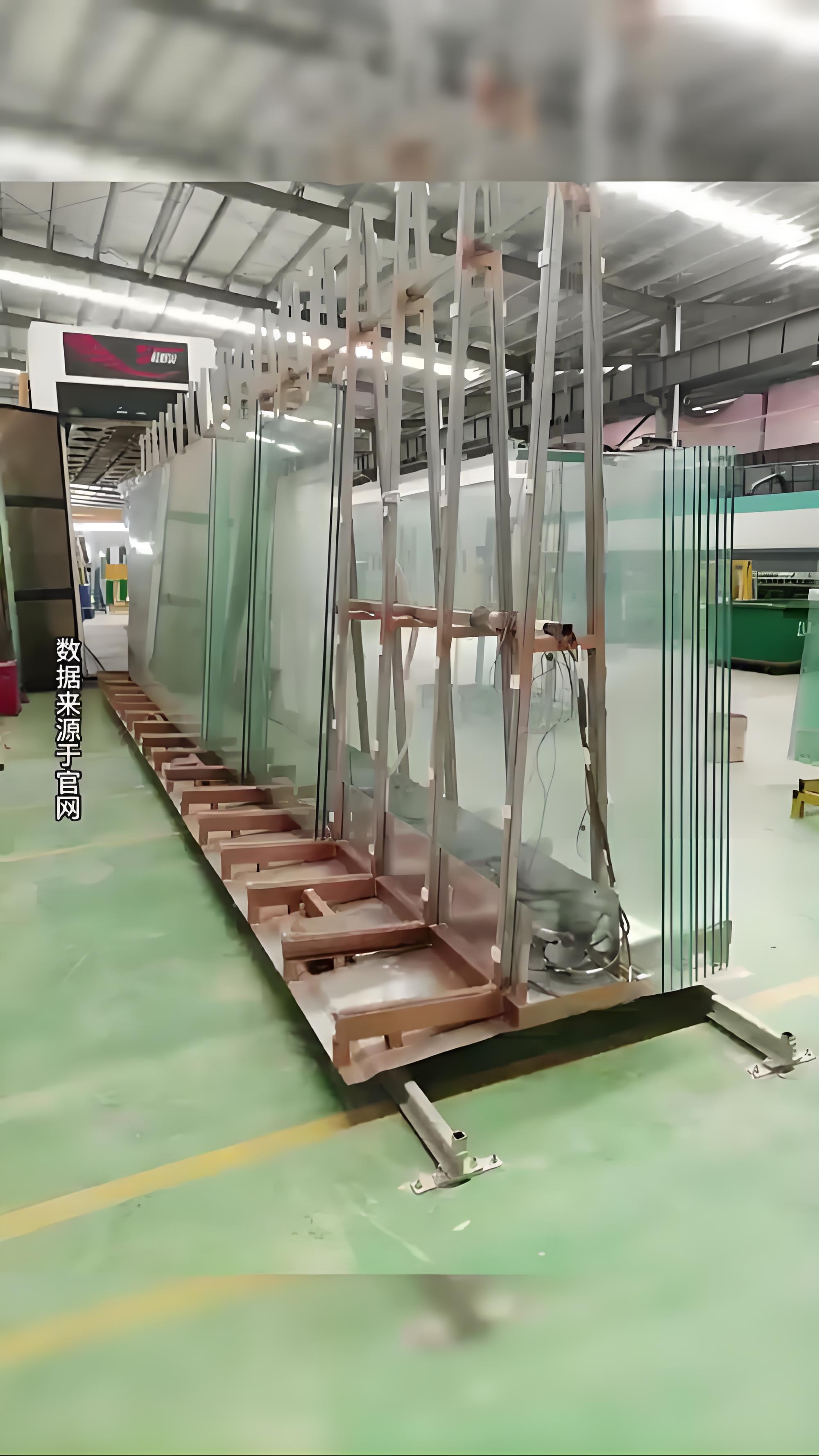
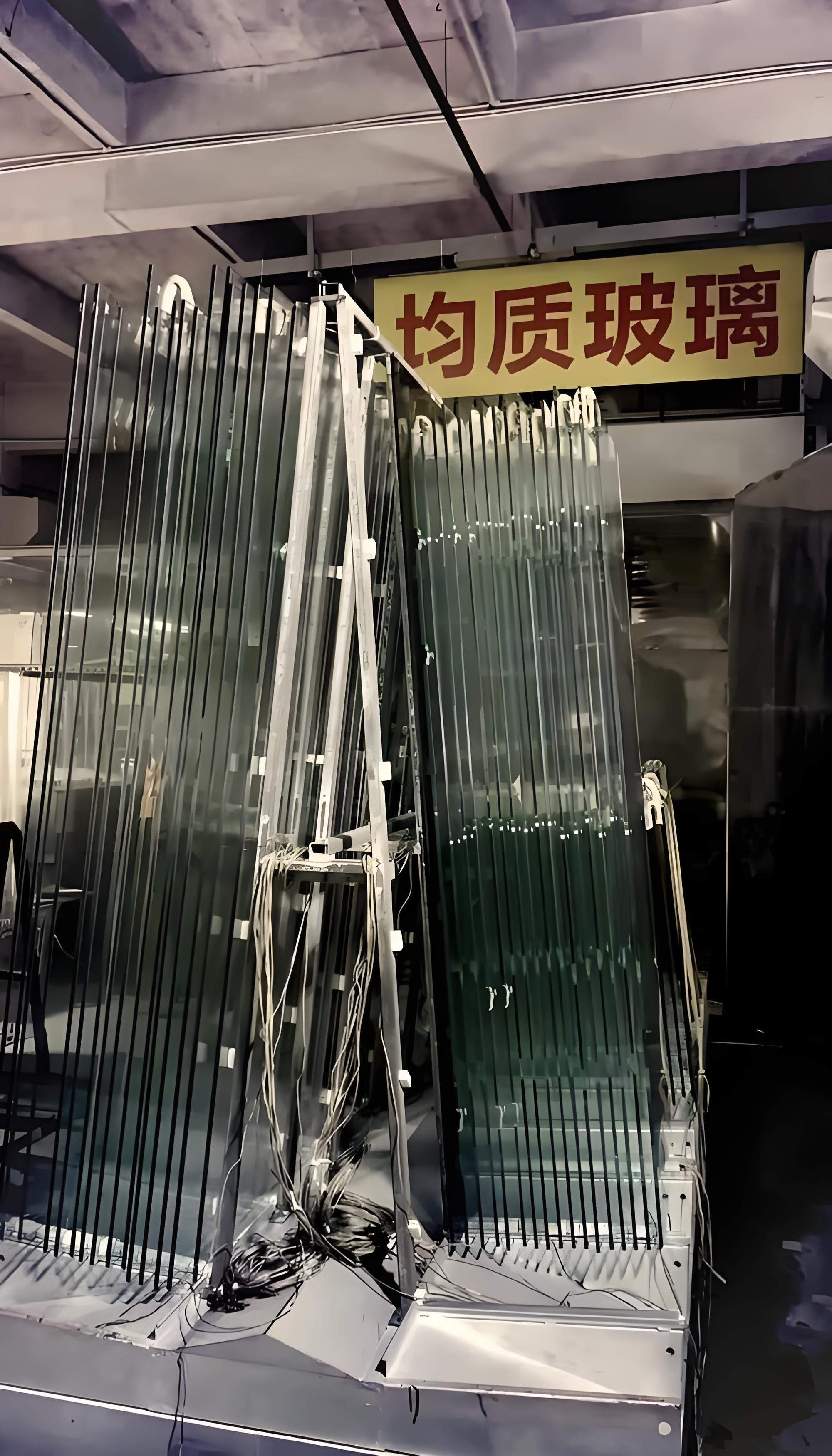
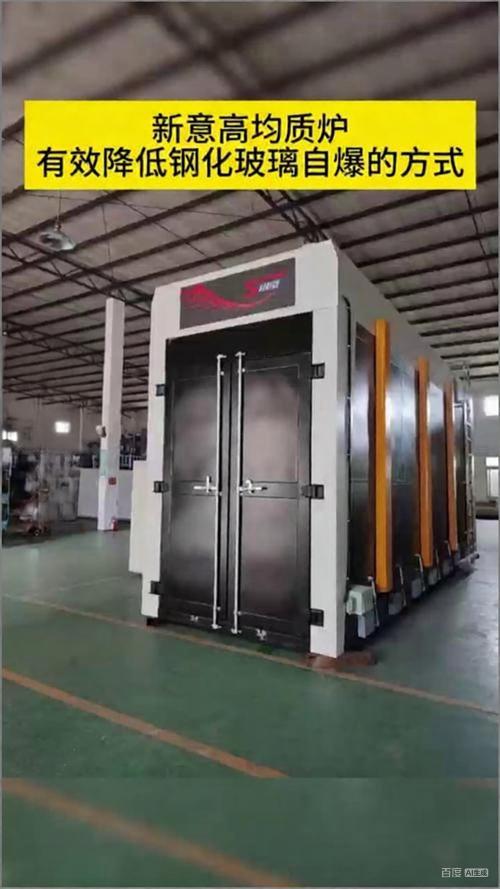
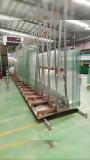
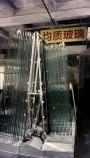
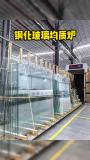
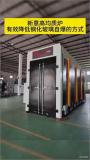
Heat soaked glass (also referred to as HST glass or heat‑soak‑tested tempered glass) is fully tempered glass that has undergone an additional thermal conditioning cycle after tempering. The panels are placed in a heat‑soak oven, gradually heated to approximately 280–300°C, held at temperature for at least 2 hours, and then slowly cooled. During this process, tempered glass containing unstable nickel sulfide (NiS) inclusions will break inside the oven rather than months or years later on the building façade.
For architects, façade contractors, and building owners, the consequence is decisive: the spontaneous breakage rate is reduced to less than 0.1% — roughly one tenth of the risk associated with standard tempered glass. For projects where replacing a glass panel means closing a high‑rise floor, dismantling a curtain wall, or cordoning off a public space, heat soaking transforms an unpredictable liability into a controlled, documented process.
| Key Specification | Value |
|---|
| Glass Type | Fully tempered + heat soak tested (HST) |
| Thickness Range | 5mm – 25mm |
| Maximum Size | 3300 × 20000 mm (flat) |
| Heat Soak Process | Per EN 14179: heat to ~280–300°C, hold ≥ 2 hours |
| Residual Spontaneous Breakage | < 0.1% (target; EN 14179 limit ≈ 1 break per 400 tons) |
| Surface Compressive Stress | ≥ 95 MPa (tempered property retained) |
| Applicable Standards | EN 14179, EN 12150, ASTM C1048, AS/NZS 2208, CCC |
| Quality System | ISO 9001 |
| HST Documentation | Batch‑level heat‑soak records available per project |
| MOQ | 100 m² |
| Lead Time | 15–25 days (incl. heat soak cycle) |
Why Heat Soaking Matters — The Nickel Sulfide Problem
Tempered glass derives its strength from a surface compressive stress layer. However, microscopic nickel sulfide (NiS) particles — inevitable trace impurities in float glass — can become trapped in an unstable α‑phase during tempering. At ambient building temperatures, these particles slowly convert to the β‑phase, expanding by ~4% and generating internal stress. When that stress exceeds the glass strength, the panel shatters spontaneously, with no external trigger.
Industry data shows that untreated tempered glass carries a typical spontaneous breakage rate of 0.1%–0.3%. Heat soaking accelerates the NiS phase transformation under controlled conditions: defective panels fail in the oven, and only "clean" panels ship to site.
💡 Key fact for specifiers: Heat soaking does not make the glass stronger — it makes the population of installed glass reliable. The tempering strength (4–5× annealed) is unchanged; the uncertainty is removed.
How Heat Soaked Glass Compares
| Property | Standard Tempered | Heat Soaked Glass (HST) |
|---|
| Manufacturing steps | Cut → Edge → Temper | Cut → Edge → Temper → Heat Soak |
| Spontaneous breakage rate | 0.1% – 0.3% | < 0.1% (typical 0.01%–0.03% in practice) |
| Mechanical strength | 4–5× annealed | 4–5× annealed (unchanged) |
| Fragmentation safety | Granular | Granular (unchanged) |
| Process time | Baseline | +24–48 hours for heat soak cycle |
| Cost premium | – | Moderate (see pricing) |
| Best for | General applications | High‑rise façades, skylights, public buildings |
| EN 14179 compliance | No | Yes |
Applications — Where Heat Soaking Is Non‑Negotiable
High‑Rise Curtain Walls & Building Façades
On towers above 8–10 floors, replacing a spontaneously broken panel requires suspended scaffolding or rope access, often costing thousands of dollars per panel. Specifying HST glass reduces this risk to < 0.1%, protecting both budget and reputation.
Skylights, Atria & Overhead Glazing
Overhead glass failure is a direct safety hazard. Heat soaked tempered glass — often further laminated — is the default specification for skylights in airports, shopping malls, and hotel atriums.
Public Buildings & Transit Hubs
Airports, train stations, stadiums, and government buildings carry high foot traffic and high liability exposure. HST glass is routinely mandated by project consultants for these applications.
Large‑Format & Jumbo Panels
The larger the panel, the higher the absolute risk. For jumbo panels up to 3300 × 20000 mm, heat soaking is strongly recommended — a single failure on a 60 m² panel is both spectacular and expensive.
Glass Floors, Stairs & Balustrades
Where glass carries live loads and human safety depends on integrity, HST (usually combined with lamination) provides the reliability baseline.
Spandrel & Structural Glazing
Structural silicone‑glazed assemblies leave no margin for replacement. HST glass minimizes the risk of a panel blowing out years after installation.
Coastal & Hurricane‑Zone Façades
Combined with laminated construction, HST glass forms the backbone of hurricane‑resistant curtain walls.
Technical Specifications
| Parameter | Specification |
|---|
| Glass Substrate | Clear, Low‑Iron, Tinted (bronze/grey/blue/green), Coated |
| Thickness | 5mm, 6mm, 8mm, 10mm, 12mm, 15mm, 19mm, 22mm, 25mm |
| Maximum Size (flat) | 3300 × 20000 mm |
| Minimum Size | 300 × 300 mm |
| Surface Compressive Stress | ≥ 95 MPa (per EN 12150) |
| Fragmentation | ≥ 40 fragments in 50×50 mm (per EN 12150) |
| Heat Soak Temperature | 280–300°C (process per EN 14179) |
| Holding Time | ≥ 2 hours at peak temperature |
| Residual Breakage Rate | < 0.1% (EN 14179 limit: 1 break per 400 tons) |
| Light Transmittance (clear 12mm) | ≥ 90% |
| Solar Heat Gain (coated options) | SHGC 0.23–0.45 available |
| Edgework | Flat polish, pencil edge, beveled, seamed |
| Further Processing | Lamination, IGU, Low‑E coating, ceramic frit, digital printing |
| Standards | EN 14179, EN 12150, ASTM C1048, AS/NZS 2208, CCC, ISO 9001 |
| HST Documentation | Batch‑level temperature‑time charts & QC reports |
Manufacturing & Quality Control
Every heat soaked glass panel from JUMBO Glass Group passes through a documented, auditable process:
- Raw glass inspection — substrate verified for optical quality and iron content
- Precision cutting & edgework — CNC processing to ±0.1 mm, edge stress controlled
- Tempering — Grenzebach furnace, surface stress ≥ 95 MPa
- Heat soak test — panels loaded into HST oven, heated to 280–300°C, held ≥ 2 hours, monitored with calibrated thermocouples
- Post‑HST inspection — visual check, flatness scan, fragmentation test on sample basis
- Documentation — batch‑level heat‑soak temperature‑time records prepared for project submission
- Packing — export‑grade plywood crates with shock‑absorbing spacers
📌 HST records and QC documentation can be provided per production batch to support project certification and owner acceptance.
Why Choose JUMBO Glass Group for Heat Soaked Glass?
- 25 years of architectural glass manufacturing since 2000
- In‑house HST furnace — heat soaking is not outsourced, ensuring process control and schedule reliability
- Jumbo capability — heat soaked panels up to 3300 × 20000 mm, the largest flat tempered format in the industry
- Full thickness range — 5mm through 25mm, including low‑iron for ultra‑clear façades
- Composite ready — HST glass can be further laminated (PVB/SGP) or assembled into insulated units
- Standards compliance — EN 14179, EN 12150, ASTM C1048, AS/NZS 2208, CCC, ISO 9001
- Batch documentation — HST temperature‑time records available per project requirement
- Global track record — supplied to 100+ countries, 5000+ projects worldwide
- Dual silver / triple silver Low‑E coating line for energy‑efficient HST IGU assemblies
Pricing Guidance
Heat soaking adds a moderate premium over standard tempered glass, driven by oven occupancy time and energy. Indicative FOB pricing:
| Thickness | Standard Tempered (USD/m²) | + Heat Soak Upgrade (USD/m²) |
|---|
| 6mm | 9–14 | +3–5 |
| 8mm | 12–18 | +3–5 |
| 10mm | 13–23 | +4–6 |
| 12mm | 15–25 | +4–6 |
| 15mm | 18–30 | +5–8 |
| 19mm | 25–40 | +6–10 |
| 22mm | 35–55 | +8–12 |
| 25mm | 40–65 | +8–12 |
💡 For jumbo panels (> 6 m²), the heat‑soak premium is typically amortized over the panel area, making HST a highly cost‑effective insurance against single‑panel replacement costs that can run 10–50× the glass value.
Frequently Asked Questions
Q1: What exactly is heat soaked glass?
HST glass is fully tempered glass that has undergone an additional thermal cycle (heated to ~280–300°C, held ≥ 2 hours per EN 14179) to force nickel sulfide inclusions to fracture the glass inside the oven rather than after installation.
Q2: Does heat soaking make the glass stronger?
No. The tempering strength (4–5× annealed) is unchanged. Heat soaking is a risk‑control process that eliminates defect‑prone panels from the batch.
Q3: What spontaneous breakage rate can be achieved?
Properly executed heat soaking reduces the spontaneous breakage rate to < 0.1%. EN 14179 sets the residual risk limit at 1 break per 400 tons of glass. In practice, high‑quality HST glass achieves 0.01%–0.03%.
Q4: Is heat soaking a guarantee against all breakage?
No. HST addresses NiS‑induced spontaneous breakage. Impact, thermal shock, improper installation, and edge damage remain possible failure modes. Comprehensive façade safety requires correct design, handling, and installation.
Q5: Which thicknesses can be heat soaked?
We process HST glass from 5mm to 25mm. The most common façade thicknesses are 8mm, 10mm, 12mm, 15mm, and 19mm.
Q6: Can heat soaked glass be laminated or used in insulated units?
Yes. HST glass is frequently used as the substrate for PVB/SGP laminated glass and for insulated glass units (IGU). The heat soak process is completed before lamination.
Q7: What is the maximum size for heat soaked glass?
Our furnace accommodates panels up to 3300 × 20000 mm (flat). Larger formats may be possible — please inquire.
Q8: How long does production take?
Standard tempered glass: 12–18 days. With heat soaking: 15–25 days, reflecting the additional 24–48 hour HST cycle.
Q9: Can you provide HST documentation for our project?
Yes. We provide batch‑level heat‑soak temperature‑time records, fragmentation test reports, and a certificate of conformity referencing EN 14179.
Q10: Is heat soaked glass required by building codes?
Many international standards and project specifications for high‑rise façades, skylights, and public buildings require heat soak testing per EN 14179 or equivalent. Local codes vary — consult your façade consultant.
Q11: What is the cost premium for heat soaking?
Typically USD 3–12 per m² depending on thickness. Given that a single jumbo panel replacement on a high‑rise can cost hundreds of dollars in access and labor, the ROI is compelling.
Q12: Can coated or low‑iron glass be heat soaked?
Yes. Low‑iron, tinted, and even coated glass can be heat soaked. For sensitive Low‑E coatings, we recommend discussing the coating type to ensure HST temperature does not degrade performance.
Get a Quote for Heat Soaked Glass
Tell us your project requirements and our engineering team will respond within 48 hours with a detailed quotation.
Please provide:
- Panel dimensions (width × height × quantity)
- Glass thickness
- Glass type (clear, low‑iron, tinted, coated)
- Edgework specification
- HST certification required (EN 14179)
- Further processing (lamination, IGU, printing)
- Required documentation (HST records, test reports)
- Target delivery date
- Project name and location
- 📧 Email your specification to: tomron1688@gmail.com
- 🌐 Or visit: www.jumbotemperedglass.com
🔗 Related Products
📦 Tempered Glass Product List
Browse our tempered glass series:
- .5mm Tempered Glass for Small Showers, Splashbacks & Furniture – Ultra-light & budget-friendly ★ This page
- .6mm Tempered Glass for Windows, Doors & Canopies – Everyday safety glass ★ This page
- .8mm Jumbo Tempered Glass for Frameless Balustrades – Frameless balustrade specialist
- 10mm Tempered Glass for Premium Balustrades & Partitions – Premium confidence choice
- 12mm Tempered Glass for Floors & Balustrades – Structural grade
- .15mm Jumbo Tempered Glass for Grand Hotel Lobbies – Heavy-duty structural
7 .19mm Ultra-Clear Structural Tempered Glass – Ultra-heavy structural
8. 22mm Tempered Glass for Extreme Loads – Extreme structural
9. 25mm Jumbo Tempered Glass for Heavy Loads – Military / nuclear grade
10. Heat Soaked Tempered Glass (5mm-25mm) – HST certified supplier
🏆 Why Choose Us?
- •✅ 20+ years of tempered glass manufacturing, daily capacity 5000 ㎡
- •✅ Capable of 22mm × 6000mm jumbo panels (confirm current max size)
- •✅ Full certification: EN 12150, CE, ASTM C1048, AS/NZS 2208, CCC, ISO 9001
- •✅ In-house SGP/PVB lamination line for thick glass — one-stop structural composite processing
- •✅ HST mandatory for all 22mm orders — spontaneous breakage rate < 0.1%
- •✅ Custom heavy-duty crates with integrated spreader bars and crane lifting points — sea freight breakage < 1%
- •✅ 45-65 day lead time, MOQ from 30 ㎡
- •✅ Free TDS, test reports, and physical samples
- •✅ Worldwide shipping: Guangzhou / Shenzhen major ports