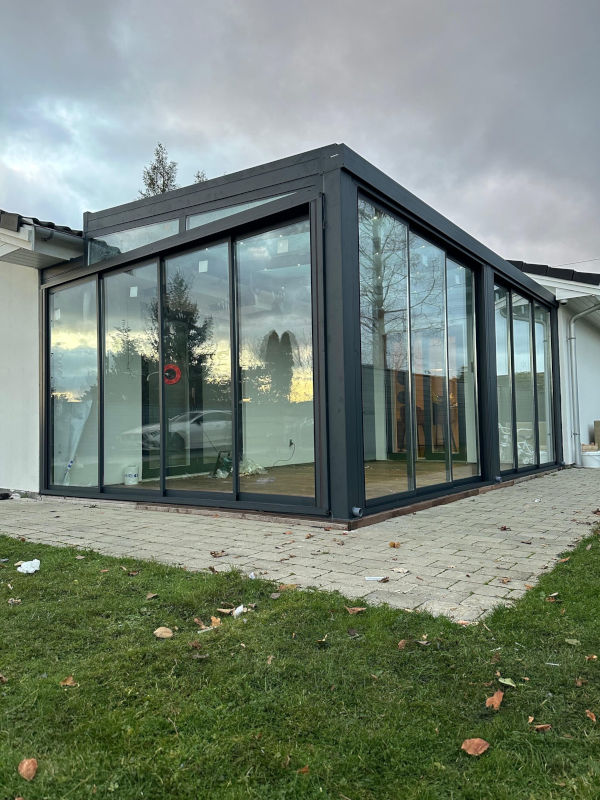
Double Silver Low‑E Glass | Double Silver Low‑Emissivity Glass for Curtain Walls & Commercial Facades
Double Silver Low‑Emissivity Glass – The Definitive Choice for Commercial Curtain Walls, Office Towers & Balanced Solar Control
Double silver Low‑E glass (also called double silver low‑emissivity glass, double‑Ag Low‑E, or dual‑silver Low‑E) is a second‑generation soft‑coat low‑emissivity glass that incorporates two precisely engineered silver layers within a multi‑layer metal oxide stack. This advanced coating architecture delivers the optimal balance between solar heat rejection and daylight transmission — making it the most widely specified Low‑E product for commercial curtain walls worldwide.
Unlike single silver Low‑E (which prioritizes maximum daylight) or triple silver Low‑E (which pushes solar control to the extreme), double silver Low‑E occupies the sweet spot: it achieves SHGC as low as 0.22 while maintaining VLT up to 72%, enabling architects and facade engineers to meet strict energy codes (ASHRAE 90.1, Title 24, EPBD) without compromising occupant comfort or visual transparency.
💡 Why double silver dominates commercial glazing: According to industry procurement data, double silver Low‑E accounts for over 60% of all Low‑E glass specified for commercial curtain walls. Its combination of performance, cost efficiency, and neutral appearance makes it the default choice for office towers, hotels, airports, and institutional buildings across every climate zone.
1. How Double Silver Low‑E Works
Double silver Low‑E coatings are deposited using magnetron sputtering (MSVD) — the same offline process used for all soft‑coat Low‑E. The coating stack contains two distinct silver (Ag) layers, each separated by dielectric layers of zinc oxide (ZnO) and barrier layers of nichrome (NiCr). This structure:
- First silver layer – reflects long‑wave infrared heat (reduces U‑value)
- Second silver layer – reflects short‑wave solar infrared radiation (reduces SHGC)
- Dielectric layers – optimize visible light transmission and color neutrality
- Barrier layers – protect silver from oxidation during processing
Typical Multilayer Stack (13+ layers)
Glass substrate
ZnO (zinc oxide) – 20nm
Ag (silver) – 12nm (first functional layer)
NiCr (nichrome) – 2nm (barrier)
ZnO (zinc oxide) – 60nm (dielectric)
Ag (silver) – 14nm (second functional layer)
NiCr (nichrome) – 2nm (barrier)
SnO₂ (tin oxide) – 30nm (anti‑reflection)
Protective top coat
The result is a coating that blocks up to 78% of solar heat energy while transmitting up to 72% of visible light — a balance impossible to achieve with single silver technology.
2. Double Silver vs. Single Silver vs. Triple Silver
| Parameter | Single Silver | Double Silver | Triple Silver |
|---|
| Silver layers | 1 | 2 | 3 |
| Emissivity | 0.12–0.15 | 0.06–0.10 | 0.03–0.07 |
| VLT range | 51–72% | 41–72% | 41–63% |
| SHGC range | 0.29–0.56 | 0.22–0.44 | 0.15–0.29 |
| U‑Value (6+16Ar+6) | ~1.7 W/m²K | ~1.4 W/m²K | ~1.2 W/m²K |
| Color neutrality | Good | Excellent | Excellent |
| Solar control | Moderate | Strong | Maximum |
| Cost premium vs. clear | +15–20% | +25–35% | +40–55% |
| Best climate | Cold | Temperate / Mixed / Hot | Hot / Tropical |
| Commercial market share | ~15% | ~60% | ~25% |
3. Performance Data – Double Silver Low‑E IGU
6+16Ar+6 Double Silver Low‑E IGU ⭐ (Commercial Curtain Wall Standard)
| Parameter | Value |
|---|
| Outer Lite | 6mm Clear or Tempered |
| Coating | Double Silver Low‑E (soft coat MSVD) |
| Coating Placement | #2 (cold climates) or #3 (hot climates) |
| Cavity | 16mm |
| Gas | Argon (≥90%) |
| Inner Lite | 6mm Clear or Tempered |
| Overall Thickness | 28mm |
| VLT | 41–72% (coating variant dependent) |
| U‑Value | ~1.4 W/m²K |
| SHGC | 0.22–0.44 (coating variant dependent) |
| g‑value | 0.22–0.44 |
| UV Blockage | 90–95% |
| Acoustic (Rw) | ~32 dB |
| Max Size | 3150 × 7300 mm |
Performance Variants Within Double Silver
| Variant | VLT (%) | SHGC | U‑Value (W/m²K) | Best For |
|---|
| High‑transmission | 65–72 | 0.38–0.44 | ~1.4 | Cold climates, daylight priority |
| Balanced | 55–65 | 0.30–0.38 | ~1.4 | Most common – temperate climates |
| Solar control | 41–50 | 0.22–0.30 | ~1.4 | Hot climates, west/south facades |
8+16Ar+8 Double Silver Low‑E IGU (High‑Rise Configuration)
| Parameter | Value |
|---|
| Outer Lite | 8mm Tempered |
| Coating | Double Silver Low‑E |
| Cavity | 16mm |
| Gas | Argon |
| Inner Lite | 8mm Tempered |
| Overall Thickness | 32mm |
| VLT | 41–68% |
| U‑Value | ~1.4 W/m²K |
| SHGC | 0.22–0.44 |
| Acoustic (Rw) | ~34 dB |
| Max Size | 3130 × 7100 mm |
4. Key Specifications
| Specification | Details |
|---|
| Glass Thickness | 4, 5, 6, 8, 10, 12, 15, 19 mm |
| Coating Process | Magnetron sputtering (MSVD) – offline soft coat |
| Silver Layers | 2 |
| Emissivity | 0.06–0.10 |
| Coating Placement | #2 or #3 surface (must be cavity‑facing) |
| IGU Required | Yes – coating must be encapsulated |
| Maximum Monolithic Size | 3140 × 8600 mm (before IGU assembly) |
| Maximum IGU Size | 3110 × 8300 mm |
| Spacer Types | Aluminum, Warm Edge TPE, Swisspacer, Stainless Steel, Structural Silicone |
| Gas Fill | Air, Argon, Krypton |
| U‑Value Range | 1.3–1.6 W/m²K (configuration dependent) |
| SHGC Range | 0.22–0.44 |
| VLT Range | 41–72% |
| UV Blockage | 90–95% |
| Sound Reduction (IGU) | 32–34 dB (clear), up to 46 dB (laminated) |
| Certifications | EN 6296‑4, EN 6319‑5, ASTM C6326, ASTM E6330, IGCC, CE, ISO 6341, CCC, SGS |
| MOQ | 1 × 20′ FCL |
| Lead Time | 4–6 weeks (IGU) |
5. Available IGU Configurations
| Configuration | Coating Variant | Gas | U‑Value | SHGC | VLT | Typical Use |
|---|
| 5+12Ar+5 | High‑transmission | Argon | ~1.6 | 0.40 | 70% | Light commercial, residential |
| 6+12Ar+6 | Balanced | Argon | ~1.5 | 0.35 | 62% | Budget commercial |
| 6+16Ar+6 | Balanced | Argon | ~1.4 | 0.33 | 60% | Commercial curtain wall standard |
| 6+16Ar+6 | Solar control | Argon | ~1.4 | 0.25 | 45% | West/south facades, hot climates |
| 6+16Kr+6 | Balanced | Krypton | ~1.2 | 0.33 | 60% | High‑performance commercial |
| 6+16Ar+8 | Balanced | Argon | ~1.4 | 0.33 | 60% | Asymmetric high‑rise |
| 8+12Ar+8 | Solar control | Argon | ~1.5 | 0.25 | 45% | Structural glazing |
| 8+16Ar+8 | Solar control | Argon | ~1.4 | 0.25 | 45% | High‑rise, super‑tall |
| 8+16Kr+8 | Solar control | Krypton | ~1.2 | 0.25 | 45% | Passive House commercial |
6. Processing Requirements
As a soft‑coat product, double silver Low‑E requires the same careful handling as all MSVD coatings:
| Process | Requirement |
|---|
| Storage | Interleaving paper to prevent contact damage |
| Cutting | Coating side face‑up; CNC with lubricant |
| Edge deletion | Mandatory – remove coating 10–15mm from edge |
| Tempering | Must be done before coating (post‑temperable variants available) |
| Washing | Deionized water, gentle brushes |
| IGU assembly | Coated surface must face cavity; never exposed |
| Handling | Clean vacuum cups; no finger contact on coated area |
⚠️ Edge deletion precision is critical for double silver. The two silver layers create a more complex corrosion pathway than single silver. Our automated edge‑deletion system uses laser‑guided measurement to guarantee complete coating removal at the seal interface.
7. Applications
Commercial Curtain Walls ⭐ Primary Application
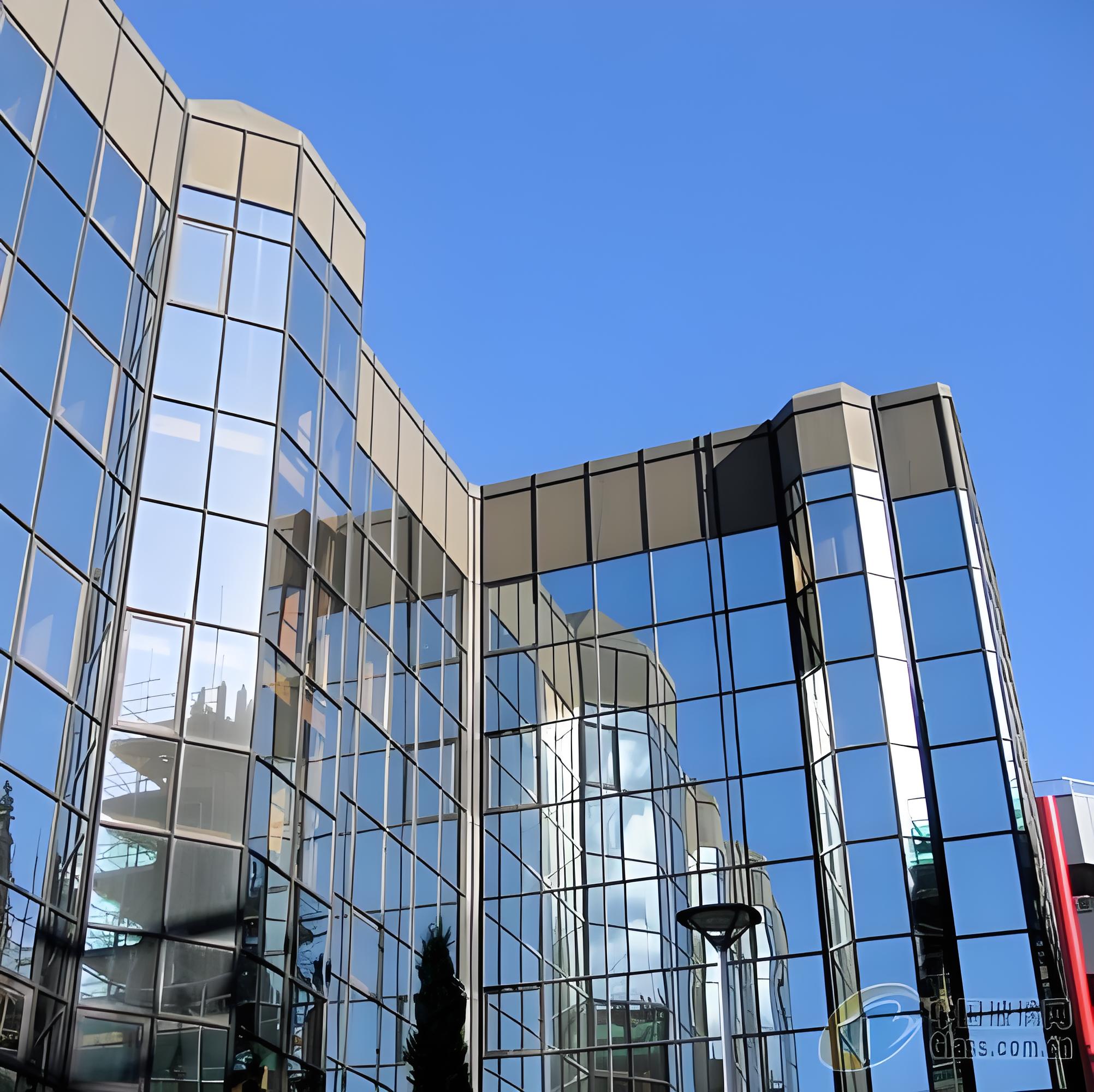
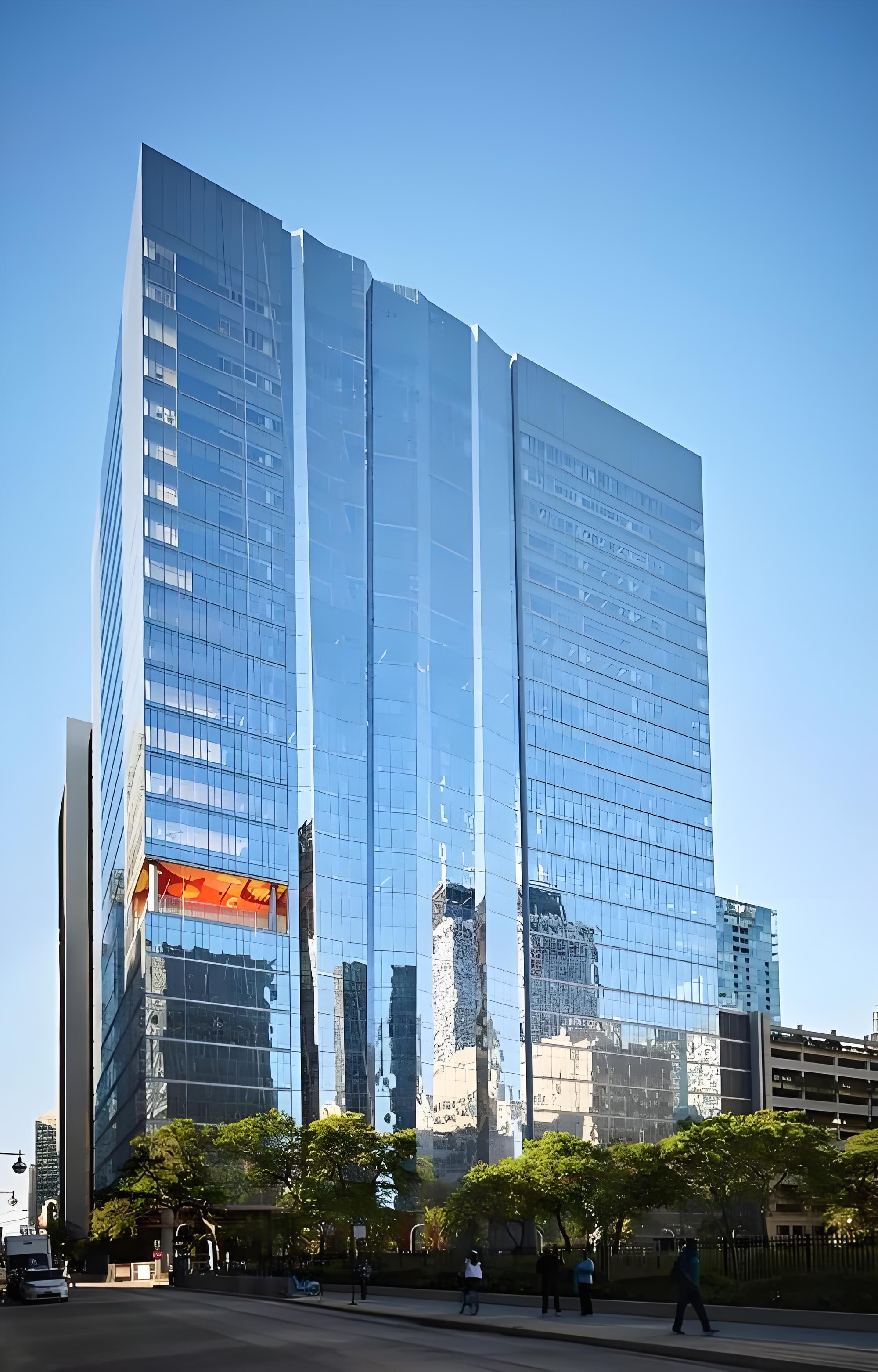
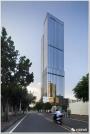
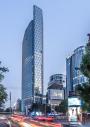
Double silver Low‑E in 6+16Ar+6 configuration is the global default for commercial curtain walls. Office towers, corporate headquarters, government buildings, and mixed‑use developments rely on this specification to meet energy codes while providing comfortable, daylit interiors.
Office Buildings & Corporate Campuses
The balanced variant (VLT 55–65%, SHGC 0.30–0.38) is ideal for open‑plan offices where daylight and solar control are equally important.
Hotels & Hospitality
Guestroom windows with double silver Low‑E eliminate "hot spots" near glass, reduce HVAC load, and improve guest comfort. Solar control variant for west‑facing elevations.
Airports & Transportation Hubs
Large‑span terminal facades use jumbo double silver Low‑E IGU (up to 3150 × 8400 mm) for consistent appearance and thermal performance across vast glazed areas.
Healthcare Facilities
High‑transmission variant maximizes daylight for patient recovery while controlling solar gain. UV blockage >90% protects sensitive medical environments.
Educational Institutions
Classrooms benefit from balanced daylight and temperature control, reducing energy costs and improving learning conditions.
Retail & Shopping Malls
Atrium skylights and storefronts use double silver Low‑E to showcase merchandise in natural light while managing solar gain.
High‑Rise Residential
Condominium towers specify double silver Low‑E for its combination of thermal performance, acoustic comfort, and neutral appearance.
8. Standards & Certifications
| Standard | Region | Scope |
|---|
| EN 6396‑4:2018 | Europe | Coated glass product standard; CE marking |
| EN 6419‑5 | Europe | Insulating glass unit standard |
| EN 6510 | Europe | Glass optical property determination |
| EN 6673 | Europe | U‑value calculation method |
| ASTM C6686‑10 | USA | Standard for pyrolytic and vacuum‑deposited coated glass |
| ASTM E6690 | USA | IGU performance standard |
| IGCC | USA/Canada | Insulating Glass Certification Council |
| ANSI Z670.1 | USA | Safety glazing material standard |
| AS/NZS 6728 | Australia/NZ | Safety glazing |
| AS/NZS 6746 | Australia/NZ | IGU standard |
| ISO 6751 | International | Quality management |
| CCC | China | Mandatory for Chinese market |
| SGS | Global | Third‑party inspection |
9. Color Options
Double silver Low‑E coatings are inherently neutral in appearance — they do not impart a strong color cast. However, the glass substrate can be tinted to achieve specific aesthetics:
| Color | Substrate | Appearance | Typical Use |
|---|
| Neutral / Clear | Clear float | Colorless, high clarity | Most common – corporate towers |
| Blue | Blue tinted | Cool blue tint | Healthcare, tech campuses |
| Grey | Grey tinted | Neutral grey | Professional offices |
| Bronze | Bronze tinted | Warm bronze | Hotels, brick facades |
| Green | Green tinted | Subtle green | Sustainable buildings |
💡 Neutral appearance is the #1 reason architects choose double silver Low‑E over reflective glass. The coating does not alter the intended color palette of the facade.
10. Pricing Guidance (FOB USD/m²)
Double Silver Low‑E IGU
| Configuration | Variant | Gas | FOB Range (USD/m²) |
|---|
| 5+12Ar+5 | High‑transmission | Argon | $26–38 |
| 6+12Ar+6 | Balanced | Argon | $28–42 |
| 6+16Ar+6 | Balanced | Argon | $30–44 |
| 6+16Ar+6 | Solar control | Argon | $32–46 |
| 6+16Kr+6 | Balanced | Krypton | $38–52 |
| 6+16Ar+8 | Balanced | Argon | $34–48 |
| 8+12Ar+8 | Solar control | Argon | $36–52 |
| 8+16Ar+8 | Solar control | Argon | $40–56 |
| 8+16Kr+8 | Solar control | Krypton | $48–64 |
| 8+16Ar+8 Lami/Lami | Balanced | Argon | $64–86 |
💡 Price determinants: coating variant (high‑transmission vs. solar control), gas fill, spacer type, tempering/laminating, panel dimensions (jumbo surcharge 10–20% for >3300×6000mm), order volume, and destination port. For a precise project quotation with U‑value/SHGC/VLT calculations specific to your project location and orientation, send us your glass schedule and performance targets.
11. Frequently Asked Questions
Q1: What is double silver Low‑E glass?
Double silver Low‑E is a soft‑coat low‑emissivity glass with two silver layers. It offers superior solar control compared to single silver while maintaining high visible light transmittance. It is the most specified Low‑E product for commercial curtain walls.
Q2: How does double silver differ from single silver?
Double silver has two silver layers instead of one, enabling lower SHGC (0.22–0.44 vs. 0.29–0.56) while maintaining similar VLT. It also achieves lower emissivity (0.06–0.10 vs. 0.12–0.15) and better U‑value.
Q3: What is the U‑value of double silver Low‑E IGU?
Typical 6+16Ar+6 double silver Low‑E IGU achieves ~1.4 W/m²K. With krypton fill, it can reach ~1.2 W/m²K.
Q4: What SHGC can double silver achieve?
Depending on the coating variant: high‑transmission (0.38–0.44), balanced (0.30–0.38), or solar control (0.22–0.30).
Q5: Which surface should the coating be on?
2 surface for cold climates (retains interior heat); #3 surface for hot climates (blocks solar heat gain).
Q6: Can double silver Low‑E be tempered?
Yes, but the coating is typically applied after tempering. Post‑temperable variants exist for simplified processing.
Q7: What is the maximum size?
Up to 3160 × 8800 mm for monolithic; up to 3030 × 7700 mm for IGU.
Q8: Is edge deletion required?
Yes. Double silver has two silver layers that create a more complex corrosion pathway. Precise edge deletion is critical for long‑term seal integrity.
Q9: What certifications do you provide?
EN 686‑4, EN 689‑5, ASTM C686, ASTM E690, IGCC, CE, ISO 691, CCC, SGS.
Q10: How does double silver compare to triple silver?
Double silver offers higher VLT (up to 72% vs. 63%) and lower cost, while triple silver achieves lower SHGC (down to 0.15 vs. 0.22). Double silver is the better choice for most commercial projects where SHGC below 0.22 is not required.
Q11: What colors are available?
Double silver coatings are neutral. Color can be achieved by using tinted glass substrate (blue, grey, bronze, green).
Q12: What is the lead time?
4–6 weeks for standard IGU configurations.
12. Get a Quote for Double Silver Low‑E Glass
Tell us your project requirements and we'll respond within 48 hours with a competitive FOB quotation and performance analysis.
Please provide:
- Coating variant: High‑transmission / Balanced / Solar control
- IGU configuration (e.g., 6+16Ar+6)
- Coating placement (#2 or #3)
- Glass types (clear, tempered, laminated)
- Spacer type (Aluminum / Warm Edge / Swisspacer / Structural Silicone)
- Gas fill (Air / Argon / Krypton)
- Target SHGC and/or U‑value
- Panel dimensions (width × height × quantity)
- Project location & climate zone
- Certifications required
- Target delivery date
- 📧 Email your specification to: tomron1688@gmail.com
- 🌐 Or visit: www.jumbotemperedglass.com
13. Related Pages (Internal Link Cluster)
Low‑E Glass Product Pages
IGU Configuration Pages
Related Resources