Home › Showerspace › Decorative Shower Glass › Tinted Shower Glass
Decorative Shower Glass
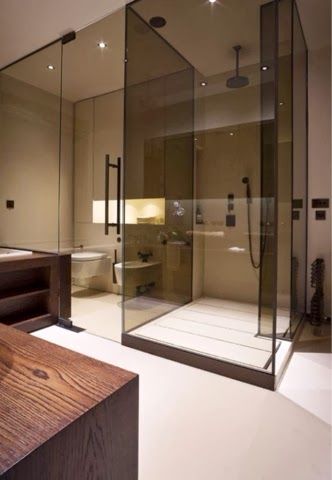
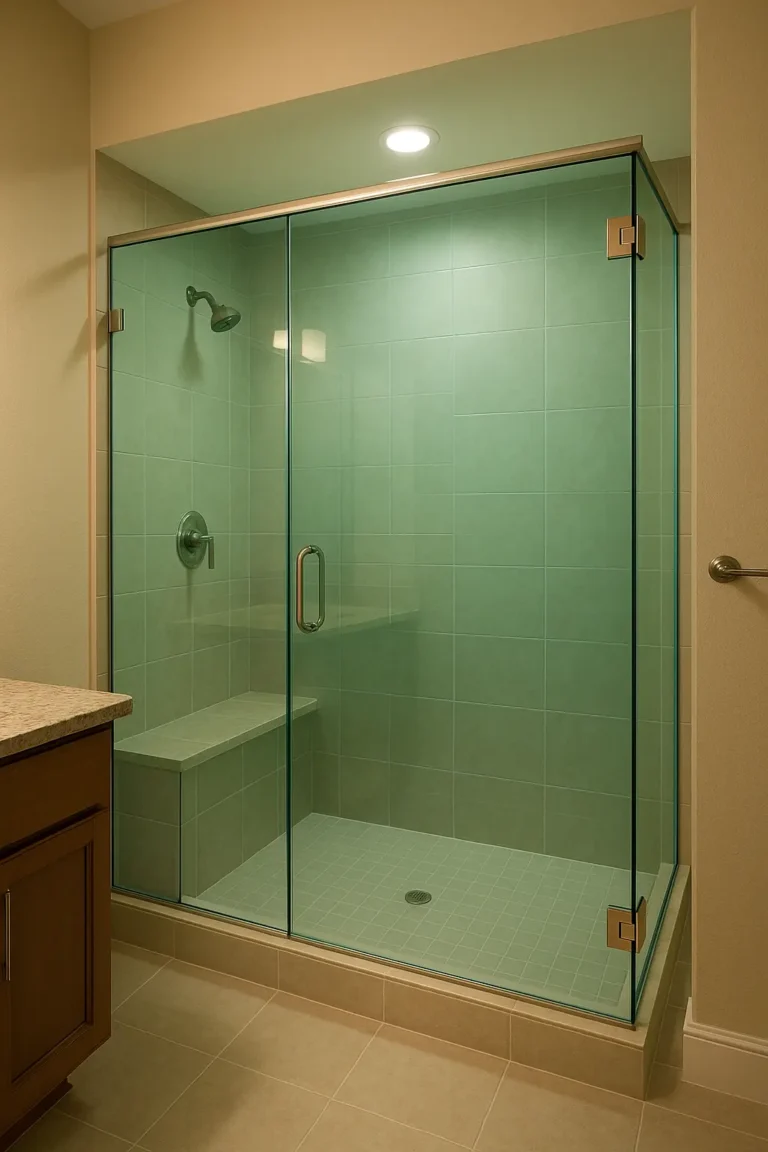
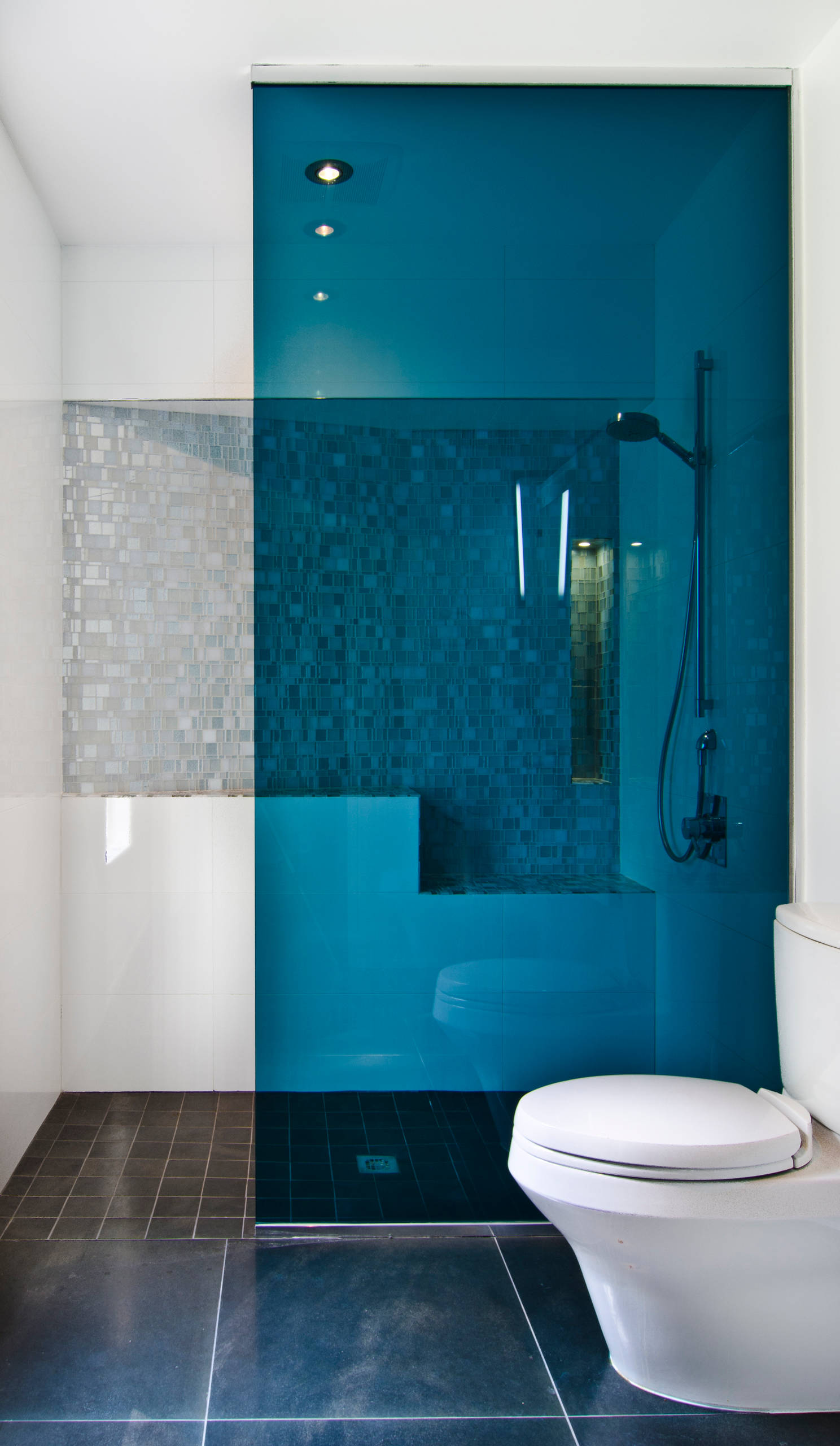
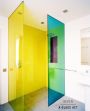
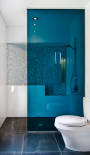
Tinted Shower Glass in Grey, Bronze & Custom Colours
Colour That Runs Through the Glass. Not On It.
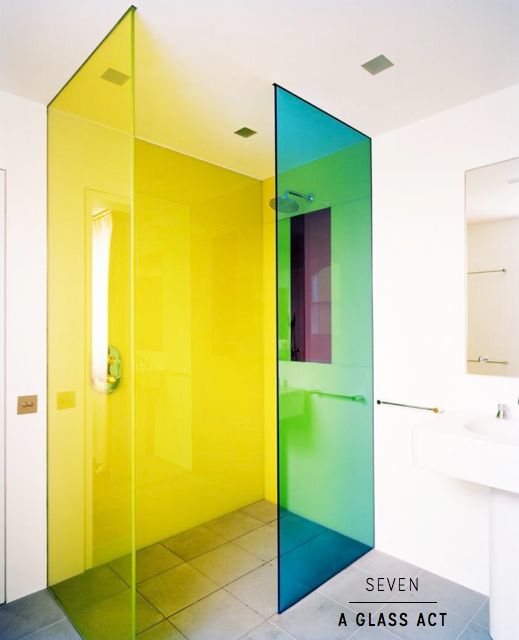
Body-tinted shower glass carries its colour through the full thickness of the glass, not on the surface. Grey, bronze and other colours from the standard float palette — uniform, permanent, and unaffected by shower cleaning or daily use.
See the Colour RangeRequest a Quote
What Is Tinted Shower Glass?
Tinted glass is made by adding colourants to the glass while it is molten, so the colour runs through the entire body of the sheet rather than sitting on the surface. Cut it, polish it, drill it — the colour is the same all the way through, and the edge is the same colour as the face.
That is the whole argument for specifying tint over an applied colour. There is no layer to scratch, peel, cloud or react with cleaning chemicals, and there is no adhesive that can fail in a wet area. The colour is a property of the material, which means it lasts as long as the glass does.
Tint reduces the amount of light passing through the panel and gives the glass a colour of its own. It is chosen for how it looks and how it sits with the rest of the bathroom scheme — not as a way of hiding what is behind the panel. That distinction matters, and we come back to it below.
Body Tint or Applied Film?
“Tinted glass” is sometimes used to describe applied film, which is a different product with a different risk profile. The distinction is worth being clear about before comparing prices.
| | Body-tinted glass | Applied film |
|---|
| Where the colour is | Throughout the glass | A layer stuck to the surface |
| Edge colour | Same as the face | Clear glass edge, visible on frameless panels |
| Durability | Colour is permanent; nothing to degrade | Adhesive can lift, bubble or cloud, particularly at the edges |
| Cleaning | Normal glass cleaning | Abrasive pads and aggressive descalers shorten its life |
| Thickness range | Any standard shower thickness | Applied after manufacture; adds no strength |
| Cost | Higher material cost | Lower up front |
Film has its place in retrofitting existing glazing. For a new shower enclosure — particularly a frameless one, where the edge is visible and the panel is cleaned daily — body-tinted glass is the specification that holds up.
Colour Range
Tinted shower glass is supplied from the standard body-tinted float palette. Colours are ordered by name, and the perceived depth of any colour depends on the glass thickness — see the note below, which is the single most important thing on this page.
Grey
The most specified tinted glass for showers. Neutral and cool, it works with stainless, chrome and matte black, and it is the safest choice for a contemporary scheme.
Bronze
Warm, with a brown-gold cast. The natural partner to brass fittings, timber vanities and stone, and the standard choice for warmer interiors.
Green
A traditional float tint, cooler and softer than grey. Less common in bathrooms now, but well suited to garden-facing and spa schemes.
Blue
Distinctly cool and noticeably coloured. Used sparingly and deliberately, usually as a feature rather than across a whole range.
Dark Grey
A deeper grey for schemes that want the enclosure to read as a solid plane. Reduces light transmission substantially — check the room has enough daylight.
Custom Colour
Other body tints can be sourced against a target colour, subject to availability and minimum quantity.
For the opposite requirement — maximum clarity with no colour at all — see low-iron shower glass.
Why Thickness Changes the Colour
This is the point buyers most often meet too late, and it is the reason a tint should not be chosen from a small colour chip alone.
Body tint is a volume effect. Light travelling through the glass passes through colourant the whole way, so the more glass it crosses, the more colour it picks up. The same nominal grey reads noticeably deeper at 10 mm than it does at 6 mm — same product name, visibly different result.
6 mm
8 mm
10 mm
12 mm
The same grey tint at increasing thickness — the colour deepens as the glass gets thicker.
Two practical consequences.
- Approve the colour at the thickness you will actually use. A sample seen at 6 mm is not the colour that arrives on a 10 mm door panel. We can send the same tint at two thicknesses so the difference is visible before you commit.
- Keep thickness consistent across a scheme. A fixed panel at 8 mm and a door at 10 mm in the same nominal tint will not read as the same colour. Where different thicknesses are unavoidable in one room, say so at enquiry stage and we will advise on how close the match can be.
Tint and Privacy: An Honest Answer
Tinted glass is regularly specified for privacy, and it is the wrong tool for the job on its own.
A tint reduces contrast and makes it harder to see detail through the panel, but it does not obscure. Everything behind the glass remains visible in outline, particularly when the shower is lit and the room beyond is not — the same effect that makes a tinted car window easy to see into at night.
Where privacy is part of the brief, the right specification is one of:
- Frosted or etched glass — genuine obscuration, at a level set by the room.
- Textured glass — visual privacy that keeps the light, with surface character.
- Tint combined with one of the above — the usual answer when a scheme wants both colour and privacy. Grey or bronze behind a ribbed surface, or under a frosted finish, raises perceived privacy substantially beyond what either treatment achieves alone.
Specify tint for colour. Specify frosting, etching or texture for privacy. If you need both, combine them — and say so at enquiry stage so the two can be developed together.
Printed or Tinted: Which Kind of Colour?
Both deliver colour, and the right one depends on whether the colour is a design or a material.
Printed glass carries colour on the surface as a design: patterns, gradients, logos, images. It can be changed panel to panel, and it is the only route to a brand mark. Tinted glass carries colour through the body as a uniform field: the same colour everywhere, on every panel, with nothing applied.
They combine well. A tinted base under a printed design shifts the whole panel’s mood without altering the artwork — though it does shift the printed colours too, which is worth approving on a sample rather than assuming.
A simple test: if the colour needs to be a pattern, print it. If it needs to be a uniform field across every panel in the range, tint it — usually simpler, and typically more economical at volume.
Combining Tint with Other Treatments
Tinted + frosted
Colour and privacy in one panel. The tint sets the mood, the frost sets the coverage — the most common combination in hotel bathroom schemes. See frosted glass →
Tinted + textured
Grey or bronze behind a reeded or fluted relief, where the tint deepens the shadow within the ribs. See reeded glass →
Tinted + printed
A coloured base under a printed design. Approve the combination on a sample, since the tint shifts the fired ink colour.
Tinted + low-iron contrast
Tinted fixed panels with a clear low-iron door, so the opening reads as open while the enclosure keeps its colour.
Light & Colour: What Tint Changes
Two things happen when you specify tinted glass, and both are worth seeing before ordering.
Light transmission falls
Tint absorbs some of the light passing through. Deeper tints darken the enclosure and the room it serves, which matters most in bathrooms with little natural daylight.
The room takes on the colour
Light passing through the panel is tinted, so the light falling inside the shower is too. Grey cools the space, bronze warms it — a genuine design tool, and a reason to approve a sample under the room’s own lighting.
The edge is part of the design
On frameless panels the polished edge shows the colour at full depth. It is usually a feature, and it is the first thing that reveals a film imitation.
Thickness & Size
Tinted shower glass is supplied in 6 mm, 8 mm, 10 mm and 12 mm thicknesses.
Thickness is determined by the application rather than chosen freely: panel dimensions, whether the panel is fixed or forms part of a moving door, the support method, the hardware specified, and the safety-glazing requirements of the destination market all bear on it. We confirm the appropriate thickness against your drawings and target market rather than leaving it to be resolved on site.
On this product thickness carries a second job, because it sets the perceived depth of the colour — see the section above. For that reason the thickness and the colour should be fixed together, and any change to one should be treated as a change to both.
Panels are cut to size from your drawings. Maximum dimensions depend on thickness, handling constraints and access at the installation location, and are confirmed per project.
Processing & Fabrication
Tinted shower glass is fabricated to drawing and supplied tempered as safety glass.
Cutting
Cut to size and shape from project drawings.
Edge Polishing
Flat polish, bevel and other edge finishes. On tinted frameless panels the polished edge is the deepest expression of the colour, which makes edge quality a design decision.
Drilling
CNC-drilled holes for hinges, clamps, brackets and handles, positioned to drawing.
Notches
CNC notches and cut-outs for pivots, channels, stabiliser bars and wall connections.
Tempering
Supplied tempered as safety glass. Requirements for the destination market are agreed before production.See tempered shower glass.
Etching & Printing
Tint can carry an etched finish or a printed design. Approve the combination on a sample, since the base colour shifts how both read.
Enclosure Compatibility
Tinted glass can be specified into the following configurations, using the standard hardware preparation for each.
Frameless
The configuration that shows fluted glass at its best: minimal framing leaves the texture as the feature. View frameless systems →
Semi-Frameless
Perimeter framing with a frameless door, a common format for mid-market ranges. View semi-frameless →
Framed
Full-profile systems where the glass panel sits within an aluminium frame. View framed systems →
Walk-In
Fixed fluted panels for open, barrier-free layouts, often combined with a clear return panel. View walk-in systems →
Hinged
Swing doors prepared for hinge and handle positions to drawing. View hinged systems →
Sliding
Sliding door panels for apartments and hospitality bathrooms. Texture direction is confirmed against the sightline and handle position. View sliding systems →
Because Showerspace develops glass, aluminium profiles and stainless steel hardware together, panel preparation is matched to the profiles and fittings in your system rather than adapted afterwards.Read about the Showerspace system approach →
Hardware Pairings
Tint is the one decorative glass where the hardware should be chosen from the colour temperature of the glass first, and the rest of the bathroom second.
Grey + Matte Black
The most specified pairing in contemporary schemes. Two cool, dark materials that read as one composition rather than as glass plus fittings.
Bronze + Brushed Brass
Warm on warm. The safest route to a bathroom that feels considered rather than assembled, and the pairing that suits stone and timber best.
Grey + Brushed Nickel
A softer, tonal alternative to matte black. Better in rooms with less daylight, where black framing can read as heavy.
View available hardware finishes →
Applications
Residential
Master en-suites and family bathrooms where the enclosure is a design feature and the walls have been newly built or re-lined.
Hotels & Hospitality
Premium room standards, where frameless is part of the specification rather than an upgrade.
Apartments
Higher-tier units within a development, often frameless while the standard units are semi-frameless.
Spa & Wellness
Where the clean, uninterrupted sightline matters and the building is new.
Commercial
Premium fit-outs, showrooms and offices — less often high-traffic changing rooms.
Technical Specifications
| Glass type | Tempered safety glass; laminated construction where the application requires it |
| Thickness | 6 mm / 8 mm / 10 mm / 12 mm — sets both the strength and the perceived colour depth |
| Size | Custom, cut to drawing; maximum dimensions confirmed per project |
| Colour | Grey, dark grey, bronze, green, blue and other body tints from the standard float palette |
| Colour vs thickness | Perceived depth increases with thickness — approve the colour at the thickness to be used |
| Light transmission | Reduced relative to clear glass, and further as tint depth and thickness increase |
| Privacy | Reduced visibility, not obscuration — see the privacy section above |
| Edge | Flat polish, bevel and other edge finishes; edge shows the colour at full depth |
| Holes | CNC drilled to drawing |
| Notches | CNC processed to drawing |
| Processing | Cutting, edge polishing, drilling, notching, tempering, acid etching, digital ceramic printing |
| Enclosure compatibility | Frameless, semi-frameless, framed, walk-in, hinged, sliding |
| Hardware | Aluminium profiles and stainless steel hardware, selected by configuration and finish |
| Safety glazing | Applicable requirements for the destination market agreed before production. |
| Packaging | Export packaging configured for glass panels and system components |
Request tinted glass samples →
Choosing a Tint Without Guesswork
Three steps remove almost all the risk from specifying tinted glass, and none of them can be done from a photograph.
- See the colour at your thickness. Ask for samples in the thickness the project will actually use. A grey approved at 6 mm is not the grey that arrives on a 10 mm door.
- Judge it in the room’s own light. Tinted glass picks up the colour of the light around it. A sample that looks right under showroom lighting can read very differently under a warm bathroom downlight or a north-facing window.
- Be honest about privacy. If the enclosure needs to obscure, tint alone will not do it. Say so at the start and we will develop the tint with a frosted, etched or textured finish from the outset.
Related products
Patterned Shower Glass
Fluted Shower Glass
Reeded Shower Glass
Textured Shower Glass
Frosted Shower Glass
Etched Shower Glass
Tinted Shower Glass
Low-Iron Shower Glass
Printed Shower Glass
Back-Painted Shower Glass
Reflective Shower Glass
RelatedTechnical
Shower Glass Thickness
Tempered Shower Glass
Laminated Shower Glass
How to Choose Shower Enclosure Glass
How to Care for Shower Glass
Hardware Finishes
Request a Quote
We use your details to respond to this enquiry only.
See the Same Grey at Two Thicknesses
Tinted glass is the one product where the sample thickness matters as much as the sample colour. We can send the same tint at two thicknesses so the difference is visible in your own light, before the order is placed.
Request Tint Samples Discuss Your Project
© Jumbo Glass Group · Showerspace — decorative shower glass and custom shower enclosure systems