Low‑E Skylight Glass | Low‑Emissivity Glass for Skylight & Roof Glazing – Jumbo Glass
Low‑Emissivity Coated Glass for Skylight & Roof Glazing – Engineered for "Light Without Heat"
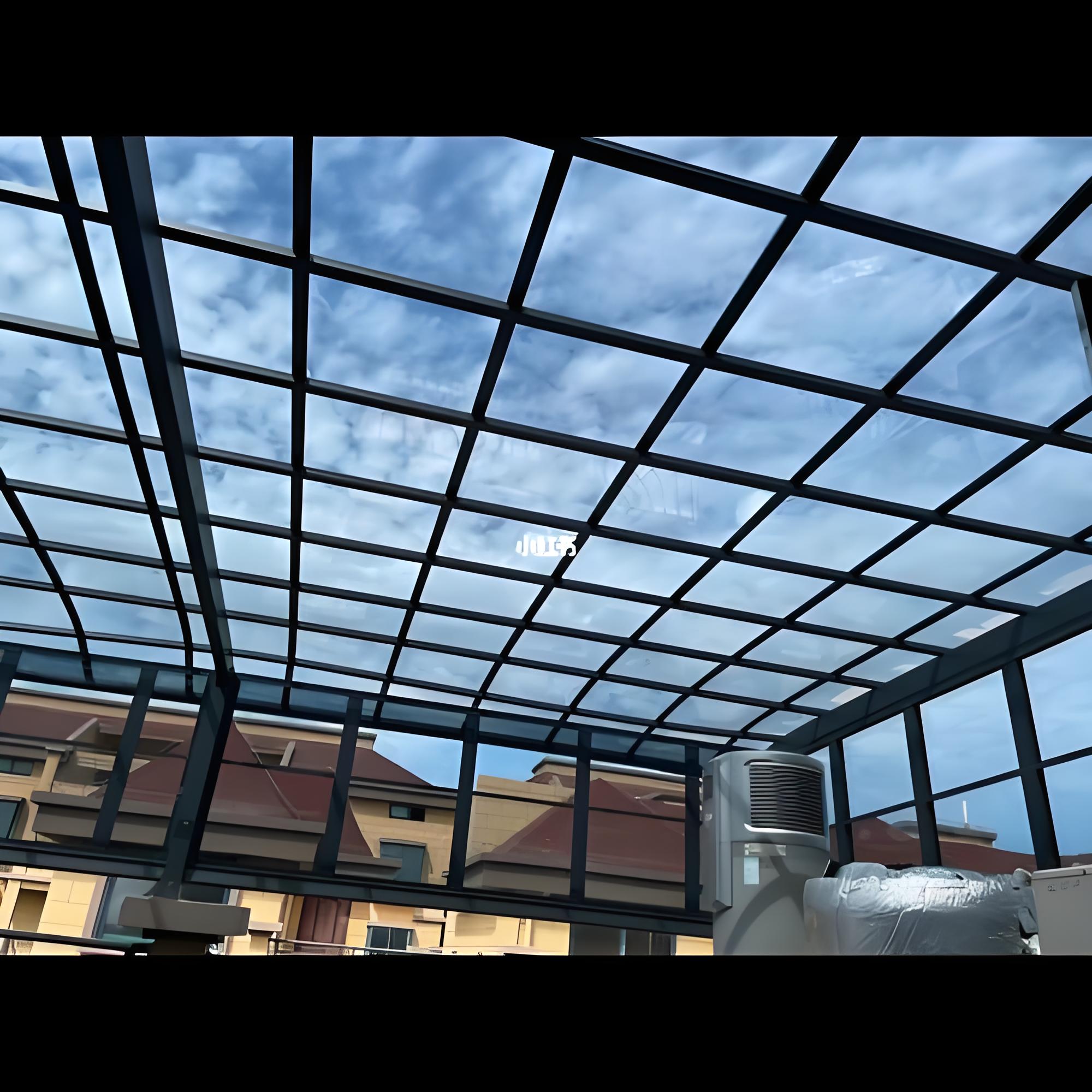
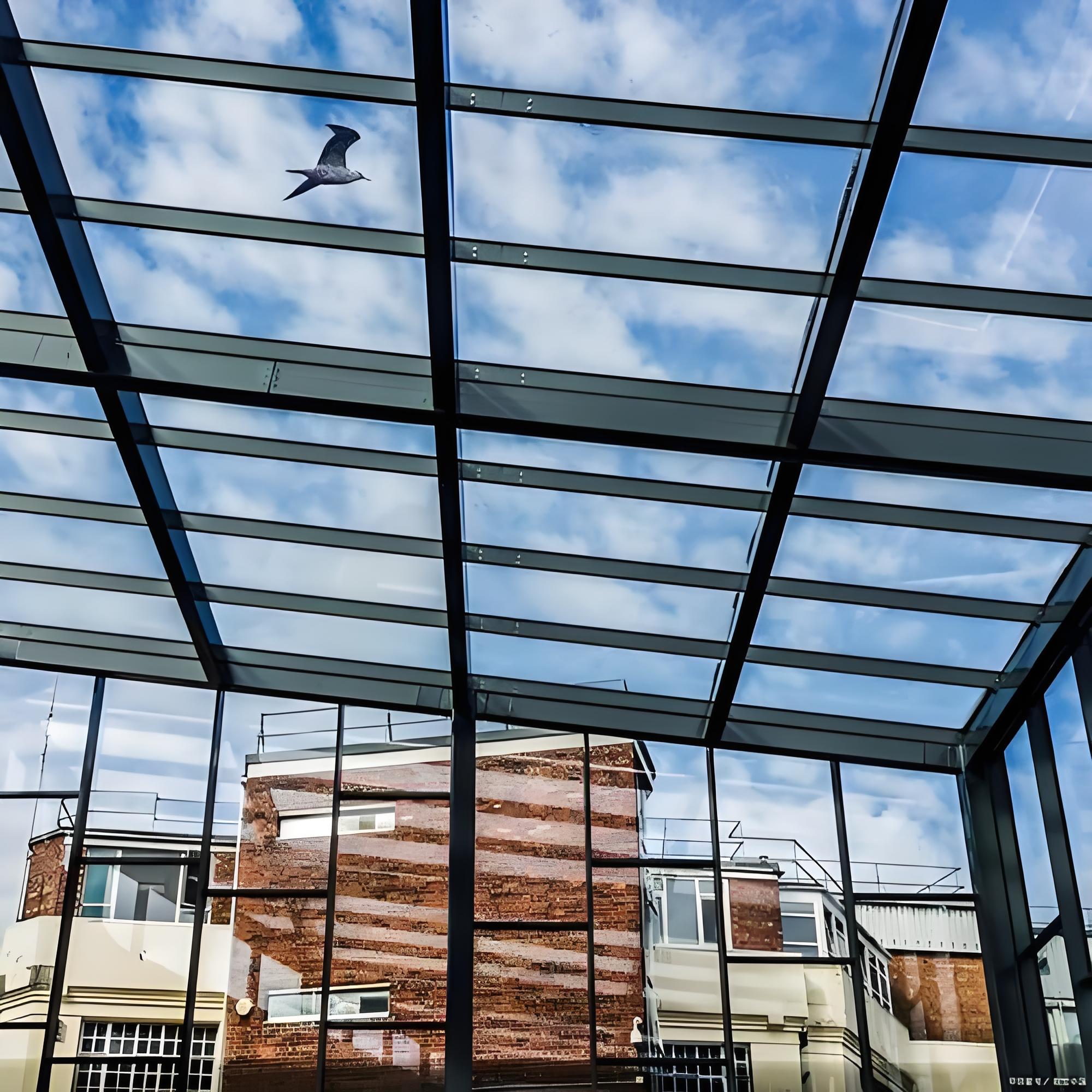
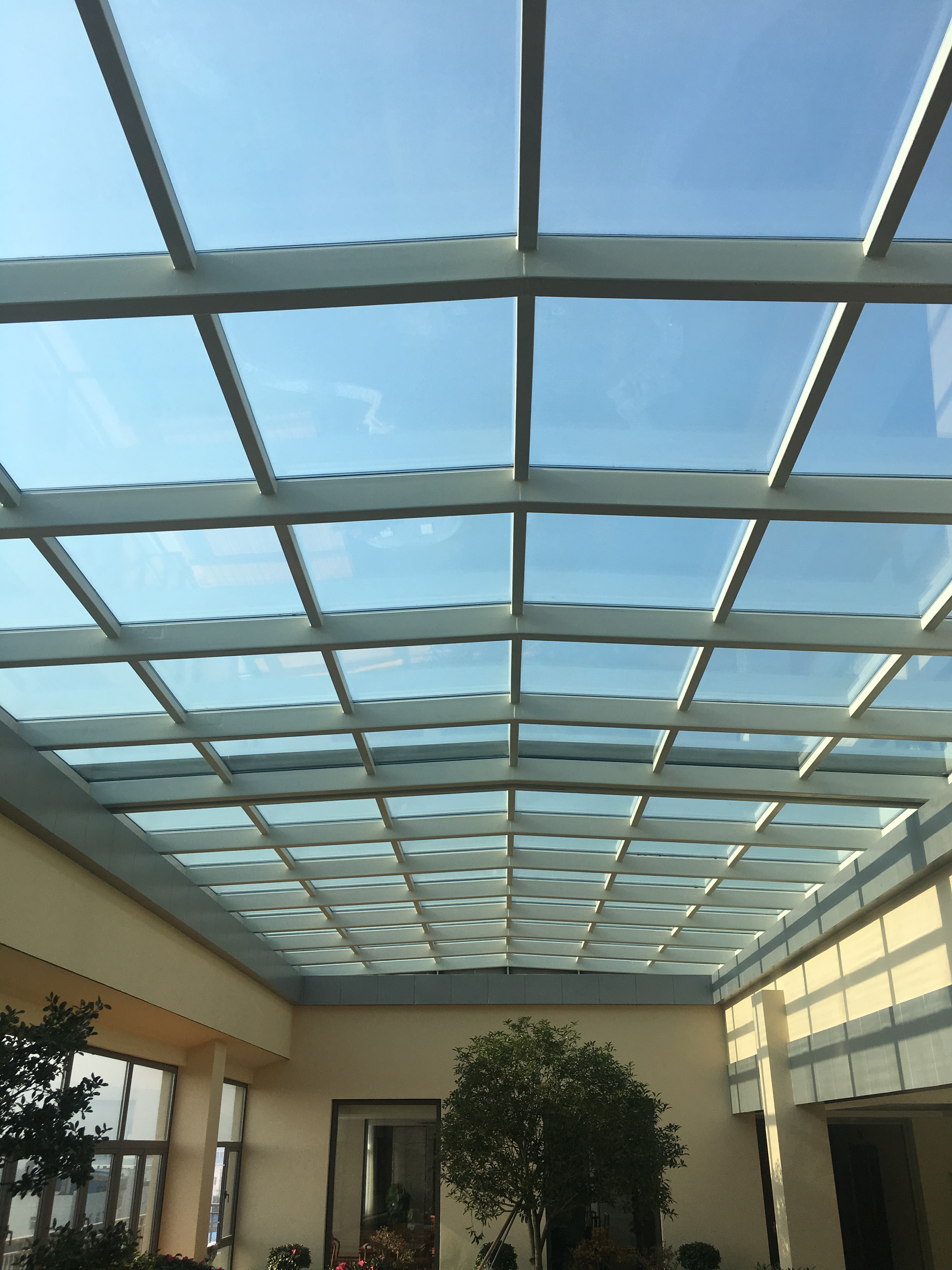
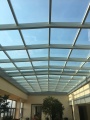
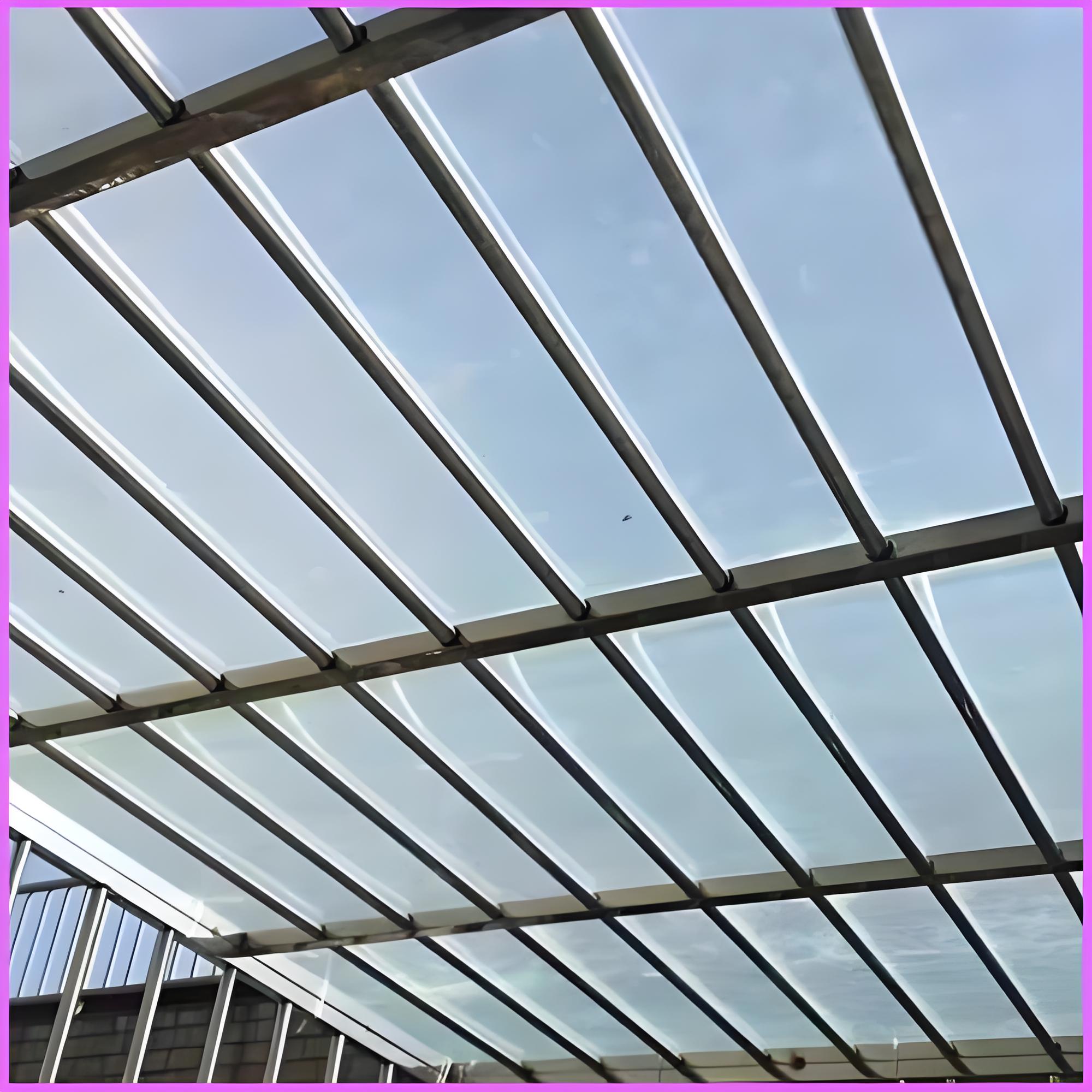
Low‑E skylight glass is glass with a microscopically thin, transparent, multi‑layer metallic coating – typically silver‑based – applied to one or more surfaces of the glazing unit. The coating reflects infrared heat energy while allowing visible daylight to pass through, so a skylight can flood a space with natural light without flooding it with heat.
For procurement managers and glazing contractors supplying energy‑efficient residential skylights, LEED/BREEAM‑targeted commercial atriums, net‑zero buildings, and hot‑climate roof glazing, specifying the right Low‑E coating is the single highest‑impact decision for both energy code compliance and occupant comfort. Unlike standard clear glass (emissivity ≈0.84), Low‑E coatings can reduce emissivity to 0.02–0.15, reflecting 80%+ of far‑infrared heat while preserving up to 80% visible light transmittance.
💡 Why Low‑E skylight glass is specified: Skylights are the most thermally punishing element in any building envelope – they face the sky, receive unfiltered solar radiation for 8–10 hours daily, and are the primary cause of the "greenhouse effect" that makes upper‑floor rooms unbearable in summer. Low‑E coatings are the only technology that solves this at the glass level, cutting cooling loads 20–50% depending on coating choice. For glass exporters, Low‑E skylight glass commands a 60–120% premium over uncoated glass and is increasingly mandated by building energy codes worldwide.
1. Quick Specification
| Parameter | Standard Clear Skylight | Low‑E Skylight Glass |
|---|
| Coating Type | None | Single / Double / Triple Silver Low‑E |
| Emissivity (ε) | ~0.84 | 0.02–0.15 |
| Coating Thickness | — | 50–300 nm (invisible) |
| U‑Value Range (IGU) | 2.7 W/m²K | 0.9–1.6 W/m²K |
| SHGC Range | 0.58–0.63 | 0.25–0.55 |
| Visible Light Transmittance | 77–90% | 58–75% |
| UV Blockage | ~60% | >95% |
| G‑Value (gIR) | 0.70–0.80 | 0.06–0.45 |
| Max IGU Size | ≤2440×6000 mm | ≤3490×18900 mm |
| Substrate Options | — | Clear, Low‑Iron, Tinted, Laminated |
2. Low‑E Skylight Glass Solutions
2.1 Residential Low‑E Skylight Glass
- Description: Energy‑efficient skylights for homes, townhouses, and apartment buildings
- Coating: Double Silver Low‑E (balanced performance)
- IGU build‑up: 6mm Tempered + 16mm Argon + 6mm Clear (Low‑E on surface #2)
- U‑value: ~1.5–1.6 W/m²K | SHGC: ~0.39–0.45
- Best for: Single‑family homes in mixed climates
- Key benefit: Year‑round comfort, 20–30% cooling energy reduction
2.2 Hot‑Climate Solar‑Control Low‑E Skylight
- Description: Aggressive solar heat rejection for hot/humid regions
- Coating: Triple Silver Low‑E (maximum infrared rejection)
- IGU build‑up: 6mm Tempered + 16mm Argon + 6mm Clear (Low‑E on surface #2)
- U‑value: ~1.1 W/m²K | SHGC: ~0.28–0.35
- Best for: Southeast Asia, Middle East, southern USA, Australia
- Key benefit: gIR as low as 0.06 – less than 6% of infrared heat enters
2.3 Cold‑Climate Passive Low‑E Skylight
- Description: Maximizes beneficial solar heat gain while retaining interior warmth
- Coating: Single or Double Silver Low‑E (high VLT, moderate SHGC)
- IGU build‑up: 6mm Tempered + 16mm Argon + 6mm Clear (Low‑E on surface #3)
- U‑value: ~1.5 W/m²K | SHGC: ~0.50–0.55
- Best for: Northern USA, Canada, Northern Europe, Northern China
- Key benefit: Winter solar gain + winter heat retention
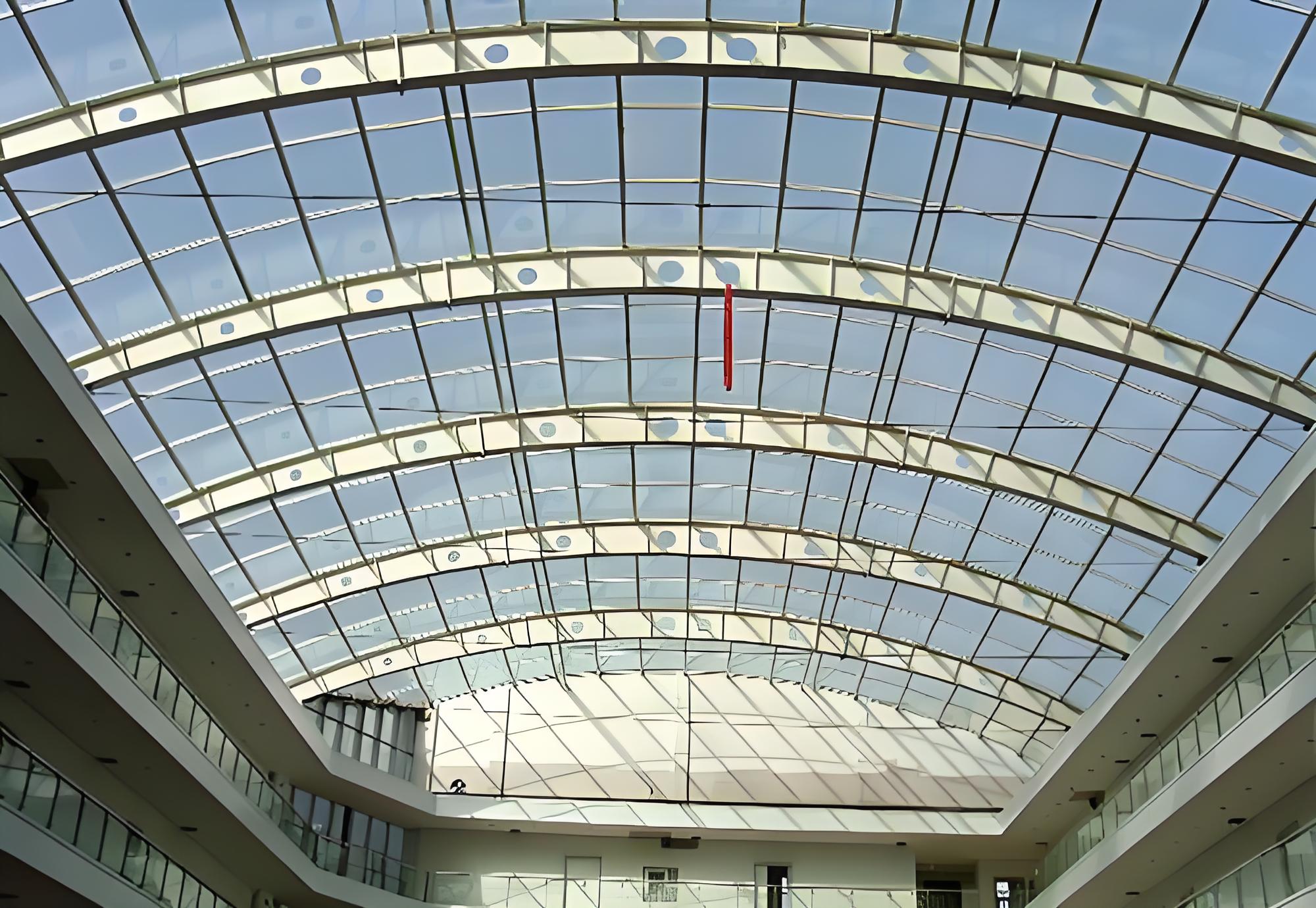
2.4 Commercial Atrium Low‑E Glass
- Description: Large‑format Low‑E glazing for building atriums and lobbies
- Coating: Double or Triple Silver Low‑E
- IGU build‑up: 8mm Tempered + 20mm Argon + 8mm Laminated Low‑E
- U‑value: ~1.0–1.2 W/m²K | SHGC: ~0.30–0.40
- Best for: Shopping malls, hotels, office buildings, airports
- Key benefit: Occupant comfort + energy code compliance (IECC, Part L, NCC)
2.5 Net‑Zero / Passive House Low‑E Skylight
- Description: Ultra‑high‑performance glazing for net‑zero and Passive House buildings
- Coating: Triple Silver Low‑E + Krypton fill + warm‑edge spacer
- IGU build‑up: 6mm + 12mm Kr + 6mm Low‑E + 12mm Kr + 6mm
- U‑value: ~0.7–0.9 W/m²K | SHGC: ~0.28–0.35
- Best for: Passive House certified buildings, net‑zero targets
- Key benefit: Meets most stringent global energy codes
2.6 Low‑Iron Low‑E Skylight Glass
- Description: Ultra‑clear Low‑Iron substrate with Low‑E coating for maximum daylight + energy performance
- Coating: Double or Triple Silver Low‑E on Low‑Iron glass
- IGU build‑up: 6mm Low‑Iron + 16mm Argon + 6mm Low‑Iron Low‑E
- U‑value: ~1.2–1.4 W/m²K | VLT: ~70–75%
- Best for: Premium residential, galleries, museums, showrooms
- Key benefit: Maximum true‑colour daylight + thermal control
3. Glass Configurations – Single / Double / Triple Silver Low‑E
The performance of Low‑E glass is determined not by coating thickness but by optical engineering – the precise nanometer‑level control of silver layer thickness and dielectric layer stacking.
3.1 How Silver Layers Change Performance
| Coating Type | Silver Layers | Visible Light (VLT) | SHGC | U‑Value (IGU) | gIR (IR transmittance) |
|---|
| Single Silver Low‑E | 1 | 70–75% | 0.55–0.60 | 1.2–1.4 | ~0.45 |
| Double Silver Low‑E | 2 | 65–70% | 0.35–0.45 | 1.0–1.2 | ~0.20 |
| Triple Silver Low‑E | 3 | 60–65% | 0.25–0.35 | 0.9–1.1 | ~0.06 |
| Reference: 3mm Clear Glass | — | 90% | 0.85 | 5.7 | 0.80 |
💡 The key insight: As silver layers increase, gIR drops dramatically – triple silver can reduce infrared heat transmittance to below 6%. This is the "cold light" effect: visible daylight enters, but the heat stays outside.
3.2 Hard‑Coat (Pyrolytic) vs. Soft‑Coat (Sputtered) Low‑E
| Property | Hard‑Coat (Pyrolytic) | Soft‑Coat (Sputtered/MSVD) |
|---|
| Application method | During float glass production (600°C+) | Vacuum chamber after glass is formed |
| Durability | Extremely durable, can be used monolithically | Delicate – must be sealed inside IGU |
| Emissivity | 0.15–0.20 (moderate) | 0.02–0.10 (superior) |
| Solar control | Moderate | Highly tunable |
| Cost | Lower | Moderate to higher |
| Best for skylights | Exposed single‑pane applications | Sealed IGUs (standard for skylights) |
| Coating placement | Surface #1 (exposed) | Surface #2 or #3 (protected inside IGU) |
3.3 Coating Position: Surface #2 vs. Surface #3
| Coating Position | Effect on SHGC | Effect on Interior Surface Temp | Best Climate |
|---|
| Surface #2 (inner face of outer pane) | Lower SHGC (blocks more solar heat) | Lower interior surface temp | Hot climates |
| Surface #3 (outer face of inner pane) | Higher SHGC (allows more solar gain) | Warmer interior surface | Cold climates |
💡 Rule of thumb for skylights: In hot climates, place Low‑E coating on surface #2 to maximize solar heat rejection. In cold climates, place it on surface #3 to harvest beneficial winter solar gain. U‑value is unaffected by coating position.
4. Safety Performance – Low‑E in Overhead Glazing
4.1 Compatibility with Safety Glass
Low‑E is a coating applied to glass – it is not a glass type. It must be combined with safety glass to meet overhead glazing codes.
| Base Glass + Low‑E | Safety Performance | Overhead Code Compliance |
|---|
| Tempered + Low‑E | Breaks into small cubes | Code compliant (with laminated inner lite) |
| Laminated + Low‑E | Post‑breakage retention | Best for overhead – mandatory in most jurisdictions |
| Tempered‑Laminated + Low‑E | Strength + retention | Premium overhead solution |
4.2 Load Requirements for Low‑E Skylight IGUs
| Load Type | Typical Value | Impact of Low‑E Coating |
|---|
| Dead load | Glass self‑weight | Coating adds negligible weight (~5g/m²) |
| Snow load | 0.5–5.0 kN/m² | Determines glass thickness (coating irrelevant) |
| Wind load | 0.5–3.0 kN/m² | Affects max panel size |
| Maintenance load | 0.74–1.5 kN/m | Requires laminated inner lite |
| Thermal stress | High for skylights | Low‑E reduces thermal stress by reducing absorption differential |
4.3 Thermal Stress Reduction – A Key Safety Benefit
| Factor | Standard Glass | Low‑E Glass |
|---|
| Solar absorption (glass substrate) | ~5–8% | Same (coating is on surface, not in glass) |
| Surface temperature differential | Can exceed 40°C | Reduced by 3–5°C with proper coating position |
| Thermal breakage risk | Moderate for skylights | Lower due to reduced radiative heat loss at night |
4.4 Impact Performance (of base safety glass)
| Standard | Test Method | Low‑E Tempered/Laminated Performance |
|---|
| ANSI Z97.1 | 100 lb (445 N) impact | Pass – no penetration |
| EN 12600 | 40 kg soft body impact | Class 1B1 |
| AS/NZS 2208 | 100 kg pendulum impact | Pass |
5. Thermal & Solar Performance
5.1 U‑Value Comparison – The Core Thermal Metric
| IGU Configuration | U‑Value (W/m²K) | Climate Suitability |
|---|
| 6+12 Air+6 Clear (no Low‑E) | 2.7 | Baseline, non‑compliant in most markets |
| 6+16 Argon+6 Clear | 2.4 | Basic |
| 6+16 Argon+6 Single Ag Low‑E (#2) | 1.6 | Moderate climates |
| 6+16 Argon+6 Double Ag Low‑E (#2) | 1.2 | IECC / Part L compliant |
| 6+16 Argon+6 Triple Ag Low‑E (#2) | 1.1 | High performance |
| 8+20 Argon+8 Double Ag Low‑E | 1.0 | Large‑format commercial |
| 6+12 Kr+6 Triple Ag+12 Kr+6 | 0.7 | Passive House / Net‑Zero |
5.2 SHGC & VLT – The Solar Control Metrics
| IGU Configuration | SHGC | VLT | LSG Ratio | Best For |
|---|
| 6+16 Argon+6 Clear | 0.58 | 77% | 1.33 | Maximum daylight (no heat control) |
| 6+16 Argon+6 Single Ag | 0.55 | 72% | 1.31 | Mild climates |
| 6+16 Argon+6 Double Ag | 0.39 | 68% | 1.74 | Balanced performance |
| 6+16 Argon+6 Triple Ag | 0.32 | 63% | 1.97 | Hot climates |
| 6+16 Argon+6 Triple Ag (#2) | 0.28 | 61% | 2.18 | Maximum solar control |
💡 LSG (Light‑to‑Solar‑Gain) ratio is the key metric for Low‑E performance. Higher LSG = more useful daylight per unit of heat gained. Triple silver Low‑E achieves LSG ratios above 1.97 – meaning nearly twice as much light as heat enters the building.
5.3 gIR – The Infrared Heat Transmittance
| Coating | gIR (Total Infrared Transmittance) | Infrared Heat Blocked |
|---|
| Single Silver Low‑E | ~0.45 | ~55% |
| Double Silver Low‑E | ~0.20 | ~80% |
| Triple Silver Low‑E | ~0.06 | ~94% |
5.4 Seasonal Performance Summary
| Season | How Low‑E Works | Measurable Effect |
|---|
| Summer | Coating reflects solar infrared before it enters | Cooling load reduced 20–50% |
| Winter (cold climate, #3 pos.) | Coating reflects indoor infrared back inside | Heat loss reduced 30–40% |
| Winter (hot climate, #2 pos.) | Still reflects indoor heat back inside | Moderate heat retention |
| Year‑round | Blocks >95% of UV radiation | Fading of furnishings/artwork prevented |
5.5 Acoustic Performance (Low‑E IGU)
| IGU Configuration | Rw (dB) | STC |
|---|
| 6+16 Argon+6 Double Ag Low‑E | 33 | 32 |
| 8+16 Argon+8 Double Ag Low‑E | 34 | 33 |
| 6+12 Kr+6 Triple Ag+12 Kr+6 | 36 | 35 |
| 8 Laminated+16 Argon+8 Double Ag Low‑E | 38 | 37 |
6. Maximum Glass Size – Jumbo Low‑E Skylight Glass
Our jumbo coating line, tempering furnace, and IGU assembly line enable Low‑E skylight glass at sizes that most suppliers cannot match.
| Parameter | Standard | Jumbo |
|---|
| Max Width | ≤2440 mm | ≤3490 mm |
| Max Height | ≤6000 mm | ≤18900 mm (extreme up to 21000 mm) |
| Max Area | ~15 m² | ~66 m² |
| Coating Type | Single Silver | Single / Double / Triple Silver |
| Substrate | Clear | Clear / Low‑Iron / Tinted / Laminated |
| Gas Fill | Air / Argon | Argon / Krypton |
| Spacer | Aluminum | Warm Edge (Stainless Steel / TPS) |
Benefits of Jumbo Low‑E Skylight Glass
| Benefit | Impact on Project |
|---|
| Fewer IGUs per roof area | Faster installation, fewer failure points |
| Larger daylight apertures | More natural light, better occupant experience |
| Reduced framing | Lower structural steel cost, cleaner sightlines |
| Fewer thermal bridges | Better whole‑system U‑value |
| Consistent coating appearance | Uniform colour/reflectance across large skylight runs |
7. Glass Processing for Low‑E Skylight Systems
7.1 Coating Application Process
| Step | Process | Specification |
|---|
| 1. Substrate selection | Float glass (clear / Low‑Iron / tinted) | 3–12 mm thickness |
| 2. Cleaning | Ultra‑pure wash | Particle‑free surface required |
| 3. MSVD sputtering | Magnetron sputter vacuum deposition | 50–300 nm coating |
| 4. Silver layer deposition | Precise nanometer‑level control | 1–3 silver layers |
| 5. Dielectric layer application | SnO₂ / TiO₂ / Si₃N₄ / ZnO | Protects silver, tunes optics |
| 6. Quality verification | Spectrophotometer measurement | VLT, SHGC, U‑value confirmed |
7.2 Post‑Coating Processing
| Operation | Notes for Low‑E Glass |
|---|
| Cutting | Standard – coating does not affect cuttability |
| Edge grinding / polishing | Standard – edge finish unaffected by coating |
| Tempering | Critical: Soft‑coat Low‑E must be tempered before IGU assembly; coating survives tempering |
| Laminating | Low‑E coating can be on the inner surface of a laminated lite |
| Hole drilling / notching | Must be completed before coating or before IGU assembly |
| IGU assembly | Low‑E coating placed on surface #2 or #3 as specified |
7.3 IGU Assembly for Low‑E Skylight Units
| Component | Specification | Notes |
|---|
| Outer lite | Tempered + Low‑E coating (surface #2) | Faces exterior, blocks solar heat |
| Inner lite | Tempered or Laminated | Safety glass, may also carry Low‑E on surface #3 |
| Spacer | Warm edge (stainless steel or TPS) | Reduces edge U‑value, prevents condensation |
| Desiccant | Molecular sieve | Absorbs residual moisture |
| Gas fill | Argon (standard) or Krypton (premium) | Improves U‑value 15–40% over air |
| Primary seal | Polyisobutylene (PIB) | Moisture barrier |
| Secondary seal | Silicone or polysulfide | Structural bond |
7.4 Quality Testing
| Test | Standard | Acceptance Criteria |
|---|
| Dew point | ASTM E2190 | Below −40°C |
| Gas concentration | EN 1279‑3 | ≥90% Argon or ≥85% Krypton |
| Optical measurement | ISO 9050 | VLT, SHGC within 5% of specification |
| U‑value verification | NFRC 100/200 | Within 5% of modeled value |
| Coating adhesion | ASTM D3359 | No delamination |
| Visual inspection | ISO 9001 QC | No visible defects, consistent colour |
8. Applicable Glass Products
Each Low‑E skylight configuration links directly to our product pages for detailed specifications.
| Skylight Configuration | Recommended Product | Link |
|---|
| Standard Low‑E IGU | Low‑E Glass + Insulated Glass | View Product → |
| Double Silver Low‑E IGU | Low‑E Glass (Double Ag) | View Product → |
| Triple Silver Low‑E IGU | Low‑E Glass (Triple Ag) | View Product → |
| Low‑E + Laminated safety | Laminated Glass + Low‑E | View Product → |
| Low‑E + Low‑Iron (ultra‑clear) | Low‑Iron Glass + Low‑E | View Product → |
| Low‑E + Solar Control | Reflective Glass + Low‑E | View Product → |
| Low‑E Triple Glazed IGU | Insulated Glass (custom) | View Product → |
| Jumbo Low‑E Skylight | Jumbo Glass + Low‑E | View Product → |
9. Standards & Certifications
| Standard | Scope | Applicable To |
|---|
| NFRC 100 | U‑value determination | All Low‑E IGU products |
| NFRC 200 | SHGC determination | All Low‑E IGU products |
| NFRC 300 | VLT determination | All Low‑E IGU products |
| ASTM E2190 | IGU durability and seal performance | IGU assembly |
| EN 1279 | Insulating glass units (EU) | EU market IGUs |
| EN 1096 | Coated glass – classification | Low‑E coating classification |
| ISO 9050 | Optical and solar properties | VLT, SHGC, g‑value |
| ASTM C1048 | Heat‑treated flat glass | Tempered Low‑E components |
| CE | European conformity marking | EU market |
| CCC | China compulsory certification | China market |
| LEED / BREEAM | Green building credits | Energy‑efficient Low‑E glazing contributes |
Project References
| Project Type | Low‑E Configuration | Size | Measured Performance |
|---|
| Residential Skylight (USA) | 6mm+16Ar+6mm Double Ag (#2) | 2650×4850 mm | U=1.5, SHGC=0.41 |
| Hotel Atrium (UAE) | 8mm+20Ar+8mm Triple Ag (#2) Low‑Iron | 2950×8200 mm | U=1.1, SHGC=0.29 |
| Office Building (Singapore) | 6mm+16Ar+6mm Triple Ag (#2) | 3100×6100 mm | U=1.1, SHGC=0.31 |
| Passive House (Germany) | 6mm+12Kr+6mm Triple Ag+12Kr+6mm | 2400×4200 mm | U=0.8, SHGC=0.33 |
| Shopping Mall (Australia) | 8mm Lam+16Ar+8mm Double Ag Low‑E | 3300×9100 mm | U=1.2, SHGC=0.37 |
| Museum Skylight (China) | 8mm Low‑Iron+16Ar+8mm Triple Ag Low‑E | 2850×6450 mm | U=1.0, SHGC=0.30, VLT=68% |
10. Request Low‑E Skylight Glass Quote
Submit your project requirements for a competitive FOB quotation and engineering assessment.
Required Information:
- Climate zone: Hot / Mixed / Cold (determines coating recommendation)
- Coating type: Single / Double / Triple Silver Low‑E
- Coating position: Surface #2 / #3 / Both
- IGU type: Double glazed / Triple glazed
- Substrate: Clear / Low‑Iron / Tinted
- Glass thickness (outer + inner)
- Cavity width (mm)
- Gas fill: Argon / Krypton
- Spacer type: Aluminum / Stainless Steel / TPS (warm edge)
- Dimensions (width × height × quantity per IGU)
- Load requirements: Snow load / Maintenance load / Wind load
- Building energy code: IECC / Part L / NCC / ASHRAE 90.1 / Other
- Target U‑value and SHGC (if known)
- Edge finish: Flat ground / Polished
- Processing: Holes, notches, cut‑outs (provide drawing)
- Application: Residential / Commercial / Hotel / Airport / Public
- Green building target: LEED / BREEAM / Passive House / None
- Project location
- Certifications required
- Target delivery date
- 📧 Email your specification to: tomron1688@gmail.com
- 🌐 Or upload drawings at: www.jumbotemperedglass.com
- Response time: Preliminary feasibility within 24 hours; detailed quotation with NFRC‑equivalent performance data within 48 hours.
11. Frequently Asked Questions
Q1: What does Low‑E stand for?
Low‑E stands for "low emissivity." Emissivity is a surface's ability to emit radiant heat, expressed as a value between 0 and 1. Standard glass has emissivity ≈0.84; Low‑E coatings reduce this to 0.02–0.15, meaning the glass reflects infrared heat rather than transmitting it.
Q2: How does Low‑E glass work in a skylight?
Sunlight reaches the glass as short‑wave energy. Visible light (380–700nm) passes through, providing daylight. Near‑infrared heat (700–2500nm) is reflected by the silver‑based coating before it can enter the building. In winter, the same coating reflects indoor infrared radiation back inside, reducing heat loss.
Q3: What is the difference between single, double, and triple silver Low‑E?
Each "silver" refers to a functional silver layer in the multi‑layer coating stack. More silver layers = greater infrared reflection and lower SHGC, while maintaining high visible light transmittance. Triple silver can block over 94% of infrared heat (gIR ≈0.06) while still transmitting 60–65% visible light.
Q4: Should the Low‑E coating be on surface #2 or #3?
For hot climates, place the coating on surface #2 (inner face of the outer pane) to maximize solar heat rejection. For cold climates where winter solar gain is desired, place it on surface #3 (outer face of the inner pane). U‑value is the same regardless of position.
Q5: Can Low‑E coating be applied to laminated glass for skylights?
Yes. Low‑E can be coated onto one ply of a laminated lite before the interlayer is bonded. This is the preferred configuration for overhead glazing where post‑breakage retention is mandatory – the laminated lite (typically the inner pane) carries the Low‑E coating.
Q6: Does Low‑E glass reduce natural light?
Quality Low‑E coatings maintain 60–75% visible light transmittance – the slight reduction is typically imperceptible to occupants. The benefit is that the light entering is "cold light" with minimal heat content.
Q7: Is Low‑E glass worth the cost for skylights?
In most climates, yes. Low‑E skylights reduce cooling energy by 20–50% and heating energy by 10–30%. Payback periods are typically 3–7 years through reduced HVAC costs. In hot climates the payback is fastest.
Q8: What U‑value can Low‑E skylight glass achieve?
Depending on coating type, gas fill, spacer, and number of panes: 1.6 W/m²K (single Ag, Argon), 1.1 W/m²K (triple Ag, Argon), down to 0.7 W/m²K (triple Ag, Krypton, triple glazed).
Q9: Does Low‑E glass prevent fading of interiors?
Yes. Low‑E coatings block >95% of UV radiation, protecting flooring, furniture, artwork, and fabrics from fading – a key benefit for museums, galleries, and luxury residential.
Q10: What is the maximum size for Low‑E skylight glass?
Up to 3490×18900 mm for IGU assemblies. Larger sizes require engineering review.
12. Related Pages (Internal Link Cluster)
Within Skylight & Roof Glass Section
PProduct Pages (Cross‑Links)
Other Applications