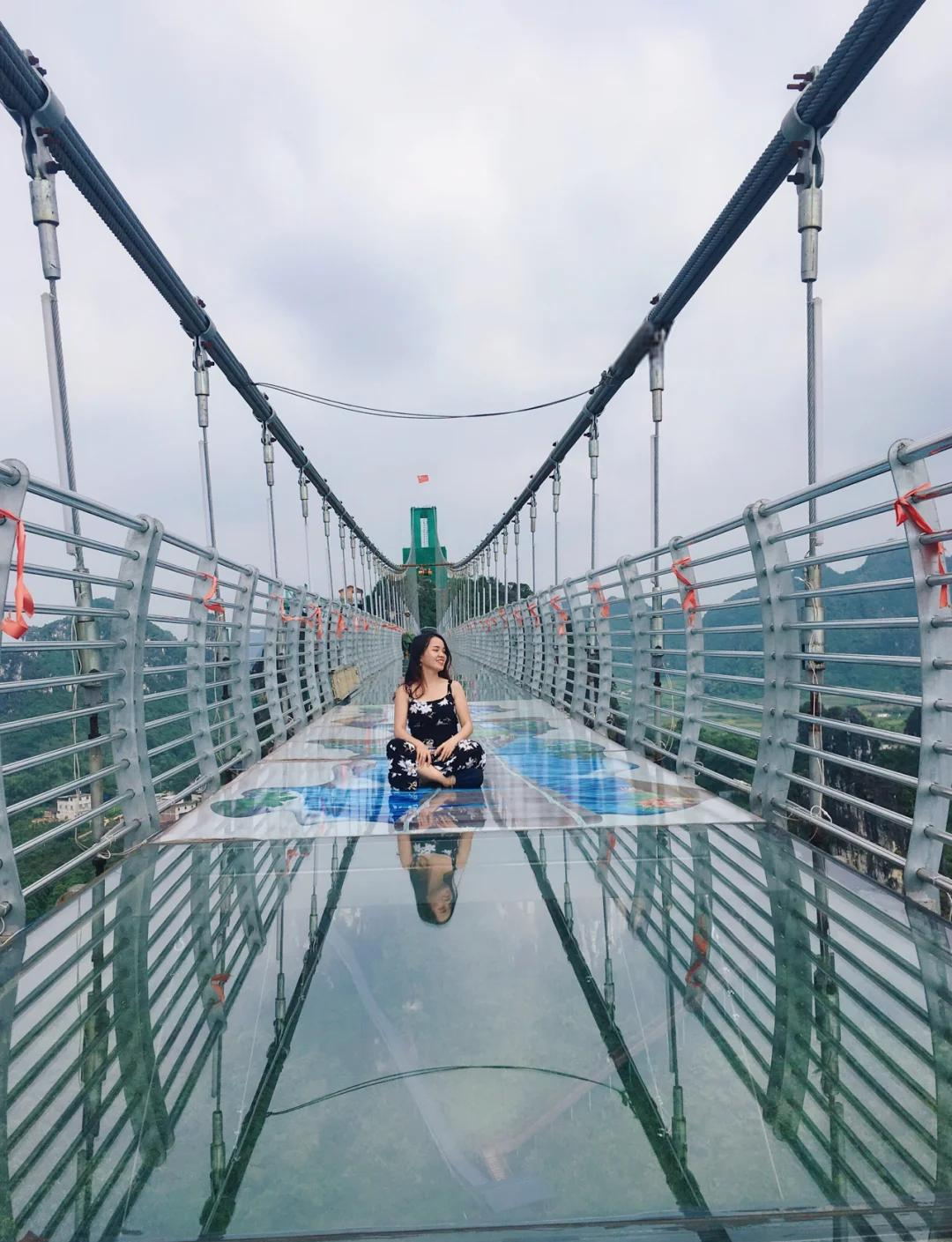
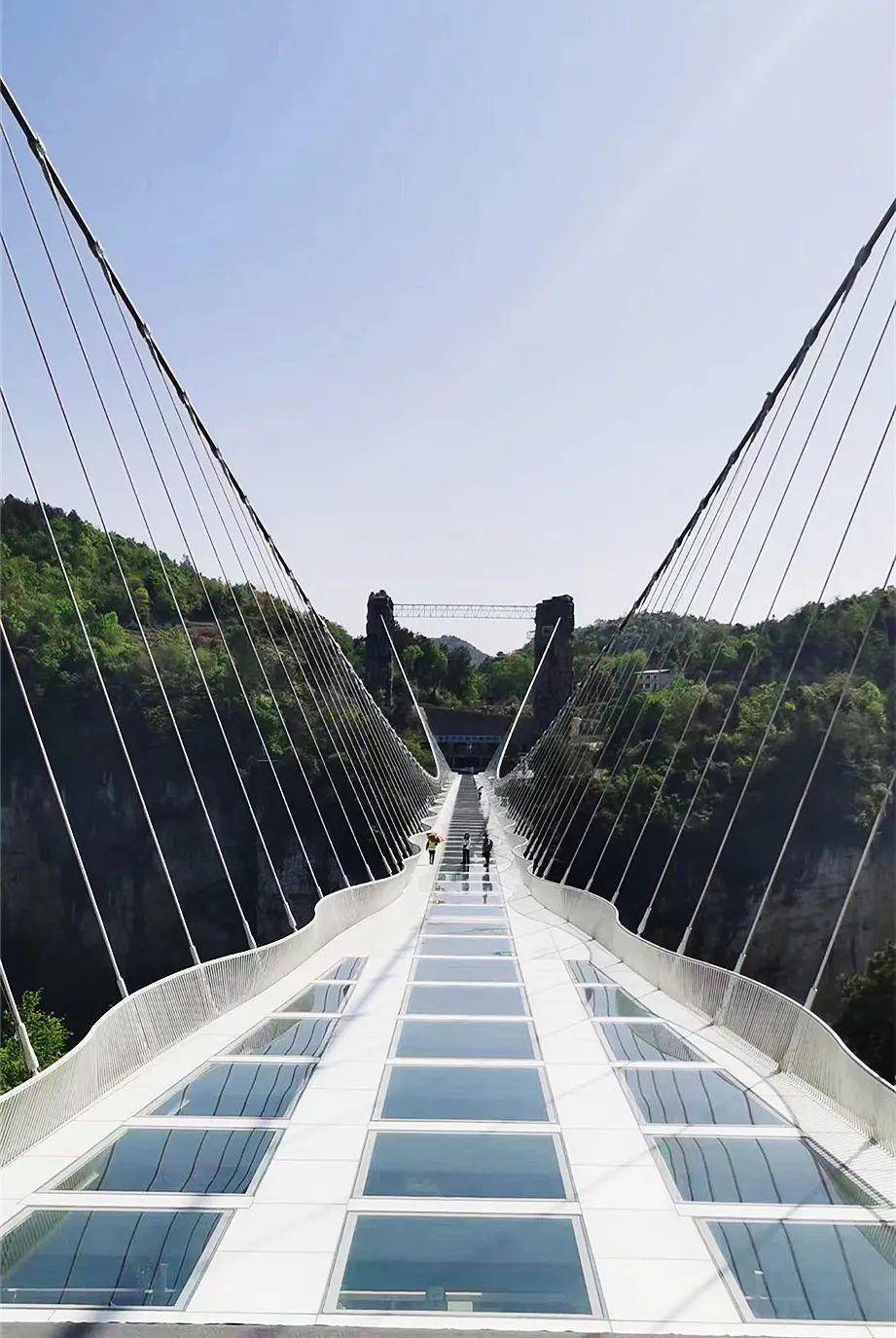
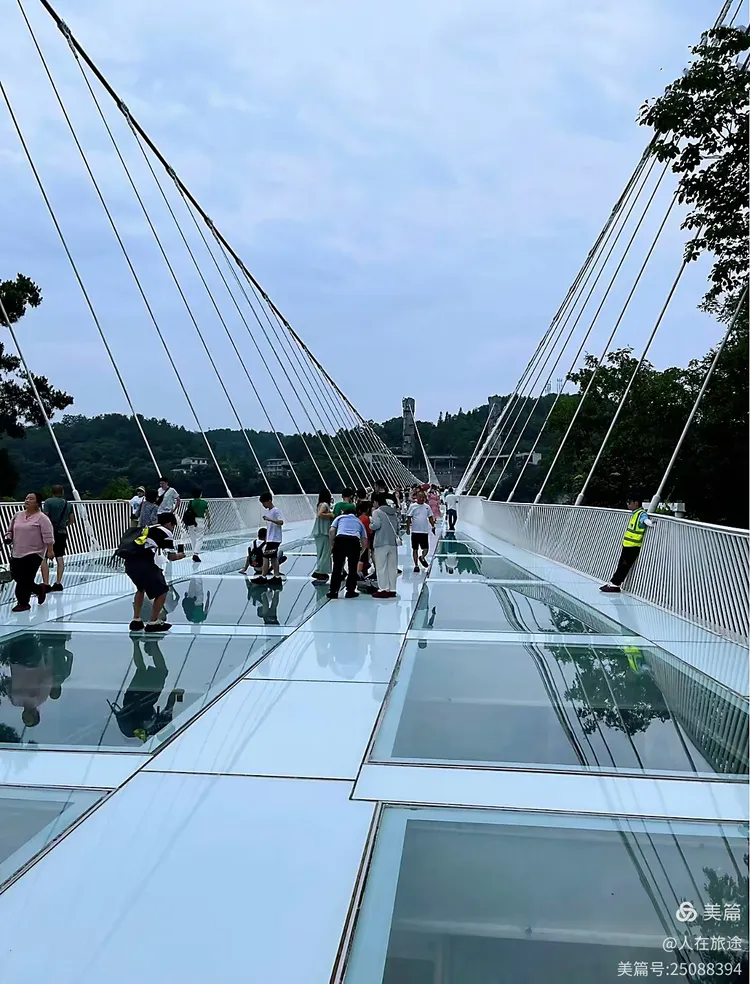
Laminated Tempered Glass Bridge
Toughened Multi-Layer Laminated Safety Glass Flooring for Pedestrian Bridges, Skywalks & Observation Walkways – Maximum Impact Resistance, Post-Breakage Retention, Ultimate Life-Safety Specification
Laminated tempered glass bridge flooring combines the strength of thermally toughened (tempered) glass plies with the post-breakage retention of multi-layer PVB lamination – creating the ultimate safety specification for pedestrian glass bridge applications. Each glass ply is first tempered to create compression layers on both surfaces (approximately four to five times stronger than annealed glass of equal thickness), then bonded together with multiple PVB interlayers in a controlled autoclave process.
For architects, structural engineers, architectural glazing contractors, construction firms, and procurement managers supplying the European, North American, Australian and global architectural market, laminated tempered glass bridge flooring represents the maximum specification for glass bridges – delivering the highest possible impact resistance, structural strength and post-breakage safety for elevated pedestrian walkways.
💡 Why laminated tempered glass is the ultimate bridge specification: A glass bridge is a life-safety structure. Every component must perform at its maximum capacity. Tempered glass provides four to five times the strength of annealed glass, meaning it can withstand higher point loads, greater impacts and more extreme thermal stress. When tempered plies are combined with multi-layer lamination, the result is a composite panel that offers: (1) maximum resistance to pedestrian point loads, (2) superior impact resistance against falling objects or accidental tools, (3) enhanced thermal stability for exterior bridges exposed to direct sunlight, (4) post-breakage retention with small granular fragments held securely by the PVB interlayers, and (5) compliance with the most stringent international building codes for elevated public access. For flagship architectural projects, tourist attractions and public infrastructure, laminated tempered glass is increasingly specified as the default bridge flooring material.
1. Laminated Tempered Glass Bridge Solutions
Laminated tempered glass bridge flooring is available in multiple configurations to suit different span lengths, load requirements and environmental conditions.
1.1 Three-Ply Laminated Tempered Glass Bridge Flooring
- Description: 10T + 1.52PVB + 10T + 1.52PVB + 10T
- Total thickness: 33.04 mm (~1-5/16″)
- Typical application: Interior bridges, short-span skywalks requiring maximum strength
- Key benefit: Tempered strength + multi-layer redundancy
1.2 Heavy-Duty Laminated Tempered Glass Bridge Flooring
- Description: 12T + 1.52PVB + 12T + 1.52PVB + 12T
- Total thickness: 38.56 mm (~1-1/2″)
- Typical application: Exterior bridges, high-traffic pedestrian crossings
- Key benefit: Greater load capacity + thermal stability
1.3 Four-Ply Laminated Tempered Glass Bridge Flooring
- Description: 10T + 1.52PVB + 10T + 1.52PVB + 10T + 1.52PVB + 10T
- Total thickness: 46.76 mm (~1-7/8″)
- Typical application: Long-span bridges, observation walkways
- Key benefit: Maximum redundancy + extreme impact resistance
1.4 Laminated Tempered Glass Bridge with Anti-Slip Treatment
- Description: Tempered plies with ceramic frit surface treatment
- Typical application: All bridge applications – interior and exterior
- Key benefit: Slip resistance integrated during tempering process
1.5 Low-Iron Laminated Tempered Glass Bridge Flooring
- Description: Low-iron tempered plies with PVB interlayers
- Typical application: Premium architectural bridges, scenic observation walkways
- Key benefit: Water-white clarity + tempered strength + laminated safety
2. Laminated Tempered vs Standard Laminated Glass Bridge
This comparison helps procurement managers understand when the additional investment in tempered plies is justified.
| Feature | Laminated Tempered Glass Bridge | Standard Laminated Glass Bridge |
|---|
| Ply strength | 4–5x stronger (tempered) | Annealed (untempered) |
| Impact resistance | ✅ Superior – withstands falling objects | Good – but lower threshold |
| Thermal stability | ✅ Excellent – handles thermal shock | Moderate – susceptible to thermal stress |
| Post-breakage fragment size | Small granular fragments | Larger shards |
| Post-breakage retention | ✅ Enhanced – fragments held by PVB | ✅ Yes – larger fragments retained |
| Cost | Highest | Higher |
| Weight | Same (same thickness) | Same (same thickness) |
| Best for | Flagship projects, public infrastructure, exterior bridges | Interior bridges, budget-sensitive projects |
2.1 When Laminated Tempered Is Required vs Standard Laminated
| Application | Recommendation | Reasoning |
|---|
| Exterior bridge (fully exposed) | Laminated tempered glass | Thermal shock resistance essential |
| Tourist attraction bridge | Laminated tempered glass | Maximum safety for high-visibility projects |
| Elevated observation walkway (20m+) | Laminated tempered glass | Maximum impact resistance |
| Public infrastructure bridge | Laminated tempered glass | Stringent code requirements |
| Interior short-span bridge (<2500mm) | Standard laminated glass sufficient | Lower risk environment |
| Budget-sensitive project | Standard laminated glass | Cost-effective alternative |
3. Why Laminated Tempered Glass for Bridges?
This section explains the technical advantages of using tempered plies in multi-layer laminated bridge construction.
3.1 Strength Comparison
| Property | Annealed Glass | Tempered Glass | Improvement |
|---|
| Bending strength | ~45 MPa | ~180 MPa | 4x stronger |
| Impact resistance | Low | Very high | 5x improvement |
| Thermal shock resistance | ~40°C differential | ~200°C differential | 5x improvement |
| Surface compression | None | ~100 MPa | Structural enhancement |
3.2 Combined Benefits of Tempering + Lamination
| Benefit | How It Works | Bridge Application Value |
|---|
| Point load resistance | Tempered plies resist concentrated loads better | Pedestrian heel impacts, furniture placement |
| Impact protection | Tempered glass absorbs impact energy without immediate fracture | Falling objects, maintenance activities |
| Thermal durability | Handles sun exposure, thermal cycling without stress fracture | Exterior bridges in varying climates |
| Fragment retention | Small tempered fragments held by PVB interlayers | Life-safety – no large falling shards |
| Structural redundancy | Multiple tempered plies + multiple interlayers | Maximum safety factor |
3.3 Post-Breakage Behaviour Comparison
| Breakage Scenario | Standard Laminated (Annealed) | Laminated Tempered |
|---|
| Single ply fracture | Large shards retained by PVB | Small granules retained by PVB |
| Impact penetration | Possible with sufficient force | Much higher force required |
| Thermal stress fracture | Possible in direct sun | Rare – excellent thermal tolerance |
| Post-breakage load retention | Good – remaining plies intact | Excellent – remaining tempered plies stronger |
4. Glass Configurations for Laminated Tempered Bridge Flooring
4.1 Glass Types
| Glass Type | Total Thickness | Typical Span | Key Advantage | Link to Product |
|---|
| 10T+1.52+10T+1.52+10Tmm | 33.04 mm | Up to 2700mm | Tempered strength + redundancy | View Laminated Glass → |
| 12T+1.52+12T+1.52+12Tmm | 39.72 mm | Up to 3700mm | Greater load + thermal stability | View Laminated Glass → |
| 10T+1.52+10T+1.52+10T+1.52+10Tmm | 47.88 mm | Up to 4700mm | Maximum redundancy | View Laminated Glass → |
| 12T+1.52+12T+1.52+12T+1.52+12Tmm | 57.96 mm | Up to 5700mm | Ultimate specification | View Laminated Glass → |
4.2 Laminated Tempered Glass Properties
| Property | 3-Ply 33.04mm | 3-Ply 39.72mm | 4-Ply 47.88mm |
|---|
| Total thickness | 34.28 mm | 41.32 mm | 49.84 mm |
| Weight per m² | ~82 kg | ~98 kg | ~119 kg |
| Ply count | 3 (all tempered) | 3 (all tempered) | 4 (all tempered) |
| Interlayer count | 2 | 2 | 3 |
| Relative strength vs annealed | 4–5x | 4–5x | 4–5x |
| Impact resistance | ✅ Superior | ✅ Superior | ✅ Maximum |
| Thermal shock resistance | ✅ Excellent | ✅ Excellent | ✅ Excellent |
4.3 PVB Interlayer Options
| Interlayer Type | Properties | Bridge Application |
|---|
| Standard PVB | Clear, excellent adhesion | General bridge applications |
| Structural PVB | Higher stiffness for load-bearing | Long-span bridges |
| Acoustic PVB | Enhanced sound dampening | Public bridges, quiet zones |
| UV-Control PVB | >99% UV filtration | Sun-exposed exterior bridges |
5. Glass Thickness for Laminated Tempered Bridge Flooring
5.1 Thickness Recommendations by Span
| Clear Span | Recommended Build-Up | Expected Deflection (3.0kN load) |
|---|
| Up to 2100 mm | 10T+1.52+10T+1.52+10Tmm (34.26mm) | ~2.2 mm |
| 2100–3100 mm | 12T+1.52+12T+1.52+12Tmm (41.30mm) | ~3.0 mm |
| 4100–5100 mm | 12T+1.52+12T+1.52+12T+1.52+12Tmm (57.94mm) | ~4.5 mm |
| 5100 mm+ | Custom multi-layer – FEA required | Subject to structural calc |
5.2 Thickness by Application
| Application | Recommended Build-Up | Notes |
|---|
| Interior short-span bridge (<2500mm) | 10T+1.52+10T+1.52+10Tmm (34.26mm) | Maximum specification for interior |
| Interior medium-span bridge (2500–3500mm) | 12T+1.52+12T+1.52+12Tmm (41.30mm) | Greater load capacity |
| Exterior bridge (any span) | Laminated tempered + anti-slip | Thermal shock resistance essential |
| Observation walkway (elevated) | 4-ply laminated tempered minimum | Maximum redundancy for elevated access |
| High-traffic public bridge | 12T+1.52+12T+1.52+12Tmm minimum | Continuous public loading |
Note: These are indicative values. Final thickness must be determined by structural engineering calculations considering actual loading conditions, support configuration, and applicable code requirements. Examples shown are typical configurations for reference only.
6. Processing & Fabrication for Laminated Tempered Bridge Glass
6.1 Manufacturing Sequence
Step 1: Glass Cutting
→ Cut to final dimensions (±0.5mm)
↓
Step 2: Edge Processing
→ Grinding, arrising, polishing
↓
Step 3: Drilling & Notching (if required)
→ CNC machining before tempering
↓
Step 4: Washing
→ Thorough cleaning for tempering furnace
↓
Step 5: Tempering
→ Heat to ~620°C, rapid cooling
↓
Step 6: Ceramic Frit Application (if required)
→ Applied before tempering for permanent bond
↓
Step 7: Lamination
→ PVB interlayers placed between tempered plies
↓
Step 8: Autoclave Cycle
→ Heat and pressure bonding (extended cycle for multi-layer)
↓
Step 9: Inspection
→ Dimensional check / Ultrasonic scan / Visual inspection
↓
Step 10: Packaging
→ Marine-grade crating for export
6.2 Critical Processing for Laminated Tempered Bridge Glass
| Processing Step | Why It Matters | Our Approach |
|---|
| Tempering quality | Consistent surface compression essential for strength | Furnace calibration + heat soak testing |
| Ceramic frit firing | Anti-slip pattern must be permanent | Fired during tempering process |
| Ply alignment | All tempered plies must align precisely | Precision stacking fixture |
| Autoclave cycle | Multi-layer requires extended cycle | Controlled profile verified by thermocouple |
| Hole drilling | Must be done before tempering | CNC drilling + edge quality verification |
7. Size & Shape Capabilities
7.1 Standard Size Range
| Parameter | Standard Capability | Jumbo Glass Capability |
|---|
| Max Panel Length | 2440 mm (96″) | ≤6000 mm |
| Max Panel Width | 1830 mm (72″) | ≤3300 mm |
| Max Panel Area | ~4.5 m² | ~20 m² |
| Glass Thickness | 34.26–57.94 mm | 8–44.5 mm (multi-ply) |
7.2 Shape Capabilities
| Shape | Capability | Typical Application |
|---|
| Rectangle | ✅ Standard | Straight bridge spans |
| Square | ✅ Standard | Individual bridge panels |
| Trapezoid | ✅ Available | Angled bridge sections |
| Custom polygon | ✅ Available | Irregular bridge layouts |
| Radius edge | ✅ Available | Curved bridge walkways |
8. Safety & Standards
8.1 Applicable Standards by Market
| Standard | Market | Scope |
|---|
| EN 14449 | Europe / UK | Primary standard for laminated safety glass |
| EN 12150 | Europe / UK | Thermally toughened safety glass |
| EN 12600 | Europe / UK | Pendulum impact test |
| ASTM E2751 | USA | Standard practice for glass pedestrian walkways |
| ASTM C1172 | USA | Standard specification for laminated architectural glass |
| ASTM C1048 | USA | Heat-treated flat glass |
| ANSI Z97.1 | USA | Safety glazing materials |
| AS/NZS 2208 | Australia / NZ | Safety glazing materials |
8.2 Load Requirements
| Application | Typical Design Load | Standard Reference |
|---|
| Interior pedestrian bridge | 3.0 kN concentrated + 5.0 kN/m² UDL | Eurocode 1 / IBC |
| Exterior pedestrian bridge | 3.0 kN concentrated + 5.0 kN/m² UDL + wind load | Eurocode 1 / IBC |
| Observation walkway | 5.0 kN concentrated + 5.0 kN/m² UDL | Project-specific |
8.3 Compliance Statement
Our laminated tempered glass bridge flooring panels are manufactured to meet applicable safety and structural requirements for your target market, including EN 14449 and EN 12150 for Europe, ASTM E2751, ASTM C1172 and ASTM C1048 for North America, and AS/NZS 2208 for Australia and New Zealand. Final structural design and compliance verification must be performed by a qualified structural engineer for each project.
9. Applications – Laminated Tempered Glass Bridge Projects
9.1 Bridge Types Using Laminated Tempered Glass Flooring
| Bridge Type | Description | Recommended Build-Up |
|---|
| Tourist attraction bridge | Exterior landmark bridge with public access | 12T+1.52+12T+1.52+12Tmm + anti-slip |
| Scenic observation walkway | Elevated exterior walkway with views | 4-ply laminated tempered + anti-slip |
| Hotel atrium bridge | Interior bridge in premium hotel | 10T+1.52+10T+1.52+10Tmm |
| Museum bridge | Interior bridge in cultural institution | Low-iron laminated tempered |
| Corporate HQ bridge | Flagship corporate building bridge | 12T+1.52+12T+1.52+12Tmm |
| Public infrastructure bridge | Municipal pedestrian crossing | Laminated tempered + anti-slip |
9.2 Application Environments
| Environment | Recommendation | Notes |
|---|
| Exterior fully exposed | Laminated tempered + anti-slip | Essential – thermal shock protection |
| Exterior covered | Laminated tempered | Protected from rain, still temperature variation |
| Interior high-traffic | Laminated tempered | Maximum durability |
| Interior low-traffic | Standard laminated sufficient | Lower cost option |
| Elevated (20m+ above ground) | Laminated tempered 4-ply minimum | Maximum safety for height |
10. Product Selection – Choosing Your Laminated Tempered Bridge Glass
10.1 Glass Selection Matrix
| Build-Up | Span Capability | Impact Resistance | Thermal Stability | Post-Breakage Retention | Cost Level | Best For |
|---|
| 3-Ply 34.27mm | Up to 2600mm | ✅ Superior | ✅ Excellent | ✅ Enhanced | Highest | Short-span maximum spec |
| 3-Ply 42.08mm | Up to 3600mm | ✅ Superior | ✅ Excellent | ✅ Enhanced | Highest | Medium-span maximum spec |
| 4-Ply 49.05mm | Up to 4600mm | ✅ Maximum | ✅ Excellent | ✅ Maximum | Highest | Long-span / public |
| 4-Ply 58.86mm | Up to 5600mm | ✅ Maximum | ✅ Excellent | ✅ Maximum | Highest | Extreme spans |
10.2 Decision Flow for Procurement Managers
Your Bridge Project Type?
↓
Flagship / Tourist / Public Infrastructure / Premium Commercial
↓
What is the clear span?
↓
<2500mm / 2500-3500mm / 3500-4500mm / >4500mm
↓
Is the bridge exterior or interior?
↓
EXTERIOR → LAMINATED TEMPERED IS ESSENTIAL
INTERIOR → Consider traffic level and project status
↓
What is the design load?
↓
3.0kN / 5.0kN
↓
Select Ply Count:
↓
3-Ply / 4-Ply / Custom
↓
Select Glass Type:
↓
Clear / Low-Iron
↓
Select PVB Interlayer:
↓
Standard / Structural / Acoustic / UV-Control
↓
Anti-Slip Required?
↓
YES (recommended for all bridge applications)
↓
ENGINEERING ASSESSMENT REQUIRED (FEA for spans >3000mm)
↓
SUBMIT BRIDGE PROJECT SPECIFICATIONS FOR QUOTATION
11. Frequently Asked Questions – Laminated Tempered Glass Bridge
Q1: What is laminated tempered glass bridge flooring?
Laminated tempered glass bridge flooring consists of three or more thermally toughened (tempered) glass plies bonded together with multiple PVB interlayers. Each ply is 4–5 times stronger than annealed glass, and the multi-layer lamination provides post-breakage retention.
Q2: Why choose laminated tempered over standard laminated for bridges?
Laminated tempered glass provides: (1) 4–5x greater strength for point loads and impacts, (2) superior thermal shock resistance for exterior bridges, (3) smaller post-breakage fragments retained by PVB, and (4) compliance with the most stringent building codes.
Q3: Is laminated tempered glass bridge flooring required for exterior bridges?
Yes – strongly recommended. Exterior bridges face thermal stress from direct sunlight, temperature cycling and potential impact from debris. Laminated tempered glass handles these conditions far better than standard laminated glass.
Q4: What is the standard thickness for laminated tempered glass bridge flooring?
Common configurations include:
- 10T+1.52+10T+1.52+10Tmm (34.27mm) – Short-span bridges
- 12T+1.52+12T+1.52+12Tmm (42.07mm) – Medium-span bridges
- 4-ply constructions (49.06mm+) – Long-span and high-traffic bridges
- Q5: Can anti-slip treatment be applied to laminated tempered glass?
- Yes. Ceramic frit anti-slip treatment is applied before the tempering process, creating a permanent bond between the frit and the glass surface. This is the industry standard for glass bridge applications.
- Q6: Is laminated tempered glass bridge flooring heavier than standard laminated?
- No – at the same total thickness, the weight is identical. The difference is in the glass strength, not the density.
- Q7: What is the maximum span for laminated tempered glass bridge flooring?
- With 4-ply laminated tempered construction and custom engineering, spans of 4000–6000mm are achievable. Longer spans require FEA and structural engineering assessment.
- Q8: Can low-iron glass be tempered and laminated for bridges?
- Yes. Low-iron glass can be fully tempered and then laminated into multi-layer configurations – combining water-white clarity with maximum strength and safety.
- Q9: How long does it take to produce laminated tempered glass bridge flooring?
- 3-ply laminated tempered panels: 7–9 weeks. 4-ply laminated tempered panels: 8–10 weeks. Custom-engineered projects: 9–11 weeks including engineering assessment.
- Q10: How do I request a quotation for laminated tempered glass bridge flooring?
- Please provide: clear span, bridge width, number of panels, support conditions, design load, indoor/outdoor, slip resistance requirement, glass type preference, applicable standard, height above ground, and target delivery date.
12. Request Laminated Tempered Glass Bridge Quote
Submit your bridge project specifications for a competitive FOB quotation.
Required Information:
- Customer type: Architect / Structural Engineer / Contractor / Construction Firm / Developer / Other
- Project type: Interior Bridge / Exterior Bridge / Skywalk / Observation Walkway / Tourist Attraction / Other
- Clear span: ___ mm
- Bridge width: ___ mm
- Number of panels: ___ (or panel width per piece)
- Support conditions: End-supported / Continuous beam / Cantilevered / Other
- Design load: ___ kN concentrated + ___ kN/m² UDL
- Deflection limit: Span/___ (e.g., span/200)
- Traffic type: Occasional / Regular / Continuous Public
- Indoor / Outdoor: Indoor / Outdoor Covered / Outdoor Exposed
- Height above ground: ___ metres
- Slip resistance required: Yes / No
- Glass type: Clear Laminated Tempered / Low-Iron Laminated Tempered / Unsure
- Ply count: 3-Ply / 4-Ply / Custom / Unsure
- Build-up: 10T+1.52+10T+1.52+10Tmm / 12T+1.52+12T+1.52+12Tmm / 4-Ply / Custom / Unsure
- PVB interlayer: Standard / Structural / Acoustic / UV-Control / Unsure
- Anti-slip treatment: Ceramic Frit / None
- Edge finish: Polished / Beveled / Arrissed
- Fixing method: Structural Silicone / Mechanical Clamps / Bolt Fixing / Combination / Undefined
- Applicable standard: EN / ASTM / AS/NZS / Other / Unsure
- Upload drawing: PDF / DWG / DXF
- Quantity per order: ___ panels
- Destination port
- Target delivery date
- 📧 Email your bridge project specifications to: tomron1688@gmail.com
- 🌐 Upload drawings at: www.jumbotemperedglass.com
- Response time: Preliminary feasibility assessment within 24 hours; detailed quotation with engineering assessment within 48 hours.
13. Related Pages (Internal Link Cluster)
Within Floor Glass Section
Product Pages (Cross‑Links)
Other Applications