Low-E Glass Selection Guide
Double Silver · Triple Silver · For Façades & Windows
Specification guidance for architects, façade consultants, glazing contractors and procurement teams — covering coating family, solar/thermal targets, coating position, IGU build-up, jumbo format and RFQ data pack.
1. What Low-E Actually Controls
Low-emissivity (Low-E) is a microscopically thin, optically neutral coating applied to one glass surface to reduce long-wave radiant heat transfer. It is the single highest-leverage choice for controlling a building's heating and cooling load — but it is not a solar-control film and it cannot replace structural or safety specification.
The three values you will be asked for on every curtain-wall or window project:
| Value | What it means | Typical lever |
|---|
| U-value | Heat transfer through the glazing (W/m²K). Lower = better insulation | Coating family, cavity count, gas fill, warm edge |
| SHGC | Fraction of solar heat admitted (0–1). Lower = less cooling load | Coating selectivity, coating position, glass tint |
| VLT | Visible light transmitted (%). Higher = brighter interior | Coating, glass thickness, tint, reflection balance
Rule one: specify the glazing system performance, not just "Low-E glass". The coating is only one layer of a make-up that includes lite thickness, cavity, spacer, gas and sealing. |
2. The Purchasing Reality
Procurement teams usually lose time on four avoidable issues:
- Asking for the coating by name, not by performance. "Double silver" is a family, not a guaranteed SHGC or VLT.
- Mixing up coating position. Surface #2 and surface #3 produce different results in a sealed IGU.
- Forgetting the IGU system. Argon, cavity width, warm-edge spacer and sealant quality determine whether the coating's lab value survives on site.
- Over-specifying. Triple silver is excellent but unnecessary for every orientation; over-spec drives cost and can hurt VLT.
The buying decision is therefore: target performance first → coating family second → make-up and supplier proof third.
3. Coating-Family Decision Matrix
Design starting points. Exact SHGC, VLT and U-value must be confirmed by the coating data sheet, IGU calculation and local energy code.
| Coating family | Best for | Upgrade when… |
|---|
| Single silver / solar control | Budget-conscious commercial windows, moderate climates | Cooling demand or code pushes SHGC/VLT below what single-silver can hold |
| Double silver | Most commercial façades and curtain walls — balanced daylight + solar control | Triple-silver performance is worth the premium, or visible transmittance is critical |
| Triple silver | Aggressive cooling-load or daylight-harvesting buildings; iconic façades | U-value or SHGC target cannot be reached with double silver at the required VLT |
| Neutral / high-light Low-E | Retail, showrooms, residential — colour fidelity and brightness | Exterior reflectance or privacy becomes a constraint |
| Low-E in laminated (PVB/SGP) | Safety, acoustic or overhead zones needing Low-E performance | Impact, post-breakage retention or acoustic targets require laminated construction |
| Low-E in IGU / triple glazing | High-performance envelopes, skyscrapers, cold or hot-extreme zones | Code or whole-building energy model requires U ≤ ~0.7–0.8 W/m²K
|
4. Typical Build-ups
Double-silver IGU (common commercial default)
6mm + 16Ar + 6mm, double-silver on surface #2 → balanced SHGC ≈ 0.28–0.35, VLT ≈ 55–65%, U ≈ 1.0 W/m²K (argon, warm edge).
Triple-silver IGU
6mm + 16Ar + 6mm, triple-silver surface #2 → lower SHGC ≈ 0.18–0.25, selective VLT ≈ 50–60%, U ≈ 0.9–1.0 W/m²K.
Laminated Low-E (safety + energy)
(8+1.52PVB+8) + 12Ar + 12mm or (10+1.90PVB+10)+12A+15mm style — common in unitized curtain walls where safety and large panel format combine.
Triple glazing / Vacuum glazing
For whole-façade U down to ~0.7 W/m²K and below, add a third lite, krypton/argon fill and warm-edge technology — specify as a complete IGU system.
Value note: cavity width, gas fill, spacer and edge seal all change the final U/SHGC/VLT. A coating datasheet is not a full IGU performance certificate.
5. Coating Position (Which Surface?)
In a standard double-glazed IGU, count glass surfaces from the outside in:
- Surface #1 — exterior-most (exposed to weather)
- Surface #2 — interior face of the outer lite ← most common Low-E location
- Surface #3 — exterior face of the inner lite
- Surface #4 — interior-most
- Default rule: place the functional Low-E coating on surface #2. It sits inside the sealed cavity, protected from weathering and abrasion, and controls radiant heat flow effectively.
- Exceptions to call out in the RFQ:
- Some solar-control or laminated systems specify the coating on #3.
- In hot climates with intense direct solar, confirm whether exterior tint + #2 Low-E is the right pairing.
- Never assume — record the surface number in the schedule and shop drawings.
6. Performance Numbers That Hold Up
| Metric | Jumbo Glass Group range / capability | Specification note |
|---|
| U-value | **1.2–1.8 W/m²K** (Low-E IGU with argon fill) | Confirm complete IGU calculation, not coating alone |
| SHGC | 0.15 – 0.5 | Lower = less solar heat gain; balance against VLT |
| VLT | Depends on coating family | Aim for useful daylight illuminance, not maximum % |
| Max IGU size | 13000 × 3000 mm | Handling, sealing and logistics limit vs monolithic |
| Cavity / gas | Argon fill, warm-edge spacer | Argon optional on budget specs; warm edge strongly recommended |
| Seal warranty | 20-year IGU seal warranty | Confirm scope and conditions in writing |
These are manufacturing and product capabilities, not a substitute for project-specific energy modelling or approved shop drawings.
7. Climate-Zone Decision
Cooling-dominated / hot-humid (e.g. South China, Gulf, Southeast Asia)
→ Drive SHGC down (double or triple silver), protect VLT, use neutral/high-selective coatings. Curtain-wall orientation matters — east/west elevations usually need stronger solar control than north.
Mixed / temperate
→ Balance U and SHGC. Double silver + argon + warm edge is often the cost-performance sweet spot.
Heating-dominated / cold
→ Prioritise U-value (triple glazing, argon/krypton, warm edge, low-E on appropriate surface) while keeping enough VLT and solar gain.
High-altitude / high-UV
→ Confirm coating durability, edge seal and tempering/lamination strategy with the supplier.
8. Pairing with IGU & Warm Edge
Low-E is almost always specified inside an insulating glass unit. The supporting choices matter as much as the coating:
- Cavity width: 12–20 mm typical; matches spacer and gas-fill volume.
- Gas fill: Argon standard for performance uplift; air cavity is a budget fallback but accepts higher U.
- Warm-edge spacer: Reduces thermal bridging at the edge and improves condensation resistance — recommended on every Low-E IGU.
- Sealant system: Dual seal (primary + secondary) and desiccant integrity protect the coating's long-term environment.
- IGCC / equivalent certification: Ask for IGU certification and a written 20-year seal warranty where claimed.
9. Jumbo / Oversize Low-E
| Format | Manufacturing capacity | Why the difference |
|---|
| Monolithic / laminated sheet | up to 3300 × 20000 mm | Single sheet, handling and transport limited |
| Insulating glass unit (IGU) | up to 13000 × 3000 mm | Sealed unit limits: gas fill, edge seal, handling and transport
Key point for buyers: the IGU format is the limiting envelope for jumbo Low-E projects. Very large sealed units increase responsibility for edge seal, gas retention and site logistics. Always coordinate maximum size with the façade engineer, IGU supplier and installation contractor. |
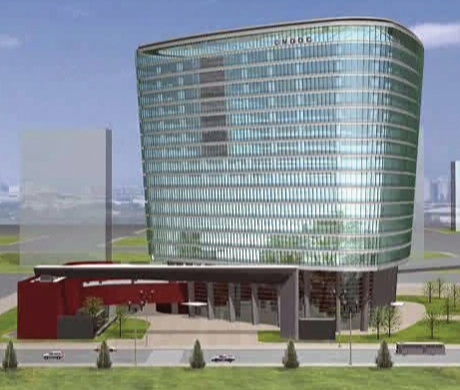
See the Qianhai Chuangjin Tower case study — its real double-silver laminated IGU make-up used panels up to 1800 × 4300 mm, chosen by the unitized framing system rather than the maximum manufacturing envelope.
10. Codes & Compliance
- Energy code: U-value, SHGC, VLT and whole-façade performance per local jurisdiction (ASHRAE 90.1 / IECC / GB 50189 / EU EPBD as applicable).
- Glass safety: EN 12150 / ASTM C1048 for tempered; EN 14449 / ASTM C1172 for laminated; local glazing safety rules.
- IGU performance: IGCC / CPSC / EN 1279 referencing practice; request test reports and warranty terms.
- Façade integration: EN 13830 (curtain walling), ASTM E330 (structural pressure), CWCT guidance as adopted.
- Documentation: coating data sheet, IGU calculation, HST records where applicable, edge-seal warranty and project-specific shop drawings.
11. Selection Decision Flow
- Define climate zone and orientation.
- Set U-value, SHGC and VLT targets from energy code / model.
- Choose coating family (single / double / triple silver).
- Fix coating position (usually surface #2).
- Select IGU build-up (cavity, gas, warm edge, seal).
- Add safety requirement (tempered / laminated / HST).
- Check jumbo / oversize feasibility (IGU ≤ 13000×3000 mm).
- Run whole-façade energy model and confirm appearance.
- Lock coating schedule, samples and mock-up.
- Issue RFQ data pack and review shop drawings.
12. RFQ Data Pack
Send this minimum set for a comparable Low-E quotation:
- Project location, climate zone and façade orientation.
- Glass sizes, quantities, vision/spandrel split.
- Performance targets: U-value (U-value (1.2–1.8 for Low-E IGU), SHGC (0.15–0.5), VLT.
- Coating preference: single / double / triple silver; neutral or tinted.
- Coating surface position (typically surface #2).
- IGU details: cavity width, gas fill, warm-edge spacer, seal type.
- Safety: tempered / laminated (PVB/SGP), HST requirement.
- Max size and handling constraints (IGU ≤ 13000×3000 mm).
- Drawings, sample/mock-up needs, delivery window and warranty expectations.
Frequently Asked Questions
What is the difference between double silver and triple silver Low-E?
Double silver is the workhorse for commercial façades — good solar control with high visible light. Triple silver adds a third silver layer for lower SHGC and U at a similar VLT, used where aggressive energy targets or selective daylighting justify the cost.
Which surface should the Low-E coating be on?
In a standard double IGU, the functional Low-E coating is normally on surface #2 (the interior face of the outer lite), protected inside the sealed cavity. Record the surface number in the RFQ and shop drawings — assumptions cause rejects.
Can Low-E glass be laminated for safety?
Yes. Low-E coatings can be incorporated into laminated make-ups (e.g. 8+1.52PVB+8 or 10+1.90PVB+10) for post-breakage retention, impact resistance or acoustic control while retaining solar/thermal performance.
What U-value and SHGC can I expect?
With Jumbo Glass Group high-performance Low-E IGU, U-values down to 0.7 W/m²K are achievable and SHGC ranges 0.15–0.5 depending on coating family and make-up. Final values require an IGU calculation and energy-model confirmation — never infer from coating alone.
How big can a Low-E IGU be?
IGU manufacturing capacity is up to 13000 × 3000 mm. Monolithic and laminated sheets can be larger (up to 3300 × 20000 mm), but the sealed IGU format is the limiting factor for oversize projects — confirm handling, edge seal and site logistics early.
Does Low-E replace the need for shading or glazing specification?
No. Low-E controls radiative heat transfer, but shading devices, frit, orientation, framing thermal break and whole-façade design still determine total energy performance. Specify the complete system.
Talk to the Technical Team
Send your RFQ data pack or coating schedule and we will cross-check coating family, surface position, IGU build-up, jumbo/oversize feasibility and warranty terms against your project specification.
Related guides & projects
- Curtain Wall Glass Selection Guide — make-up, vision/spandrel, structural and RFQ decisions.
- IGU / Insulating Glass Selection Guide — argon, warm edge, cavity, U-value and seal warranty.
- Qianhai Chuangjin Tower — Double-Silver Low-E IGU Curtain Wall — real project case study.
Continue Reading
Jumbo Glass Family
Related Products
Resources
Back to the full selection-guide index.
Glass Skylight Selection Guide →
Sloped overhead glazing taken to the extreme — atrium & skylight rules.
Glass Bridge / Deck Guide →
When your canopy becomes walkable — concentrated load rules.
Jumbo Laminated Glass →
The product page behind every PVB / SGP canopy build-up.
Jumbo Tempered Glass →
Monolithic tempered plies (pre-lamination) and material spec.
Jumbo Glass / Oversize Glass →
Size definitions, capability and engineering overview.
Source & spec basis: Jumbo Tempered Glass Group manufacturing capabilities (Low-E IGU U-value 1.2–1.8 W/m²K; SHGC 0.15–0.5; max IGU 13000×3000 mm; argon fill; warm-edge spacer; 20-year seal warranty; IGCC-certified IGU factory), EN 12150 / ASTM C1048 / EN 14449 / EN 1279 / IGCC referencing practice, and disclosed project data from Qianhai Chuangjin Tower. Final values must be confirmed by approved shop drawings, energy model, design institute/engineer and local authority requirements.